Minerals · common
Aegirine
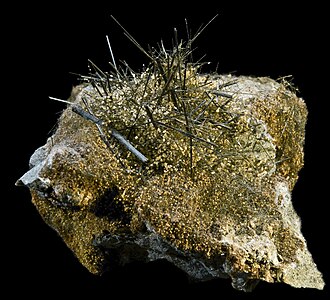
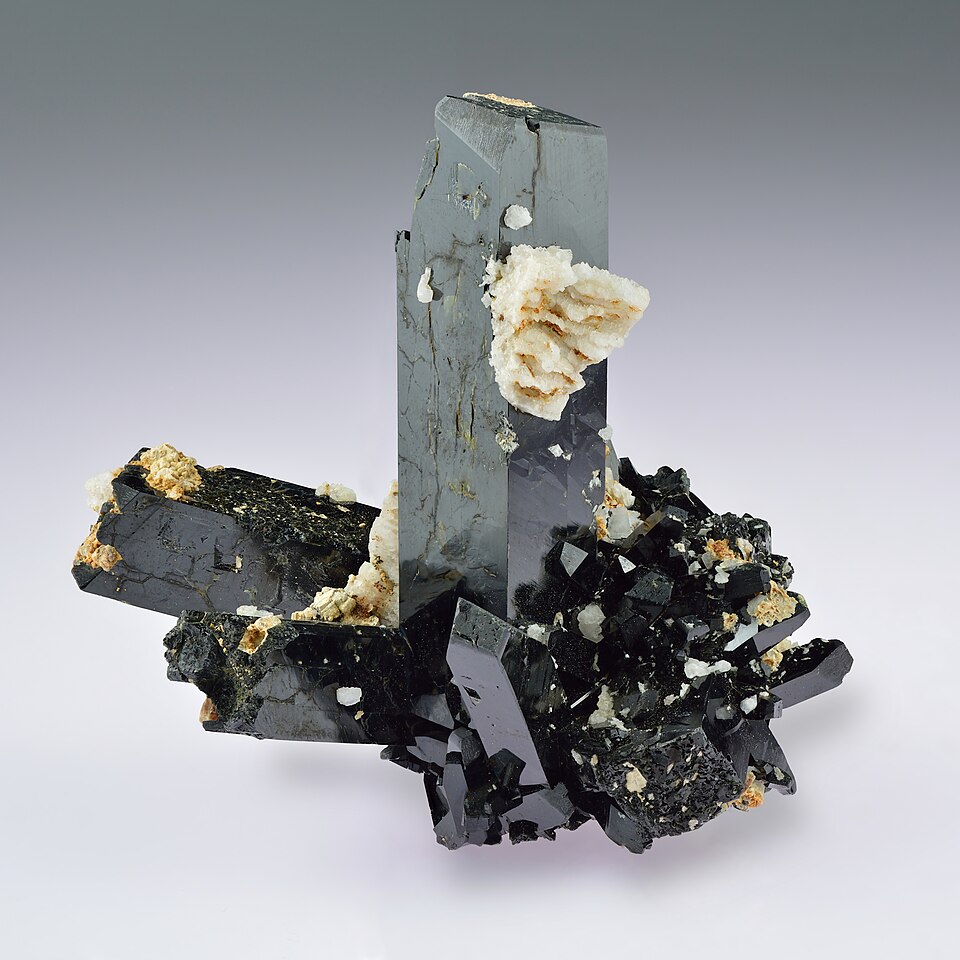
Aegirine is a sodium iron silicate belonging to the pyroxene group, with the formula NaFeSi2O6. It crystallizes in the monoclinic system, typically forming slender, wedge-tipped prisms in alkaline igneous rocks. Its dark green to black color and glassy luster distinguish it from other common pyroxenes.
Aegirine properties at a glance
| Type | Minerals |
|---|---|
| Chemical formula | NaFeSi2O6 |
| Mohs hardness | 6–6.5 |
| Crystal system | Monoclinic |
| Luster | Vitreous |
| Streak | Pale green to grayish yellow |
| Cleavage | Good prismatic, two directions at ~87°/93° |
| Fracture | Uneven to splintery |
| Specific gravity | 3.4–3.6 |
| Transparency | Translucent to opaque |
| Common colors | Dark green, Black, Brown-green |
| Rarity | common |
Geology & background
Aegirine forms almost exclusively in sodium-rich, silica-poor igneous environments, especially nepheline syenites, alkaline granites, and their pegmatites, where sodium and iron are abundant enough to stabilize this pyroxene over more common calcium-magnesium varieties. Classic localities include the Larvik region of Norway, the Kola Peninsula in Russia, Mont Saint-Hilaire in Quebec, and the alkaline complexes of Malawi, all of which supply well-formed prismatic crystals to collectors. The mineral is named for Aegir, the Norse god of the sea, a nod to its discovery in Norway.
Rockhounds should note that aegirine forms a solid-solution series with augite, and iron-rich, low-sodium members were once called acmite, a term still seen on older labels. Because it grows in unusual alkaline rock suites, aegirine specimens often come paired with other rare sodium-bearing minerals, making a single matrix piece educational well beyond the pyroxene itself.
How to identify Aegirine
Look for slender, elongated prismatic crystals with a nearly square cross-section, often striated lengthwise and terminated in a wedge. Color ranges from dark green through brown to nearly black, with a vitreous luster and a pale green to grayish streak. Hardness of about 6 separates it from softer amphiboles like hornblende, which shares a similar habit but has different cleavage angles; aegirine's two cleavage planes meet near 87 and 93 degrees, the classic pyroxene angle.
- Compare the specimen's color, luster, crystal habit, grain size, streak, and locality before confirming.
- Use multiple photos when possible, including a fresh surface and a close view of texture.
Full Aegirine identification guide: checklist, home tests and look-alikes →
Aegirine vs similar stones
Not sure it isn't something else? Side-by-side comparisons with the stones most often confused with Aegirine.
Where Aegirine is found
Reported from multiple localities worldwide; verify locality against specimen provenance when available.
How much is Aegirine worth?
| Entry-level specimen | $2 |
|---|---|
| Typical collector specimen | $20 |
| Premium specimen | $150+ |
Value depends on size, crystal quality, color, locality, rarity, damage, and provenance.
Common uses
- Collector specimens
- Education
- Field identification
- Industrial or lapidary use when suitable
Interesting facts
- Aegirine is named after Aegir, the Norse sea god, because it was first described from Norwegian alkaline rocks.
- It forms a complete solid-solution series with augite, with iron-rich intermediate members historically labeled acmite.
- Well-formed aegirine crystals sometimes float free in cavities within nepheline syenite pegmatites, allowing perfect termination on all sides.
Care & safety
Handle as a collector specimen until hardness, cleavage, and fracture are verified.
Avoid inhaling dust. Do not cut, grind, or polish unknown specimens without eye protection and a proper respirator.
Aegirine FAQ
What is Aegirine?
Aegirine is a sodium iron silicate belonging to the pyroxene group, with the formula NaFeSi2O6. It crystallizes in the monoclinic system, typically forming slender, wedge-tipped prisms in alkaline igneous rocks. Its dark green to black color and glassy luster distinguish it from other common pyroxenes.
How much is Aegirine worth?
Entry-level Aegirine specimens sell for around $2, a typical collector specimen for about $20, and premium pieces for $150 or more. Value depends on size, crystal quality, color, locality, rarity, damage, and provenance.
How hard is Aegirine?
Aegirine has a Mohs hardness of 6–6.5. It is about as hard as window glass: a knife barely marks it, while a steel file (Mohs 6.5) will.
What is Aegirine used for?
Aegirine is used for collector specimens, education, field identification, and industrial or lapidary use when suitable.