Igneous Rocks · common
Andesite
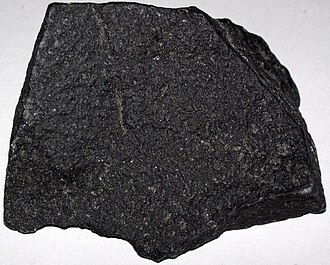
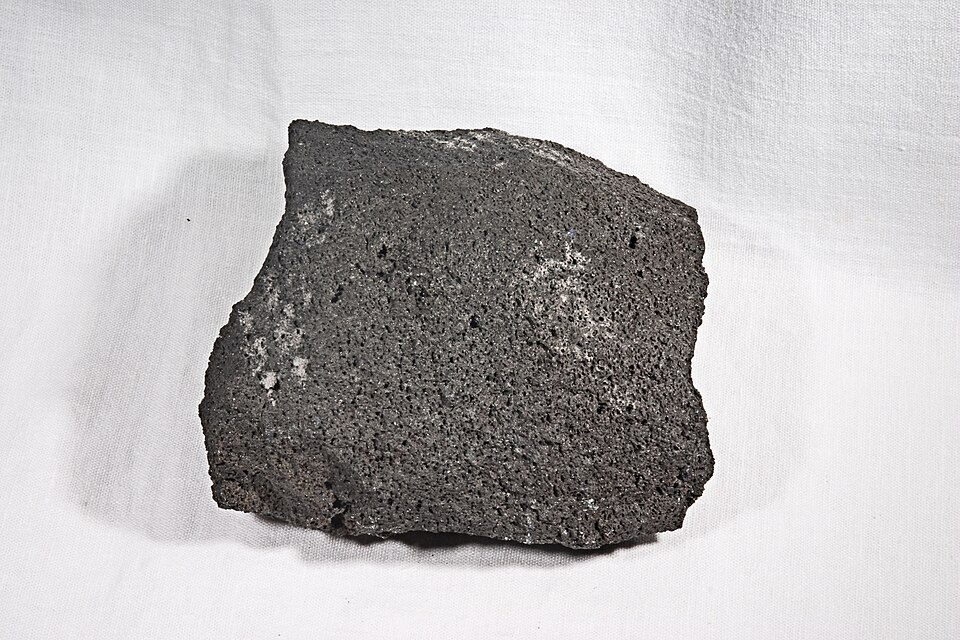
Andesite is a fine-grained, intermediate volcanic rock formed from lava with a silica content between basalt and rhyolite, typically 57 to 63 percent. It is named for the Andes Mountains, where it makes up much of the volcanic arc, and its groundmass is usually too fine to identify individual minerals without magnification. Andesite forms at convergent plate boundaries where oceanic crust melts beneath continental or island arcs.
Andesite properties at a glance
| Type | Igneous Rocks |
|---|---|
| Mohs hardness | 5–6 |
| Luster | Dull groundmass with vitreous phenocrysts |
| Fracture | Conchoidal to uneven |
| Specific gravity | 2.5–2.8 |
| Transparency | Opaque |
| Common colors | Gray, Dark gray, Greenish gray, Brown, Black |
| Rarity | common |
Geology & background
Andesite erupts from stratovolcanoes along subduction zones, where partial melting of the mantle wedge above a descending oceanic plate generates magma that rises and mixes with continental crust before eruption. This intermediate chemistry makes andesite lavas moderately viscous, often producing explosive eruptions and thick lava domes rather than the runny flows typical of basalt. Prominent occurrences include the Andes of South America, the Cascade Range of the Pacific Northwest, and the volcanic arcs ringing the Pacific known collectively as the Ring of Fire.
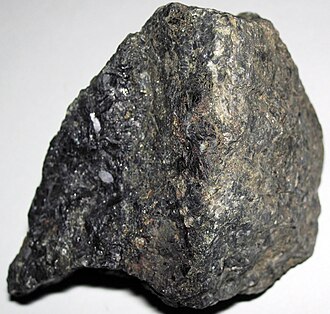
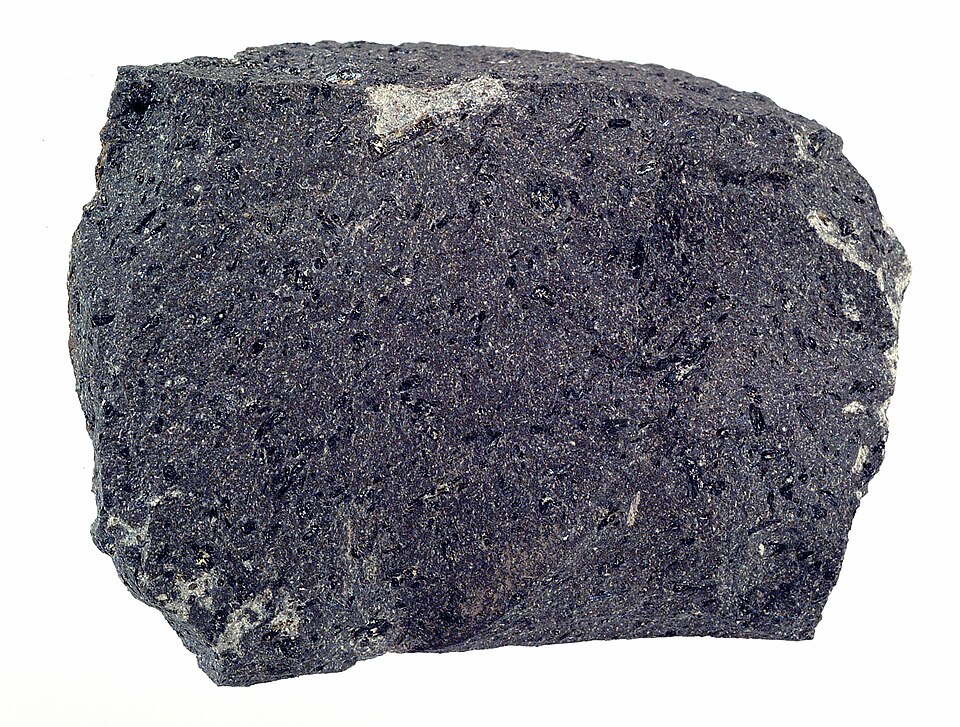
Under a hand lens, andesite typically shows small phenocrysts of plagioclase feldspar, hornblende, or pyroxene set in a gray to greenish-gray groundmass, giving it a porphyritic texture. Rockhounds collecting andesite should note that its appearance varies enormously between flows depending on cooling rate and mineral content, so specimens from the same volcano can look quite different. Because andesite is so common at active margins, well-labeled locality data matters more for collectors than the rock itself, which has modest monetary value but high geologic storytelling appeal.
How to identify Andesite
Andesite is typically gray, greenish-gray, or brownish, with a fine-grained, aphanitic groundmass that may enclose visible white plagioclase or dark hornblende phenocrysts. Its overall hardness runs around 6 on the Mohs scale, reflecting the feldspar and pyroxene it contains, though testing individual mineral grains gives a better read than testing the rock as a whole. Streak is not diagnostic since it is a rock rather than a single mineral. Andesite is frequently confused with basalt, which is darker and more iron-rich, and with fine-grained diorite, which cools underground rather than erupting.
- Compare the specimen's color, luster, crystal habit, grain size, streak, and locality before confirming.
- Use multiple photos when possible, including a fresh surface and a close view of texture.
Full Andesite identification guide: checklist, home tests and look-alikes →
Andesite vs similar stones
Not sure it isn't something else? Side-by-side comparisons with the stones most often confused with Andesite.
Where Andesite is found
Reported from multiple localities worldwide; verify locality against specimen provenance when available.
How much is Andesite worth?
| Entry-level specimen | $1 |
|---|---|
| Typical collector specimen | $10 |
| Premium specimen | $75+ |
Value depends on size, crystal quality, color, locality, rarity, damage, and provenance.
Common uses
- Field identification
- Construction or aggregate when suitable
- Landscape interpretation
- Education
Interesting facts
- Andesite gave its name to an entire category of volcanic rock chemistry, called the andesitic suite, that geologists use to classify continental arc volcanism worldwide.
- Some andesite eruptions build up so much gas pressure that they trigger explosive Plinian eruptions similar to Mount St. Helens in 1980.
- The word andesite was coined in 1836 by German geologist Leopold von Buch after studying rocks collected from Chile's stratovolcanoes.
Care & safety
Handle as a collector specimen until hardness, cleavage, and fracture are verified.
Avoid inhaling dust. Do not cut, grind, or polish unknown specimens without eye protection and a proper respirator.
Andesite FAQ
What is Andesite?
Andesite is a fine-grained, intermediate volcanic rock formed from lava with a silica content between basalt and rhyolite, typically 57 to 63 percent. It is named for the Andes Mountains, where it makes up much of the volcanic arc, and its groundmass is usually too fine to identify individual minerals without magnification. Andesite forms at convergent plate boundaries where oceanic crust melts beneath continental or island arcs.
How much is Andesite worth?
Entry-level Andesite specimens sell for around $1, a typical collector specimen for about $10, and premium pieces for $75 or more. Value depends on size, crystal quality, color, locality, rarity, damage, and provenance.
How hard is Andesite?
Andesite has a Mohs hardness of 5–6. It is about as hard as window glass: a knife barely marks it, while a steel file (Mohs 6.5) will.
What is Andesite used for?
Andesite is used for field identification, construction or aggregate when suitable, landscape interpretation, and education.