Phosphate Minerals · rare
Lazulite
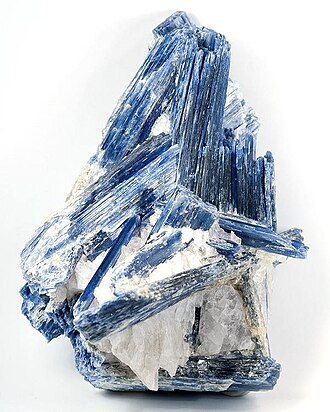
Lazulite is a magnesium aluminum phosphate prized by collectors for its rich azure-blue color. It forms hard pyramidal crystals and granular masses, most often in metamorphic quartzites and pegmatites.
Also known as: Blue spar.
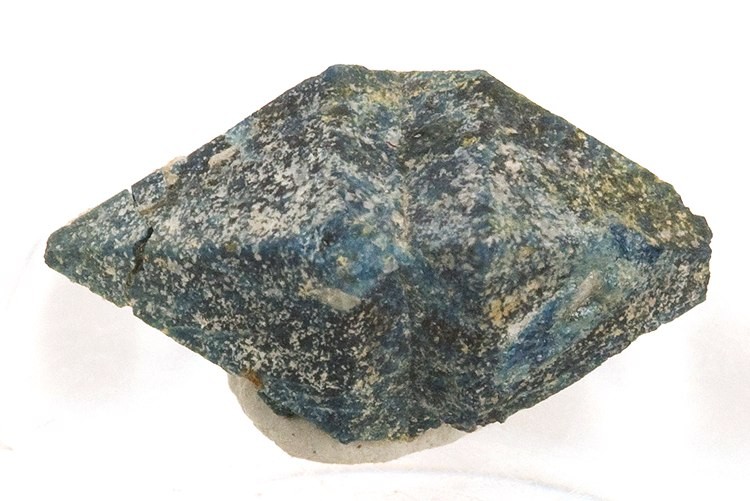
Lazulite properties at a glance
| Type | Phosphate Minerals |
|---|---|
| Chemical formula | MgAl2(PO4)2(OH)2 |
| Mohs hardness | 5.75 |
| Crystal system | monoclinic |
| Luster | vitreous |
| Streak | White |
| Cleavage | Indistinct |
| Fracture | Uneven to splintery |
| Specific gravity | 3.1 |
| Transparency | translucent |
| Common colors | Blue, Sky blue, Azure blue, Bluish green |
| Rarity | rare |
Geology & background
Lazulite forms in aluminum-rich metamorphic rocks, high-grade quartzites, and granite pegmatites, often through metamorphism of phosphate-bearing sediments.
Lazulite has been valued mainly as a striking blue collector mineral, and notable crystal localities such as Werfen in Austria and Graves Mountain in Georgia became well known to mineralogists.
How to identify Lazulite
- Look for a hard, azure to sky-blue mineral forming sharp pyramidal crystals or granular masses.
- Lazulite is notably harder than azurite and can show strong color change with viewing direction.
- Distinguish it from lazurite and sodalite by its greater hardness and its occurrence in quartzite and pegmatite.
Full Lazulite identification guide: checklist, home tests and look-alikes →
Lazulite vs similar stones
Not sure it isn't something else? Side-by-side comparisons with the stones most often confused with Lazulite.
Where Lazulite is found
Lazulite occurs in aluminum-rich metamorphic quartzites and pegmatites, with notable crystal localities in Austria, the United States, Canada, Brazil, and Sweden.
How much is Lazulite worth?
| Entry-level specimen | $15 |
|---|---|
| Typical collector specimen | $90 |
| Premium specimen | $500+ |
Value depends on color intensity, crystal form, size, locality, aesthetics, damage, and provenance.
Common uses
- Collector specimens
- Occasional lapidary cabochons
- Mineralogical study
- Display crystals
Interesting facts
- The name lazulite derives from words meaning blue, shared with lapis lazuli and azurite.
- Lazulite forms a chemical series with the iron-rich mineral scorzalite.
- Its color can appear strikingly different when viewed from different crystal directions.
- Lazulite is the official provincial mineral emblem of Yukon, Canada.
Care & safety
Lazulite is fairly hard but can chip along edges and crystal points if struck.
Avoid inhaling dust. Do not cut, grind, or polish unknown specimens without eye protection and a proper respirator.
Lazulite FAQ
What is Lazulite?
Lazulite is a magnesium aluminum phosphate prized by collectors for its rich azure-blue color. It forms hard pyramidal crystals and granular masses, most often in metamorphic quartzites and pegmatites.
How much is Lazulite worth?
Entry-level Lazulite specimens sell for around $15, a typical collector specimen for about $90, and premium pieces for $500 or more. Value depends on color intensity, crystal form, size, locality, aesthetics, damage, and provenance.
How hard is Lazulite?
Lazulite has a Mohs hardness of 5.75. It is about as hard as window glass: a knife barely marks it, while a steel file (Mohs 6.5) will.
Where is Lazulite found?
Notable sources of Lazulite include Austria, United States, Canada, Brazil, and Sweden. Lazulite forms in aluminum-rich metamorphic rocks, high-grade quartzites, and granite pegmatites, often through metamorphism of phosphate-bearing sediments..
What is Lazulite used for?
Lazulite is used for collector specimens, occasional lapidary cabochons, mineralogical study, and display crystals.