Silicate Minerals · common
Pyrophyllite
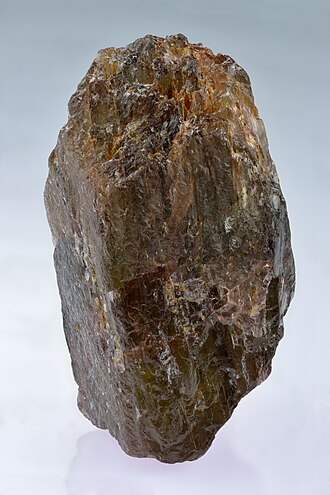
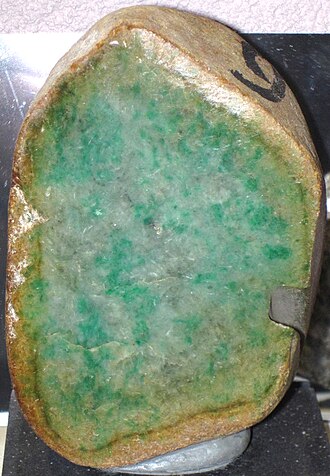
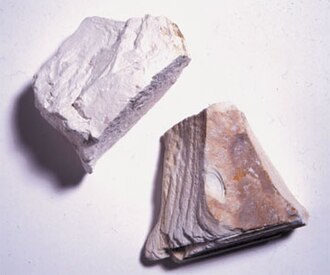
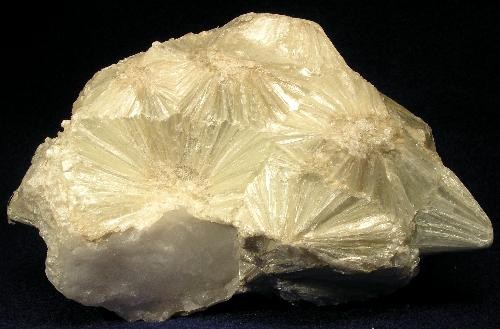
Pyrophyllite is a very soft aluminum silicate that closely resembles talc, with a pearly luster and a greasy feel. It typically forms foliated, fibrous, or radiating aggregates in metamorphic and hydrothermally altered rocks.
Also known as: Agalmatolite, Pencil stone.
Pyrophyllite properties at a glance
| Type | Silicate Minerals |
|---|---|
| Chemical formula | Al2Si4O10(OH)2 |
| Mohs hardness | 1.5 |
| Crystal system | monoclinic |
| Luster | pearly |
| Streak | White |
| Cleavage | Perfect basal |
| Fracture | Uneven |
| Specific gravity | 2.8 |
| Transparency | translucent |
| Common colors | White, Gray, Pale green, Yellow, Brown |
| Rarity | common |
Geology & background
Pyrophyllite forms during low-grade metamorphism and hydrothermal alteration of aluminum-rich rocks, often appearing as foliated or radiating masses in schists and altered volcanic rocks.
Pyrophyllite has long been carved into figurines and ornaments in East Asia and used industrially as a heat-resistant, easily worked material in ceramics and refractory products.
How to identify Pyrophyllite
- Look for a very soft, pale mineral with a pearly luster and a greasy, slippery feel.
- Pyrophyllite forms foliated and radiating aggregates and can be scratched by a fingernail.
- It is nearly identical to talc, so locality and associated minerals help distinguish the two.
Full Pyrophyllite identification guide: checklist, home tests and look-alikes →
Pyrophyllite vs similar stones
Not sure it isn't something else? Side-by-side comparisons with the stones most often confused with Pyrophyllite.
Where Pyrophyllite is found
Pyrophyllite occurs in metamorphic and hydrothermally altered rocks worldwide, with notable specimen localities in the United States, Brazil, South Korea, China, Japan, and South Africa.
How much is Pyrophyllite worth?
| Entry-level specimen | $5 |
|---|---|
| Typical collector specimen | $30 |
| Premium specimen | $150+ |
Value depends on habit, color, locality, associated minerals, and overall condition.
Common uses
- Carving and ornamental stone
- Ceramics and refractories
- Filler in paints and rubber
- Insecticide carrier
- Collector specimens
Interesting facts
- Pyrophyllite is so soft it can be scratched with a fingernail and feels slippery like talc.
- Its name comes from Greek words for fire and leaf, since it exfoliates when strongly heated.
- Compact pyrophyllite, often sold as agalmatolite, is widely used as a carving stone.
- It is nearly identical in appearance to talc and the two are easily confused.
Care & safety
Pyrophyllite is extremely soft and easily scratched, dented, or scarred by ordinary handling.
Avoid inhaling dust. Do not cut, grind, or polish unknown specimens without eye protection and a proper respirator.
Pyrophyllite FAQ
What is Pyrophyllite?
Pyrophyllite is a very soft aluminum silicate that closely resembles talc, with a pearly luster and a greasy feel. It typically forms foliated, fibrous, or radiating aggregates in metamorphic and hydrothermally altered rocks.
How much is Pyrophyllite worth?
Entry-level Pyrophyllite specimens sell for around $5, a typical collector specimen for about $30, and premium pieces for $150 or more. Value depends on habit, color, locality, associated minerals, and overall condition.
How hard is Pyrophyllite?
Pyrophyllite has a Mohs hardness of 1.5. A fingernail (Mohs 2.5) scratches it easily.
Where is Pyrophyllite found?
Notable sources of Pyrophyllite include United States, Brazil, South Korea, China, Japan, and South Africa. Pyrophyllite forms during low-grade metamorphism and hydrothermal alteration of aluminum-rich rocks, often appearing as foliated or radiating masses in schists and altered volcanic rocks..
What is Pyrophyllite used for?
Pyrophyllite is used for carving and ornamental stone, ceramics and refractories, filler in paints and rubber, insecticide carrier, and collector specimens.