Silicate Minerals · common
Schorl
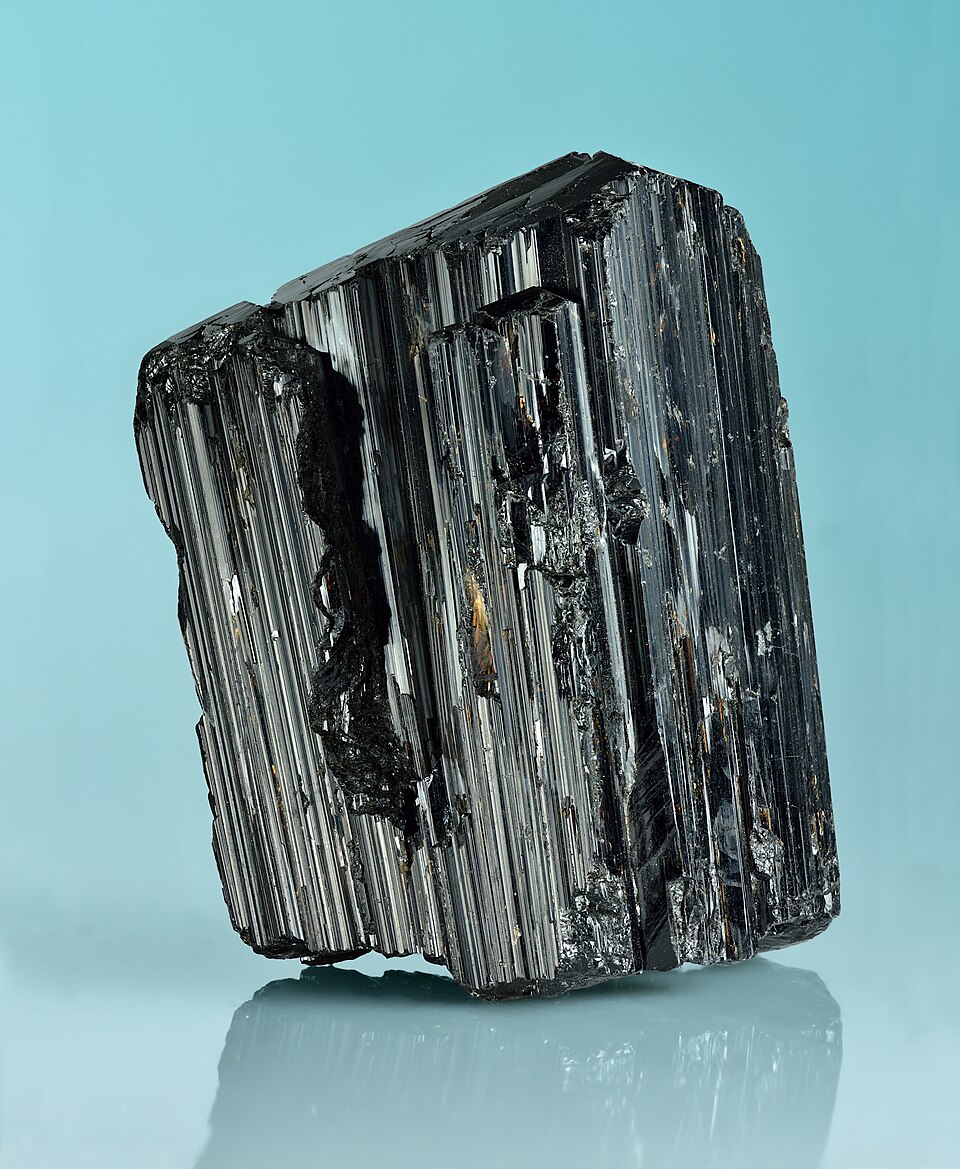
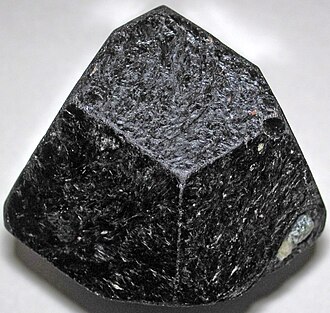
Schorl is the common black, iron-rich member of the tourmaline group. It forms striated prismatic crystals with a rounded triangular cross-section and is by far the most abundant tourmaline species in nature.
Also known as: Black tourmaline, Iron tourmaline.
Schorl properties at a glance
| Type | Silicate Minerals |
|---|---|
| Chemical formula | NaFe3Al6(BO3)3Si6O18(OH)4 |
| Mohs hardness | 7 |
| Crystal system | trigonal |
| Luster | vitreous |
| Streak | White to grayish |
| Cleavage | None |
| Fracture | Conchoidal to uneven |
| Specific gravity | 3.1 |
| Transparency | opaque |
| Common colors | Black, Bluish black, Brownish black |
| Rarity | common |
Geology & background
Schorl crystallizes mainly in granites and granite pegmatites and in associated metamorphic rocks, where boron-rich fluids allow this iron tourmaline to grow.
Schorl has been known to miners for centuries under traditional German names. Its electrical properties were noticed historically when crystals attracted ash near a fire, helping early scientists study pyroelectricity.
How to identify Schorl
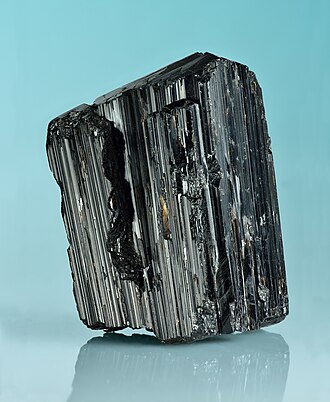
- Look for black prismatic crystals with strong lengthwise striations and a rounded triangular cross-section.
- Schorl has no cleavage and a hardness of about seven, helping separate it from softer black minerals.
- Crystals may show a domed or wedge-shaped termination typical of tourmaline.
Full Schorl identification guide: checklist, home tests and look-alikes →
Schorl photos
Schorl vs similar stones
Not sure it isn't something else? Side-by-side comparisons with the stones most often confused with Schorl.
Where Schorl is found
Schorl occurs in granites and pegmatites worldwide, with notable specimen localities in Brazil, the United States, Namibia, the Czech Republic, Pakistan, and Madagascar.
How much is Schorl worth?
| Entry-level specimen | $5 |
|---|---|
| Typical collector specimen | $50 |
| Premium specimen | $400+ |
Value depends on crystal size, sharpness, luster, terminations, locality, and aesthetic association with other minerals.
Common uses
- Collector specimens
- Tourmaline group reference material
- Educational mineralogy
- Occasional carved or ornamental pieces
Interesting facts
- Schorl makes up the large majority of all tourmaline found in nature.
- Tourmaline crystals like schorl can become electrically charged when heated or compressed.
- Its prismatic crystals show heavy lengthwise striations and a rounded triangular cross-section.
- The name schorl is an old mining term that predates the word tourmaline.
Care & safety
Schorl is hard and durable but slender crystals can be brittle and may chip on sharp impact.
Avoid inhaling dust. Do not cut, grind, or polish unknown specimens without eye protection and a proper respirator.
Schorl FAQ
What is Schorl?
Schorl is the common black, iron-rich member of the tourmaline group. It forms striated prismatic crystals with a rounded triangular cross-section and is by far the most abundant tourmaline species in nature.
How much is Schorl worth?
Entry-level Schorl specimens sell for around $5, a typical collector specimen for about $50, and premium pieces for $400 or more. Value depends on crystal size, sharpness, luster, terminations, locality, and aesthetic association with other minerals.
How hard is Schorl?
Schorl has a Mohs hardness of 7. It scratches glass and a steel knife and cannot be scratched by a steel file.
Where is Schorl found?
Notable sources of Schorl include Brazil, United States, Namibia, Czech Republic, Pakistan, and Madagascar. Schorl crystallizes mainly in granites and granite pegmatites and in associated metamorphic rocks, where boron-rich fluids allow this iron tourmaline to grow..
What is Schorl used for?
Schorl is used for collector specimens, tourmaline group reference material, educational mineralogy, and occasional carved or ornamental pieces.