Carbonaceous Rocks · uncommon
Shungite
Shungite is a black, carbon-rich rock found mainly in the Karelia region of northwestern Russia. It ranges from dull carbon-bearing rock to a lustrous high-carbon variety and is notable for its very old Precambrian age.
Also known as: Schungite.
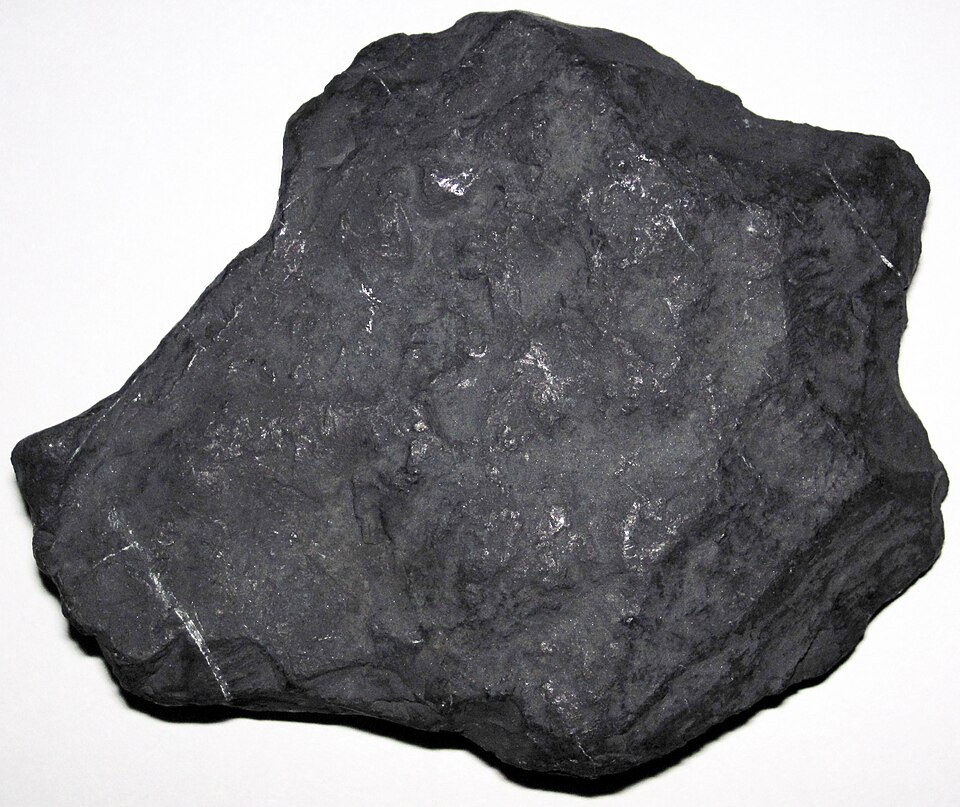
Shungite properties at a glance
| Type | Carbonaceous Rocks |
|---|---|
| Mohs hardness | 3.5 |
| Luster | submetallic |
| Streak | Black |
| Fracture | Conchoidal to uneven |
| Specific gravity | 1.9 |
| Transparency | opaque |
| Common colors | Black, Dark gray |
| Rarity | uncommon |
Geology & background
Shungite formed from ancient organic-rich sediments that were buried, compacted, and metamorphosed, concentrating carbon into a black, lustrous rock.
Shungite has been used regionally in Russia for centuries, including as a pigment and at a historic spa established in the early eighteenth century. It later drew scientific attention for its unusual carbon chemistry.
How to identify Shungite
- Look for a black color, light weight for its size, and a dull to submetallic luster.
- Shungite can leave a black mark and feels lightweight compared with most ordinary rocks.
- Locality is a strong clue, as authentic shungite comes almost entirely from Russian Karelia.
Full Shungite identification guide: checklist, home tests and look-alikes →
Shungite vs similar stones
Not sure it isn't something else? Side-by-side comparisons with the stones most often confused with Shungite.
Where Shungite is found
Shungite occurs almost exclusively in the Karelia region of northwestern Russia, where ancient carbon-rich sediments were preserved and concentrated.
How much is Shungite worth?
| Entry-level specimen | $5 |
|---|---|
| Typical collector specimen | $30 |
| Premium specimen | $150+ |
Value depends on carbon grade, luster, size, finish, and whether the piece is carved or polished.
Common uses
- Water filtration media
- Collector and decorative specimens
- Carved objects and ornaments
- Scientific study of carbon
- Pigment in earlier times
Interesting facts
- Shungite is roughly two billion years old, making it one of the oldest carbon-rich rocks on Earth.
- It is named after the village of Shunga in Russian Karelia, where it was first described.
- High-grade shungite can contain a very large proportion of carbon by weight.
- Researchers have reported natural fullerene-type carbon structures within some shungite.
Care & safety
Shungite is relatively soft and can chip, crumble, or leave black residue on surfaces.
Avoid inhaling dust. Do not cut, grind, or polish unknown specimens without eye protection and a proper respirator.
Shungite FAQ
What is Shungite?
Shungite is a black, carbon-rich rock found mainly in the Karelia region of northwestern Russia. It ranges from dull carbon-bearing rock to a lustrous high-carbon variety and is notable for its very old Precambrian age.
How much is Shungite worth?
Entry-level Shungite specimens sell for around $5, a typical collector specimen for about $30, and premium pieces for $150 or more. Value depends on carbon grade, luster, size, finish, and whether the piece is carved or polished.
How hard is Shungite?
Shungite has a Mohs hardness of 3.5. A steel knife blade (Mohs 5.5) scratches it; a copper coin does not.
Where is Shungite found?
Notable sources of Shungite include Russia. Shungite formed from ancient organic-rich sediments that were buried, compacted, and metamorphosed, concentrating carbon into a black, lustrous rock..
What is Shungite used for?
Shungite is used for water filtration media, collector and decorative specimens, carved objects and ornaments, scientific study of carbon, and pigment in earlier times.