Silicate Minerals · common
Stilbite
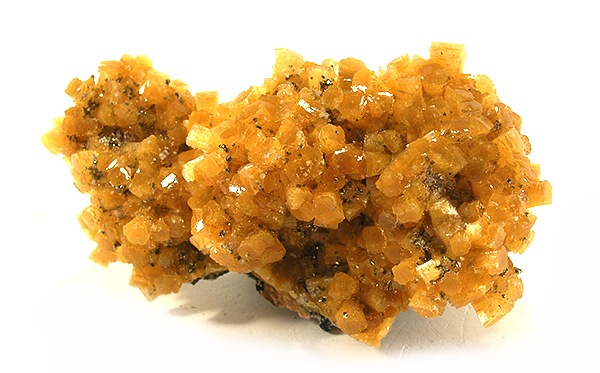
Stilbite is a calcium-rich zeolite mineral known for its distinctive sheaf-like or bowtie-shaped crystal aggregates. It commonly occurs as white to salmon-pink crystals lining cavities in basalt, often with other zeolites.
Also known as: Stilbite-Ca, Desmine.
Stilbite properties at a glance
| Type | Silicate Minerals |
|---|---|
| Chemical formula | NaCa4(Si27Al9)O72-28H2O |
| Mohs hardness | 3.75 |
| Crystal system | monoclinic |
| Luster | vitreous |
| Streak | White |
| Cleavage | Perfect in one direction |
| Fracture | Uneven |
| Specific gravity | 2.2 |
| Transparency | transparent |
| Common colors | White, Pink, Salmon, Yellow, Brown |
| Rarity | common |
Geology & background
Stilbite is a zeolite that crystallizes in cavities and fractures of basaltic volcanic rocks, as well as in some hydrothermal veins and metamorphic settings.
Stilbite was among the first zeolites described in early mineralogy, and its abundance in volcanic rocks made it an important reference mineral in the study of zeolite formation.
How to identify Stilbite
- Look for sheaf-like or bowtie-shaped crystal bundles with a pearly luster on cleavage surfaces.
- Low hardness near 3.5 to 4, low density, and occurrence in basalt cavities are strong clues.
- White to salmon-pink color with other zeolites such as apophyllite supports the identification.
Full Stilbite identification guide: checklist, home tests and look-alikes →
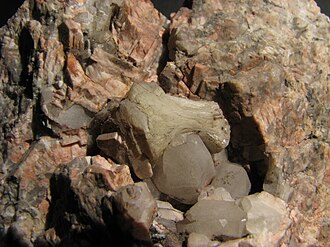
Stilbite photos
Stilbite vs similar stones
Not sure it isn't something else? Side-by-side comparisons with the stones most often confused with Stilbite.
Where Stilbite is found
Stilbite occurs in cavities of basaltic volcanic rocks, with notable specimen localities in India, Iceland, the United States, Scotland, Brazil, and Italy.
How much is Stilbite worth?
| Entry-level specimen | $5 |
|---|---|
| Typical collector specimen | $40 |
| Premium specimen | $250+ |
Value depends on crystal size, color, sharpness of sheaf groups, associated minerals, and locality.
Common uses
- Collector and display specimens
- Zeolite group reference mineral
- Mineralogy teaching material
Interesting facts
- The name comes from a Greek word for luster, describing its bright pearly sheen on cleavage surfaces.
- Stilbite crystals frequently group into wheat-sheaf or bowtie bundles that are instantly recognizable.
- It is a hydrated zeolite and slowly loses water when heated, a property shared across the zeolite group.
- The basalt traps of India have produced famous large salmon-colored stilbite specimens.
Care & safety
Stilbite is soft and somewhat fragile, so crystal sprays chip and abrade easily.
Avoid inhaling dust. Do not cut, grind, or polish unknown specimens without eye protection and a proper respirator.
Stilbite FAQ
What is Stilbite?
Stilbite is a calcium-rich zeolite mineral known for its distinctive sheaf-like or bowtie-shaped crystal aggregates. It commonly occurs as white to salmon-pink crystals lining cavities in basalt, often with other zeolites.
How much is Stilbite worth?
Entry-level Stilbite specimens sell for around $5, a typical collector specimen for about $40, and premium pieces for $250 or more. Value depends on crystal size, color, sharpness of sheaf groups, associated minerals, and locality.
How hard is Stilbite?
Stilbite has a Mohs hardness of 3.75. A steel knife blade (Mohs 5.5) scratches it; a copper coin does not.
Where is Stilbite found?
Notable sources of Stilbite include India, Iceland, United States, Scotland, Brazil, and Italy. Stilbite is a zeolite that crystallizes in cavities and fractures of basaltic volcanic rocks, as well as in some hydrothermal veins and metamorphic settings..
What is Stilbite used for?
Stilbite is used for collector and display specimens, zeolite group reference mineral, and mineralogy teaching material.