Halide Minerals · uncommon
Sylvite
Sylvite is potassium chloride, a soft evaporite mineral closely resembling halite. It forms cubic crystals and granular masses in salt deposits and is the principal ore mineral for potassium used in fertilizer.
Also known as: Sylvine, Potash.
Sylvite properties at a glance
| Type | Halide Minerals |
|---|---|
| Chemical formula | KCl |
| Mohs hardness | 2 |
| Crystal system | cubic |
| Luster | vitreous |
| Streak | White |
| Cleavage | Perfect cubic |
| Fracture | Uneven |
| Specific gravity | 1.99 |
| Transparency | transparent |
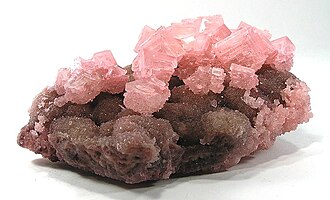
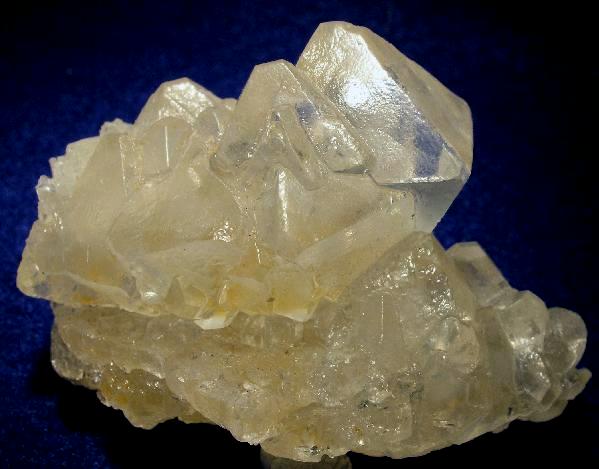
| Common colors | Colorless, White, Red, Pink, Bluish |
| Rarity | uncommon |
Geology & background
Sylvite is potassium chloride that forms by evaporation of saline waters, crystallizing in marine evaporite beds along with halite and other salts.
Sylvite was named after the chemist Franciscus Sylvius, and its mining transformed agriculture by providing an abundant potassium source for fertilizers in the modern era.
How to identify Sylvite
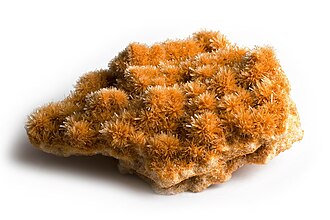
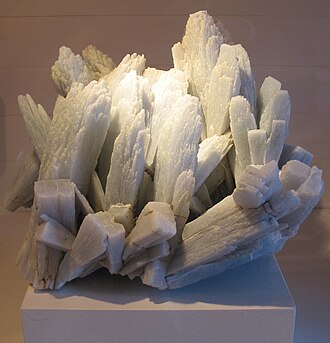
- Look for cubic crystals or granular masses with perfect cubic cleavage and low hardness near 2.
- Sylvite tastes distinctly bitter, which separates it from salty-tasting halite.
- Very low density and red or pink coloring from hematite inclusions are additional clues.
Full Sylvite identification guide: checklist, home tests and look-alikes →
Sylvite photos
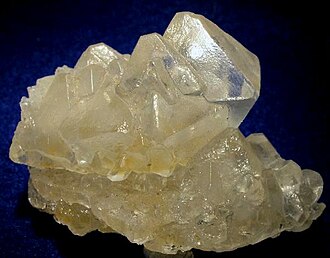
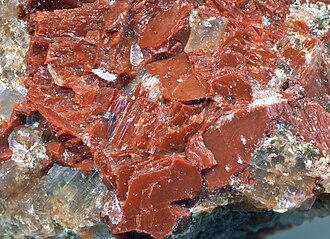
Sylvite vs similar stones
Not sure it isn't something else? Side-by-side comparisons with the stones most often confused with Sylvite.
Where Sylvite is found
Sylvite occurs in marine evaporite deposits, with notable specimen and ore localities in Canada, Germany, the United States, Russia, Poland, and Italy.
How much is Sylvite worth?
| Entry-level specimen | $5 |
|---|---|
| Typical collector specimen | $30 |
| Premium specimen | $180+ |
Value depends on crystal quality, color, transparency, locality, and condition of the specimen.
Common uses
- Potassium ore for fertilizer
- Source of potassium chemicals
- Optical and laboratory material
- Collector specimens
Interesting facts
- Sylvite is the main natural source of potassium for fertilizers, often marketed as potash.
- It has a strongly bitter taste, unlike the salty taste of common halite.
- Red and pink colors are usually caused by tiny inclusions of hematite.
- Sylvite and halite look similar, but sylvite is slightly softer and tastes bitter rather than salty.
Care & safety
Sylvite is soft, brittle, and water soluble, so specimens are fragile and sensitive to humidity.
Avoid inhaling dust. Do not cut, grind, or polish unknown specimens without eye protection and a proper respirator.
Water soluble. Sylvite dissolves readily in water and absorbs moisture, so do not wash specimens.
Sylvite FAQ
What is Sylvite?
Sylvite is potassium chloride, a soft evaporite mineral closely resembling halite. It forms cubic crystals and granular masses in salt deposits and is the principal ore mineral for potassium used in fertilizer.
How much is Sylvite worth?
Entry-level Sylvite specimens sell for around $5, a typical collector specimen for about $30, and premium pieces for $180 or more. Value depends on crystal quality, color, transparency, locality, and condition of the specimen.
How hard is Sylvite?
Sylvite has a Mohs hardness of 2. A fingernail (Mohs 2.5) scratches it easily.
Where is Sylvite found?
Notable sources of Sylvite include Canada, Germany, United States, Russia, Poland, and Italy. Sylvite is potassium chloride that forms by evaporation of saline waters, crystallizing in marine evaporite beds along with halite and other salts..
What is Sylvite used for?
Sylvite is used for potassium ore for fertilizer, source of potassium chemicals, optical and laboratory material, and collector specimens.