Silicate Minerals · common
Tremolite
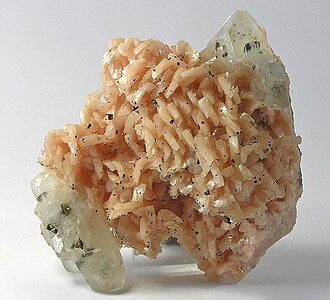
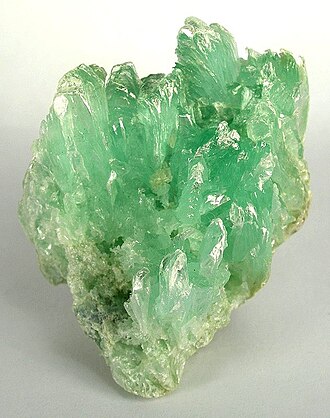
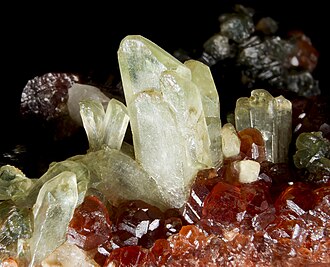
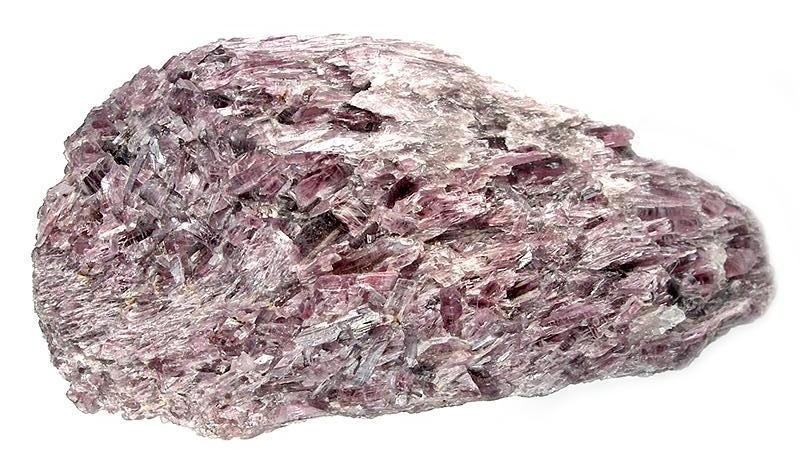
Tremolite is a calcium magnesium amphibole that occurs as bladed, columnar, or fibrous crystals, typically white to gray but ranging to green or pink. It is a common metamorphic mineral and the magnesium end-member of the tremolite-actinolite series.
Also known as: Calcium magnesium amphibole, Hexagonalite.
Tremolite properties at a glance
| Type | Silicate Minerals |
|---|---|
| Chemical formula | Ca2Mg5Si8O22(OH)2 |
| Mohs hardness | 5.5 |
| Crystal system | monoclinic |
| Luster | vitreous |
| Streak | White |
| Cleavage | Perfect |
| Fracture | Splintery |
| Specific gravity | 3 |
| Transparency | translucent |
| Common colors | White, Gray, Green, Pink |
| Rarity | common |
Geology & background
Tremolite is a metamorphic amphibole that forms during the regional or contact metamorphism of dolomitic limestones and magnesium-rich rocks, often crystallizing as bladed or fibrous aggregates.
Tremolite was named in 1789 and has been studied as a key metamorphic indicator mineral. Its fibrous form contributed to the long history of asbestos use, which later prompted health regulation.
How to identify Tremolite
- Look for bladed, columnar, or fibrous crystals with two amphibole cleavages meeting near 56 and 124 degrees.
- White to gray color and a splintery feel help distinguish tremolite from pyroxenes.
- Association with metamorphosed dolomitic limestone supports identification.
Full Tremolite identification guide: checklist, home tests and look-alikes →
Tremolite vs similar stones
Not sure it isn't something else? Side-by-side comparisons with the stones most often confused with Tremolite.
Where Tremolite is found
Tremolite occurs in metamorphosed dolomitic rocks worldwide, with notable specimen localities in the United States, Italy, Switzerland, Canada, Tanzania, and Myanmar.
How much is Tremolite worth?
| Entry-level specimen | $8 |
|---|---|
| Typical collector specimen | $40 |
| Premium specimen | $250+ |
Value depends on crystal form, color, transparency, locality, damage, and overall aesthetics.
Common uses
- Collector specimens
- Educational mineralogy
- Component of nephrite jade carving stone
- Petrologic study
Interesting facts
- Tremolite is the magnesium-rich end member of the tremolite-actinolite amphibole series.
- Some fibrous tremolite occurs as asbestos, one of the regulated forms of asbestos minerals.
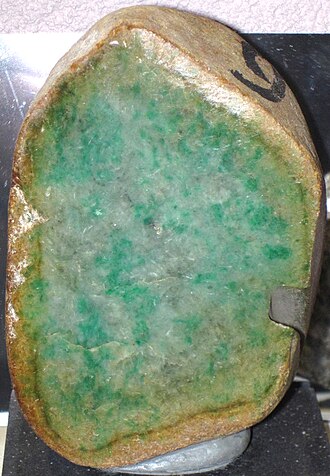
- The translucent green variety nephrite jade is largely composed of fine intergrown tremolite and actinolite.
- The mineral was named after the Tremola Valley in Switzerland.
Care & safety
Tremolite is moderately hard but has perfect cleavage, and fibrous specimens are fragile.
Avoid inhaling dust. Do not cut, grind, or polish unknown specimens without eye protection and a proper respirator.
Possible asbestiform fibers. Some tremolite occurs as asbestos; handle fibrous specimens minimally, keep them intact, and never crush or inhale fibers.
Tremolite FAQ
What is Tremolite?
Tremolite is a calcium magnesium amphibole that occurs as bladed, columnar, or fibrous crystals, typically white to gray but ranging to green or pink. It is a common metamorphic mineral and the magnesium end-member of the tremolite-actinolite series.
How much is Tremolite worth?
Entry-level Tremolite specimens sell for around $8, a typical collector specimen for about $40, and premium pieces for $250 or more. Value depends on crystal form, color, transparency, locality, damage, and overall aesthetics.
How hard is Tremolite?
Tremolite has a Mohs hardness of 5.5. It is about as hard as window glass: a knife barely marks it, while a steel file (Mohs 6.5) will.
Where is Tremolite found?
Notable sources of Tremolite include United States, Italy, Switzerland, Canada, Tanzania, and Myanmar. Tremolite is a metamorphic amphibole that forms during the regional or contact metamorphism of dolomitic limestones and magnesium-rich rocks, often crystallizing as bladed or fibrous aggregates..
What is Tremolite used for?
Tremolite is used for collector specimens, educational mineralogy, component of nephrite jade carving stone, and petrologic study.