Minerals · common
Arsenopyrite
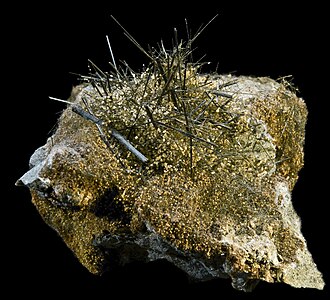
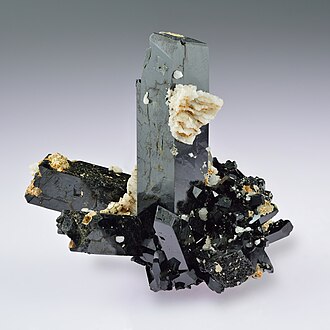
Arsenopyrite is an iron arsenic sulfide, FeAsS, and the most common arsenic-bearing mineral in Earth's crust. It crystallizes in the monoclinic system despite forming crystals that often look nearly orthorhombic, and it stands as the primary ore of arsenic. Its silvery, metallic luster and tendency to tarnish to a dull gray or iridescent surface distinguish it at a glance from ordinary pyrite.
Arsenopyrite properties at a glance
| Type | Minerals |
|---|---|
| Chemical formula | FeAsS |
| Mohs hardness | 5.5–6 |
| Crystal system | Monoclinic |
| Luster | Metallic |
| Streak | Dark grayish black |
| Cleavage | Distinct on {110} |
| Fracture | Uneven to subconchoidal, brittle |
| Specific gravity | 6.0–6.2 |
| Transparency | Opaque |
| Common colors | Silver-white, Steel-gray, Tarnished yellowish/iridescent |
| Rarity | common |
Geology & background
Arsenopyrite typically forms in hydrothermal veins associated with tin and tungsten deposits, as well as in contact metamorphic zones and pegmatites, where it crystallizes from arsenic- and sulfur-bearing fluids at moderate to high temperatures. It commonly occurs alongside cassiterite, wolframite, quartz, and pyrite in mineralized veins, making it a useful pathfinder mineral for prospectors searching for tin and gold. Notable localities include Panasqueira in Portugal, Freiberg in Germany, and numerous vein deposits across Cornwall, England, all historically mined for tin or associated gold.
When heated or struck, arsenopyrite can release a garlicky odor from arsenic compounds, a classic field clue that should only be tested with great caution and never by deliberately inhaling fumes. Specimens should be stored away from moisture, since prolonged exposure to humid air can slowly oxidize the surface, so collectors typically wash their hands after handling and avoid crushing samples indoors. Well-formed prismatic crystals with sharp striations are the most sought-after specimens among sulfide collectors.
How to identify Arsenopyrite
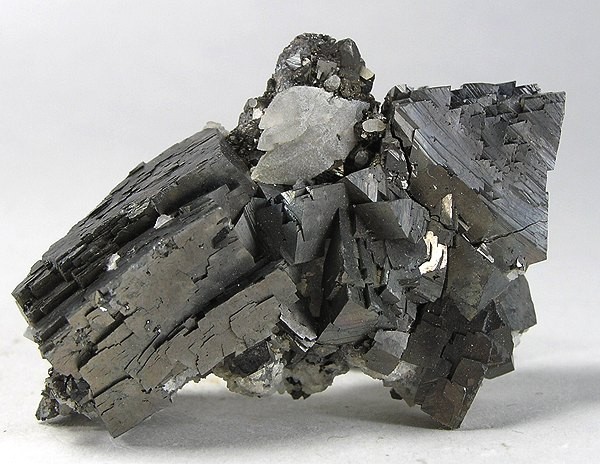
Arsenopyrite shows a bright silvery-white to steel-gray color with a metallic luster that can tarnish to a dull, sometimes iridescent surface. Its streak is dark gray to black, hardness falls around 5.5 to 6, and it lacks a strong cleavage, instead breaking with an uneven fracture. Crystals are typically elongated, striated prisms with a diamond-shaped cross section. It is commonly confused with pyrite and marcasite, but arsenopyrite is denser, may give off a garlic-like odor when struck, and its crystal shape is more elongated than pyrite's cubes.
- Compare the specimen's color, luster, crystal habit, grain size, streak, and locality before confirming.
- Use multiple photos when possible, including a fresh surface and a close view of texture.
Full Arsenopyrite identification guide: checklist, home tests and look-alikes →
Arsenopyrite vs similar stones
Not sure it isn't something else? Side-by-side comparisons with the stones most often confused with Arsenopyrite.
Where Arsenopyrite is found
Reported from multiple localities worldwide; verify locality against specimen provenance when available.
How much is Arsenopyrite worth?
| Entry-level specimen | $2 |
|---|---|
| Typical collector specimen | $20 |
| Premium specimen | $150+ |
Value depends on size, crystal quality, color, locality, rarity, damage, and provenance.
Common uses
- Collector specimens
- Education
- Field identification
- Industrial or lapidary use when suitable
Interesting facts
- Striking arsenopyrite with a hammer can release a faint garlic-like smell, caused by arsenic compounds volatilizing under the heat of impact.
- Arsenopyrite is the world's leading natural source of arsenic, historically refined for pesticides, wood preservatives, and semiconductor doping.
- Gold often hides in microscopic form within arsenopyrite crystals, making it an important indicator mineral for gold prospectors in orogenic deposits.
Care & safety
Handle as a collector specimen until hardness, cleavage, and fracture are verified.
Avoid inhaling dust. Do not cut, grind, or polish unknown specimens without eye protection and a proper respirator.
Arsenopyrite FAQ
What is Arsenopyrite?
Arsenopyrite is an iron arsenic sulfide, FeAsS, and the most common arsenic-bearing mineral in Earth's crust. It crystallizes in the monoclinic system despite forming crystals that often look nearly orthorhombic, and it stands as the primary ore of arsenic. Its silvery, metallic luster and tendency to tarnish to a dull gray or iridescent surface distinguish it at a glance from ordinary pyrite.
How much is Arsenopyrite worth?
Entry-level Arsenopyrite specimens sell for around $2, a typical collector specimen for about $20, and premium pieces for $150 or more. Value depends on size, crystal quality, color, locality, rarity, damage, and provenance.
How hard is Arsenopyrite?
Arsenopyrite has a Mohs hardness of 5.5–6. It is about as hard as window glass: a knife barely marks it, while a steel file (Mohs 6.5) will.
What is Arsenopyrite used for?
Arsenopyrite is used for collector specimens, education, field identification, and industrial or lapidary use when suitable.