Minerals · common
Baryte
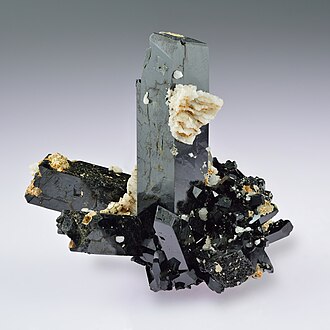
Baryte, also spelled barite, is barium sulfate, BaSO4, best known among minerals for its unusually high density despite being non-metallic in appearance. It commonly forms tabular crystals and rosette clusters in hydrothermal veins and sedimentary rock cavities, and its name comes from the Greek barys, meaning heavy. Baryte serves as the primary industrial ore of barium and is used worldwide as a weighting agent in drilling fluids.
Also known as: Barite.
Baryte properties at a glance
| Type | Minerals |
|---|---|
| Chemical formula | BaSO4 |
| Mohs hardness | 3–3.5 |
| Crystal system | Orthorhombic |
| Luster | Vitreous, pearly on cleavage |
| Streak | White |
| Cleavage | Perfect basal and prismatic (three directions) |
| Fracture | Uneven to splintery |
| Specific gravity | 4.3–4.6 |
| Transparency | Transparent to opaque |
| Common colors | Colorless, White, Yellow, Blue, Brown, Red |
| Rarity | common |
Geology & background
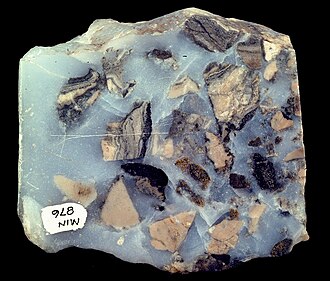
Baryte precipitates from hydrothermal fluids in vein deposits, forms as a cement or nodules in sedimentary rocks, and occurs as a gangue mineral alongside sulfide ores of lead, zinc, and silver. Notable localities include the Cave-in-Rock district of Illinois, famous for sky-blue crystals; the Elmwood Mine in Tennessee for large golden crystals; Frizington in England's Cumbria region; and Morocco, which produces striking crested and rosette specimens known as desert roses when combined with sand grains. Baryte also forms concretions in shale and limestone that weather out as distinctive rounded or radiating nodules.
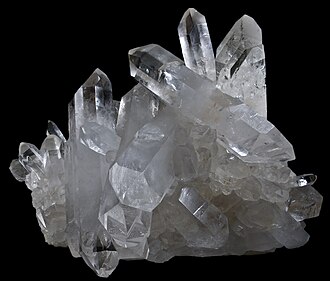
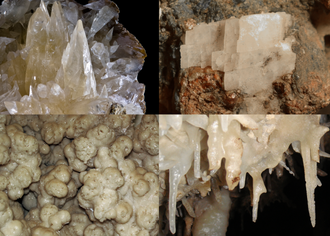
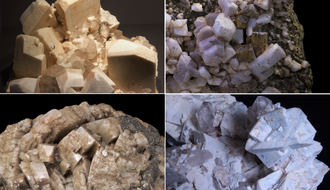
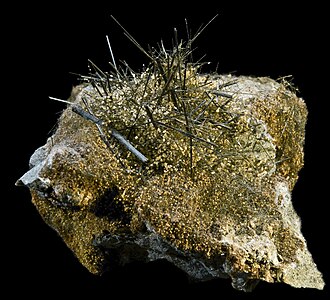
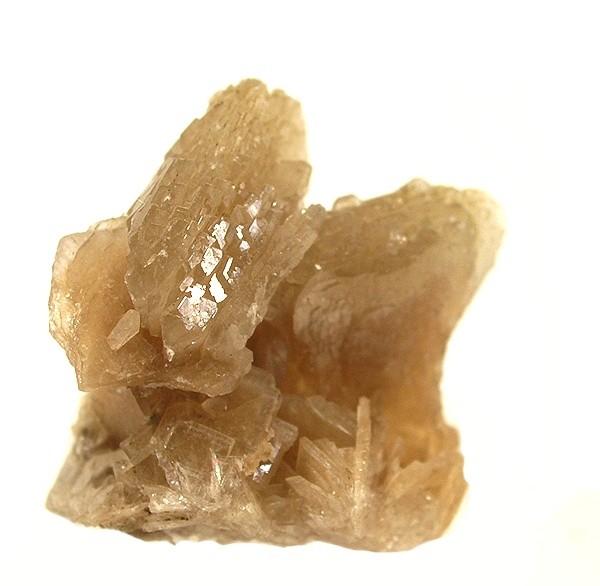
Rockhounds appreciate baryte for the sheer diversity of its crystal forms, from thin bladed rosettes to blocky tabular crystals and even fibrous or concretionary masses, so a single mineral species can anchor several very different-looking specimens in a collection. Because baryte is soft and can chip along its cleavage, pieces are best stored padded and away from harder minerals, and collectors often seek Cave-in-Rock's saturated blue crystals or Moroccan desert roses as signature examples of the species.
How to identify Baryte
Baryte is typically colorless, white, pale blue, yellow, or brown, with a vitreous to pearly luster and a white streak. Its defining feature is a high specific gravity, around 4.5, which makes it feel noticeably heavier than most non-metallic minerals of similar size, and it has a hardness of 3 to 3.5 with perfect cleavage in two directions producing tabular crystals. It is most often confused with celestine and anglesite, but baryte's greater weight relative to celestine and its lack of celestine's typically more delicate blue tint help distinguish it, while a blowpipe or specific-gravity test separates it from calcite.
- Compare the specimen's color, luster, crystal habit, grain size, streak, and locality before confirming.
- Use multiple photos when possible, including a fresh surface and a close view of texture.
Full Baryte identification guide: checklist, home tests and look-alikes →
Baryte vs similar stones
Not sure it isn't something else? Side-by-side comparisons with the stones most often confused with Baryte.
Where Baryte is found
Reported from multiple localities worldwide; verify locality against specimen provenance when available.
How much is Baryte worth?
| Entry-level specimen | $2 |
|---|---|
| Typical collector specimen | $20 |
| Premium specimen | $150+ |
Value depends on size, crystal quality, color, locality, rarity, damage, and provenance.
Common uses
- Collector specimens
- Education
- Field identification
- Industrial or lapidary use when suitable
Interesting facts
- Baryte is the primary source of barium sulfate used as the contrast medium patients drink before abdominal X-rays and CT scans.
- Ground baryte is added to drilling mud on oil and gas rigs because its high density helps control downhole pressure.
- Moroccan desert rose formations combine baryte or gypsum crystals with wind-blown sand to create fan-shaped clusters resembling flower petals.
Care & safety
Handle as a collector specimen until hardness, cleavage, and fracture are verified.
Avoid inhaling dust. Do not cut, grind, or polish unknown specimens without eye protection and a proper respirator.
Baryte FAQ
What is Baryte?
Baryte, also spelled barite, is barium sulfate, BaSO4, best known among minerals for its unusually high density despite being non-metallic in appearance. It commonly forms tabular crystals and rosette clusters in hydrothermal veins and sedimentary rock cavities, and its name comes from the Greek barys, meaning heavy. Baryte serves as the primary industrial ore of barium and is used worldwide as a weighting agent in drilling fluids.
How much is Baryte worth?
Entry-level Baryte specimens sell for around $2, a typical collector specimen for about $20, and premium pieces for $150 or more. Value depends on size, crystal quality, color, locality, rarity, damage, and provenance.
How hard is Baryte?
Baryte has a Mohs hardness of 3–3.5. A copper coin (Mohs 3.5) scratches it, but a fingernail does not.
What is Baryte used for?
Baryte is used for collector specimens, education, field identification, and industrial or lapidary use when suitable.