Minerals · common
Cerussite
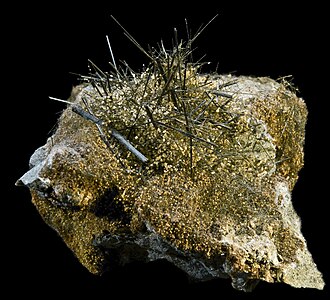
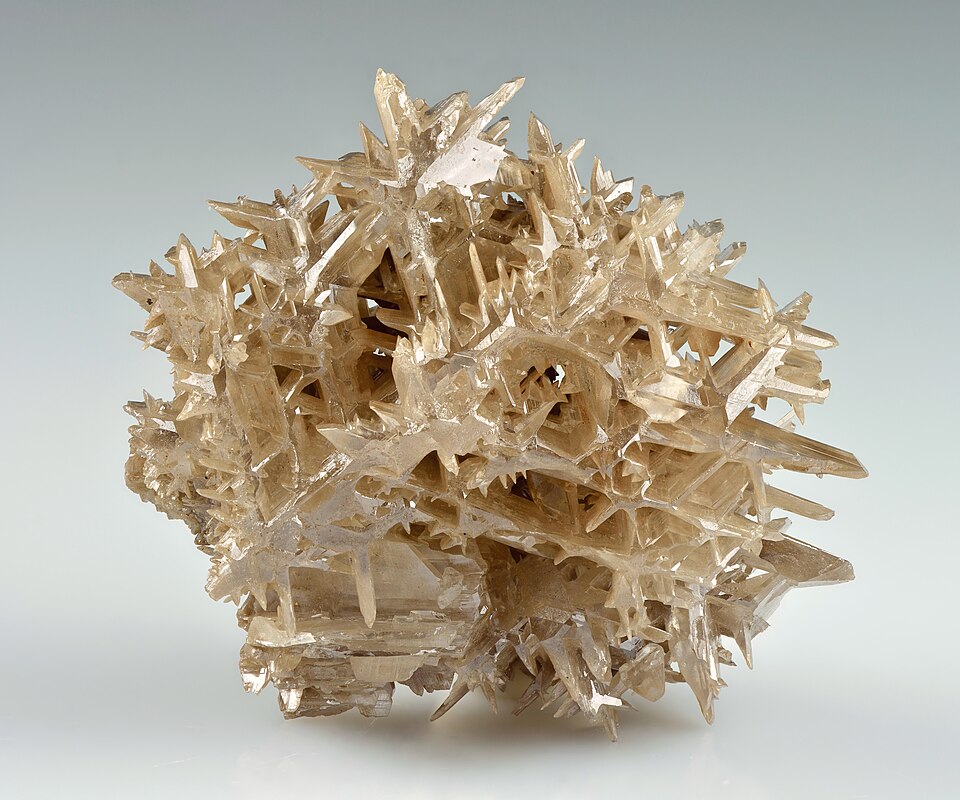
Cerussite is lead carbonate, PbCO3, a heavy, brittle mineral that forms in the oxidized gossan zones of lead ore deposits. Its very high density and strong adamantine luster make it feel and look far more valuable than its modest hardness would suggest, and colorless crystals can show fire approaching that of diamond. It commonly develops as twinned, reticulated, or star-shaped crystal groups.
Cerussite properties at a glance
| Type | Minerals |
|---|---|
| Chemical formula | PbCO3 |
| Mohs hardness | 3–3.5 |
| Crystal system | Orthorhombic |
| Luster | Adamantine to vitreous/resinous |
| Streak | White |
| Cleavage | Distinct on {110} and {021} |
| Fracture | Conchoidal, brittle |
| Specific gravity | 6.5–6.6 |
| Transparency | Transparent to translucent |
| Common colors | Colorless, White, Gray, Blue (rare), Green (rare) |
| Rarity | common |
Geology & background
Cerussite forms when primary lead sulfide, galena, weathers and reacts with carbonate-bearing groundwater in the oxidized upper portions of lead-zinc deposits, often alongside other secondary lead minerals such as anglesite and pyromorphite. Superb crystallized specimens, including intricate twinned reticulated lattices, come from Tsumeb in Namibia, Broken Hill in Australia, and Touissit in Morocco, all classic oxidized-zone lead localities. Because it needs specific weathering conditions, well-crystallized cerussite is considerably scarcer than massive or earthy lead carbonate.
Collectors prize cerussite for its blend of high density, strong luster, and elegant twinned habit, with sixling, or six-fold, twins forming attractive star or wheel patterns. The mineral is soft and brittle enough that specimens demand careful handling, and its lead content means washed hands should follow any direct contact. Faceted cerussite gems exist but stay rare and extremely fragile, valued mainly by specialist collectors rather than worn as everyday jewelry.
How to identify Cerussite
Cerussite is colorless, white, gray, or pale-tinted with an adamantine to sub-adamantine luster and a white streak, and its exceptional heaviness for a light-colored mineral is a strong field clue. Hardness is low, around 3 to 3.5, and it is brittle with distinct cleavage and a conchoidal fracture. Crystals often show intricate twinning that forms star-like or lattice-like reticulated groups. It can resemble anglesite or barite, but cerussite effervesces in dilute acid because of its carbonate content, which those minerals lack.
- Compare the specimen's color, luster, crystal habit, grain size, streak, and locality before confirming.
- Use multiple photos when possible, including a fresh surface and a close view of texture.
Full Cerussite identification guide: checklist, home tests and look-alikes →
Cerussite vs similar stones
Not sure it isn't something else? Side-by-side comparisons with the stones most often confused with Cerussite.
Where Cerussite is found
Reported from multiple localities worldwide; verify locality against specimen provenance when available.
How much is Cerussite worth?
| Entry-level specimen | $2 |
|---|---|
| Typical collector specimen | $20 |
| Premium specimen | $150+ |
Value depends on size, crystal quality, color, locality, rarity, damage, and provenance.
Common uses
- Collector specimens
- Education
- Field identification
- Industrial or lapidary use when suitable
Interesting facts
- Cerussite served as a white pigment and cosmetic base in antiquity, despite the toxicity of its lead content.
- Its sixling twins, where six individual crystals join at set angles, create delicate star- or wheel-shaped patterns unique among common minerals.
- Fine colorless cerussite can be faceted into gems with dispersion approaching that of diamond, though softness makes the stones impractical for rings.
Care & safety
Handle as a collector specimen until hardness, cleavage, and fracture are verified.
Avoid inhaling dust. Do not cut, grind, or polish unknown specimens without eye protection and a proper respirator.
Cerussite FAQ
What is Cerussite?
Cerussite is lead carbonate, PbCO3, a heavy, brittle mineral that forms in the oxidized gossan zones of lead ore deposits. Its very high density and strong adamantine luster make it feel and look far more valuable than its modest hardness would suggest, and colorless crystals can show fire approaching that of diamond. It commonly develops as twinned, reticulated, or star-shaped crystal groups.
How much is Cerussite worth?
Entry-level Cerussite specimens sell for around $2, a typical collector specimen for about $20, and premium pieces for $150 or more. Value depends on size, crystal quality, color, locality, rarity, damage, and provenance.
How hard is Cerussite?
Cerussite has a Mohs hardness of 3–3.5. A copper coin (Mohs 3.5) scratches it, but a fingernail does not.
What is Cerussite used for?
Cerussite is used for collector specimens, education, field identification, and industrial or lapidary use when suitable.