Minerals · common
Chalcocite
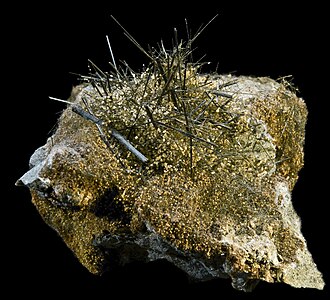
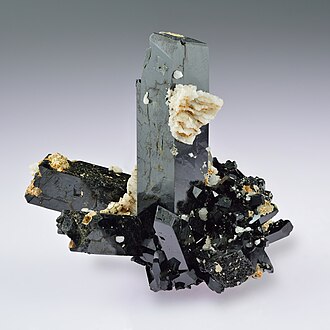
Chalcocite is copper sulfide, Cu2S, and one of the richest copper ore minerals by weight, containing nearly 80 percent copper. It crystallizes in the orthorhombic system but commonly appears in fine-grained, massive, dark gray to black form rather than as distinct crystals. Unlike most sulfides, it is sectile, meaning a knife blade can shave off a curl rather than shatter it.
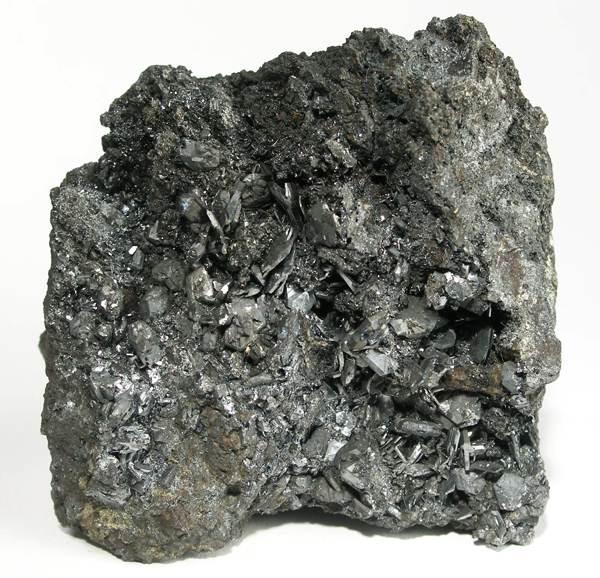
Chalcocite properties at a glance
| Type | Minerals |
|---|---|
| Chemical formula | Cu2S |
| Mohs hardness | 2.5–3 |
| Crystal system | Monoclinic |
| Luster | Metallic |
| Streak | Dark gray to black |
| Cleavage | Poor, indistinct prismatic |
| Fracture | Conchoidal |
| Specific gravity | 5.5–5.8 |
| Transparency | Opaque |
| Common colors | Blackish lead-gray, Black |
| Rarity | common |
Geology & background
Chalcocite forms mainly through supergene enrichment, a process in which descending groundwater leaches copper from an oxidizing sulfide deposit and redeposits it at depth as a blanket of secondary, copper-rich sulfides just below the water table. This enrichment concentrates copper dramatically and has made many low-grade porphyry copper deposits, including several in Arizona, Utah, and Chile, economically viable to mine. Primary, higher-temperature chalcocite also occurs in some hydrothermal veins, though it is less common than the supergene variety. In hand specimen, massive chalcocite often shows a dull metallic sheen that quickly tarnishes to a dull gray, blue, or greenish-black film on exposure to air. Collectors typically encounter it intergrown with bornite, chalcopyrite, and covellite, and telling the individual minerals apart in such mixtures usually takes more than a hand lens.
How to identify Chalcocite
Chalcocite is dark gray to black with a metallic to dull luster, and it commonly tarnishes to blue, green, or iridescent surface colors. Streak is grayish-black, hardness is only 2.5 to 3, and unlike most sulfides it is sectile, meaning a knife can shave a thin sliver from it rather than gouge or crumble it. It is easily confused with bornite or covellite, but its sectility and lack of bornite's strong purple iridescence help separate the three.
- Compare the specimen's color, luster, crystal habit, grain size, streak, and locality before confirming.
- Use multiple photos when possible, including a fresh surface and a close view of texture.
Full Chalcocite identification guide: checklist, home tests and look-alikes →
Chalcocite vs similar stones
Not sure it isn't something else? Side-by-side comparisons with the stones most often confused with Chalcocite.
Where Chalcocite is found
Reported from multiple localities worldwide; verify locality against specimen provenance when available.
How much is Chalcocite worth?
| Entry-level specimen | $2 |
|---|---|
| Typical collector specimen | $20 |
| Premium specimen | $150+ |
Value depends on size, crystal quality, color, locality, rarity, damage, and provenance.
Common uses
- Collector specimens
- Education
- Field identification
- Industrial or lapidary use when suitable
Interesting facts
- Chalcocite contains nearly 80 percent copper by weight, making it one of the richest natural copper ores known.
- It is sectile rather than brittle, so a knife blade can pare off a thin shaving instead of chipping or shattering it.
- Much of the world's chalcocite formed through supergene enrichment, a slow underground process that naturally upgrades low-grade copper deposits into ore.
Care & safety
Handle as a collector specimen until hardness, cleavage, and fracture are verified.
Avoid inhaling dust. Do not cut, grind, or polish unknown specimens without eye protection and a proper respirator.
Chalcocite FAQ
What is Chalcocite?
Chalcocite is copper sulfide, Cu2S, and one of the richest copper ore minerals by weight, containing nearly 80 percent copper. It crystallizes in the orthorhombic system but commonly appears in fine-grained, massive, dark gray to black form rather than as distinct crystals. Unlike most sulfides, it is sectile, meaning a knife blade can shave off a curl rather than shatter it.
How much is Chalcocite worth?
Entry-level Chalcocite specimens sell for around $2, a typical collector specimen for about $20, and premium pieces for $150 or more. Value depends on size, crystal quality, color, locality, rarity, damage, and provenance.
How hard is Chalcocite?
Chalcocite has a Mohs hardness of 2.5–3. A copper coin (Mohs 3.5) scratches it, but a fingernail does not.
What is Chalcocite used for?
Chalcocite is used for collector specimens, education, field identification, and industrial or lapidary use when suitable.