Minerals · common
Chromite
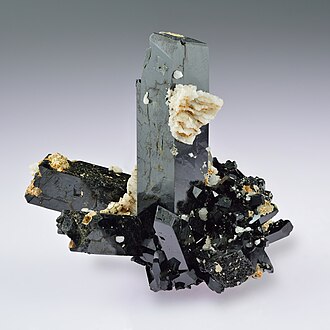
Chromite is iron chromium oxide, FeCr2O4, a member of the spinel group and the only economically significant ore of chromium. It crystallizes in the cubic system as black to brownish-black grains or octahedral crystals, most often found disseminated through dark, dense mafic and ultramafic rocks. Its formation is closely tied to the early crystallization of magma in large layered igneous intrusions.
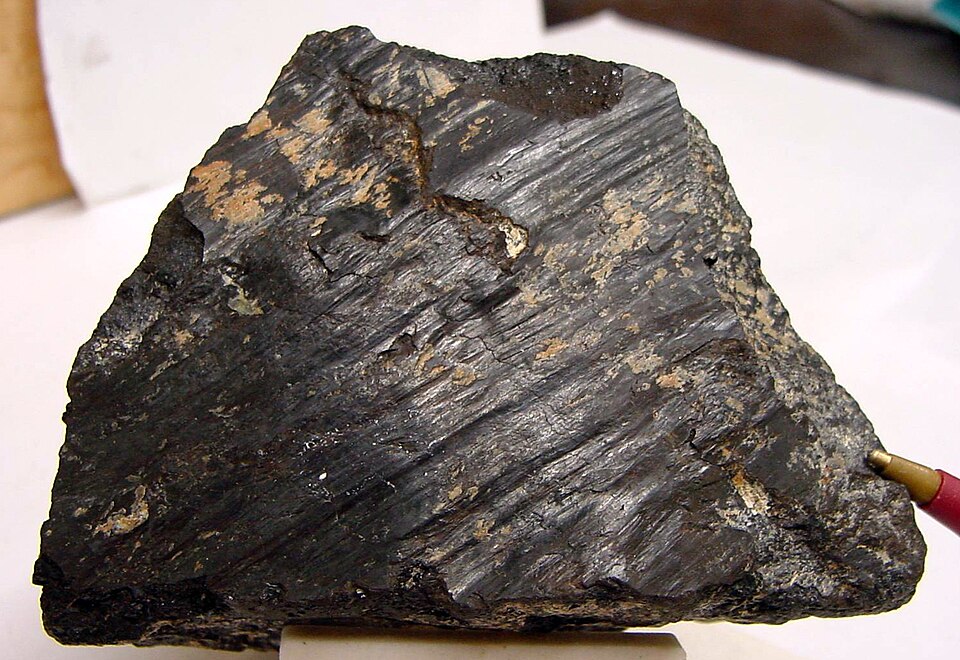
Chromite properties at a glance
| Type | Minerals |
|---|---|
| Chemical formula | FeCr2O4 |
| Mohs hardness | 5.5 |
| Crystal system | Isometric |
| Luster | Metallic to submetallic |
| Streak | Dark brown to black |
| Cleavage | None |
| Fracture | Uneven to conchoidal |
| Specific gravity | 4.5–4.8 |
| Transparency | Opaque |
| Common colors | Black, Brownish black |
| Rarity | common |
Geology & background
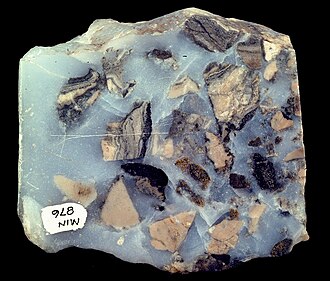
Chromite crystallizes early from cooling mafic to ultramafic magma, often settling by gravity into thick, mineable layers within massive layered intrusions such as the Bushveld Complex of South Africa and the Stillwater Complex of Montana, which together host the bulk of the world's chromium reserves. A second style of deposit, called podiform chromite, forms in ophiolites, slices of ancient oceanic mantle now exposed on land, where chromite occurs in irregular pods within serpentinized peridotite. Because chromium is essential for stainless steel and various alloys, chromite mining underpins a large slice of global metals production even though the mineral itself rarely interests gem collectors.
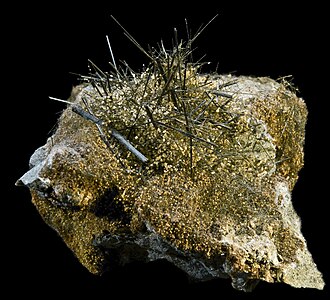
Rockhounds who find chromite in the field will usually encounter it as dull black grains scattered through dark, dense ultramafic rock rather than as attractive crystals.
How to identify Chromite
Chromite appears as black to brownish-black grains or, less commonly, octahedral crystals with a submetallic to metallic luster and a dark brown streak, distinguishing it from magnetite's black streak. It is weakly to non-magnetic, unlike strongly magnetic magnetite, which is otherwise its closest look-alike in dark ultramafic rock. Hardness of 5.5, a lack of visible cleavage, and its typical association with olivine and serpentine in dense, dark host rock all help confirm chromite in hand specimen.
- Compare the specimen's color, luster, crystal habit, grain size, streak, and locality before confirming.
- Use multiple photos when possible, including a fresh surface and a close view of texture.
Full Chromite identification guide: checklist, home tests and look-alikes →
Chromite vs similar stones
Not sure it isn't something else? Side-by-side comparisons with the stones most often confused with Chromite.
Where Chromite is found
Reported from multiple localities worldwide; verify locality against specimen provenance when available.
How much is Chromite worth?
| Entry-level specimen | $2 |
|---|---|
| Typical collector specimen | $20 |
| Premium specimen | $150+ |
Value depends on size, crystal quality, color, locality, rarity, damage, and provenance.
Common uses
- Collector specimens
- Education
- Field identification
- Industrial or lapidary use when suitable
Interesting facts
- Chromite is essentially the only economically viable source of chromium, the element that makes stainless steel resist rust.
- The Bushveld Complex in South Africa holds an estimated majority of the planet's known chromium reserves in a single intrusion.
- Unlike the strongly magnetic mineral magnetite, chromite is only weakly attracted to a magnet, a handy field test.
Care & safety
Handle as a collector specimen until hardness, cleavage, and fracture are verified.
Avoid inhaling dust. Do not cut, grind, or polish unknown specimens without eye protection and a proper respirator.
Chromite FAQ
What is Chromite?
Chromite is iron chromium oxide, FeCr2O4, a member of the spinel group and the only economically significant ore of chromium. It crystallizes in the cubic system as black to brownish-black grains or octahedral crystals, most often found disseminated through dark, dense mafic and ultramafic rocks. Its formation is closely tied to the early crystallization of magma in large layered igneous intrusions.
How much is Chromite worth?
Entry-level Chromite specimens sell for around $2, a typical collector specimen for about $20, and premium pieces for $150 or more. Value depends on size, crystal quality, color, locality, rarity, damage, and provenance.
How hard is Chromite?
Chromite has a Mohs hardness of 5.5. It is about as hard as window glass: a knife barely marks it, while a steel file (Mohs 6.5) will.
What is Chromite used for?
Chromite is used for collector specimens, education, field identification, and industrial or lapidary use when suitable.