Minerals · common
Corundum
Corundum is aluminum oxide, Al2O3, crystallizing in the trigonal system and ranking as the second-hardest natural mineral after diamond. Its gem varieties, red ruby and every other color of sapphire, are colored by trace amounts of chromium, iron, or titanium substituting into an otherwise colorless crystal structure. Non-gem corundum is widely used as an industrial abrasive under the name emery.
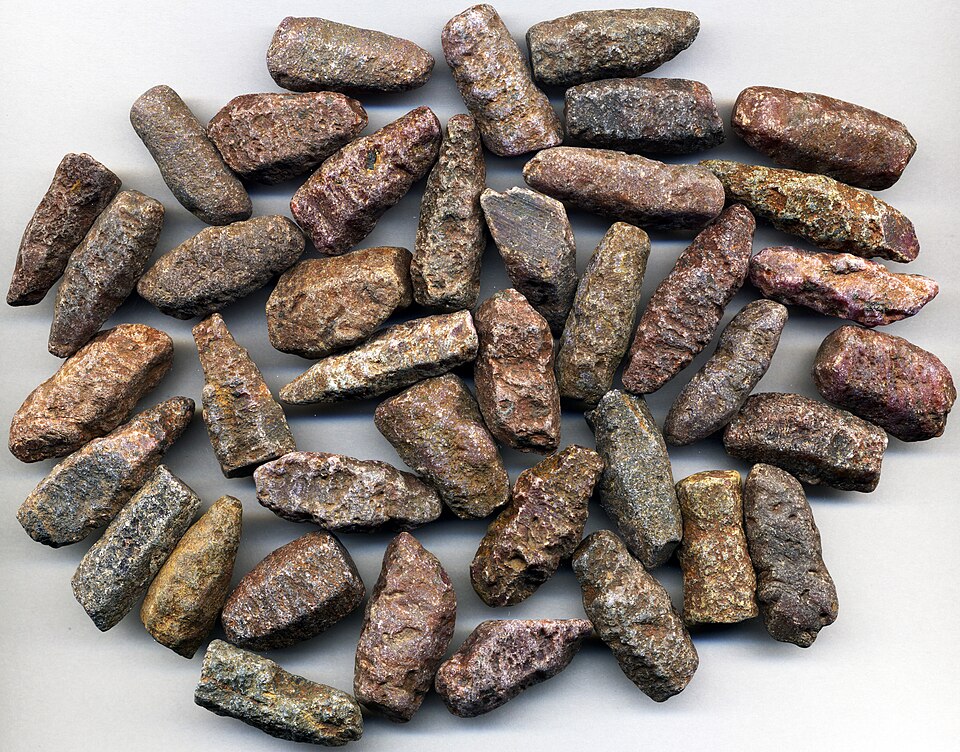
Corundum properties at a glance
| Type | Minerals |
|---|---|
| Chemical formula | Al2O3 |
| Mohs hardness | 9 |
| Crystal system | Trigonal |
| Luster | Adamantine to vitreous |
| Streak | White (colorless) |
| Cleavage | None (rhombohedral/basal parting) |
| Fracture | Conchoidal to uneven |
| Specific gravity | 3.95–4.10 |
| Transparency | Transparent to translucent |
| Common colors | Red (ruby), Blue (sapphire), Colorless, Yellow, Green, Pink, Gray |
| Rarity | common |
Geology & background
Corundum forms in aluminum-rich, silica-poor metamorphic rocks such as marble and certain gneisses, and also crystallizes directly from some alkaline igneous magmas like syenite; because it resists weathering so well, it also concentrates in placer gravels eroded from these source rocks. Sri Lanka, Myanmar, and Madagascar produce much of the world's gem-quality ruby and sapphire from such alluvial deposits, while marble-hosted ruby deposits in Myanmar's Mogok valley have supplied fine stones for centuries. Rockhounds searching stream gravels in corundum-bearing regions look for its extreme hardness and hexagonal barrel-shaped crystals, since almost nothing else in typical gravel will scratch a steel file.
Heat treatment is standard practice in the gem trade to improve color and clarity, so collectors of natural, untreated corundum specimens should be aware that treated material dominates the commercial market.
How to identify Corundum
Corundum forms hexagonal, barrel-shaped or tabular crystals with a vitreous to slightly adamantine luster and a colorless to white streak regardless of body color. Its hardness of 9 is the single most diagnostic property, since it will scratch every common mineral except diamond and a handful of rare synthetics. Color ranges from colorless through red, blue, yellow, and purple, and some crystals show a six-rayed star effect called asterism when cut as a cabochon, caused by tiny oriented needle-like inclusions of rutile.
- Compare the specimen's color, luster, crystal habit, grain size, streak, and locality before confirming.
- Use multiple photos when possible, including a fresh surface and a close view of texture.
Full Corundum identification guide: checklist, home tests and look-alikes →
Corundum vs similar stones
Not sure it isn't something else? Side-by-side comparisons with the stones most often confused with Corundum.
Where Corundum is found
Reported from multiple localities worldwide; verify locality against specimen provenance when available.
How much is Corundum worth?
| Entry-level specimen | $2 |
|---|---|
| Typical collector specimen | $20 |
| Premium specimen | $150+ |
Value depends on size, crystal quality, color, locality, rarity, damage, and provenance.
Common uses
- Collector specimens
- Education
- Field identification
- Industrial or lapidary use when suitable
Interesting facts
- Corundum is the second-hardest natural mineral known, surpassed only by diamond on the Mohs scale.
- Ruby and sapphire are the exact same mineral species, distinguished only by the trace elements that produce their color.
- Tiny needle-like rutile inclusions inside some corundum crystals can create a six-rayed star effect when the stone is polished as a cabochon.
Care & safety
Handle as a collector specimen until hardness, cleavage, and fracture are verified.
Avoid inhaling dust. Do not cut, grind, or polish unknown specimens without eye protection and a proper respirator.
Corundum FAQ
What is Corundum?
Corundum is aluminum oxide, Al2O3, crystallizing in the trigonal system and ranking as the second-hardest natural mineral after diamond. Its gem varieties, red ruby and every other color of sapphire, are colored by trace amounts of chromium, iron, or titanium substituting into an otherwise colorless crystal structure. Non-gem corundum is widely used as an industrial abrasive under the name emery.
How much is Corundum worth?
Entry-level Corundum specimens sell for around $2, a typical collector specimen for about $20, and premium pieces for $150 or more. Value depends on size, crystal quality, color, locality, rarity, damage, and provenance.
How hard is Corundum?
Corundum has a Mohs hardness of 9. It scratches glass, steel and even quartz; only harder gems will mark it.
What is Corundum used for?
Corundum is used for collector specimens, education, field identification, and industrial or lapidary use when suitable.