Quartz Family · common
Dendritic Agate
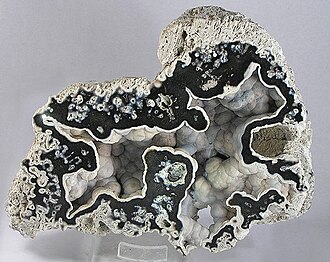
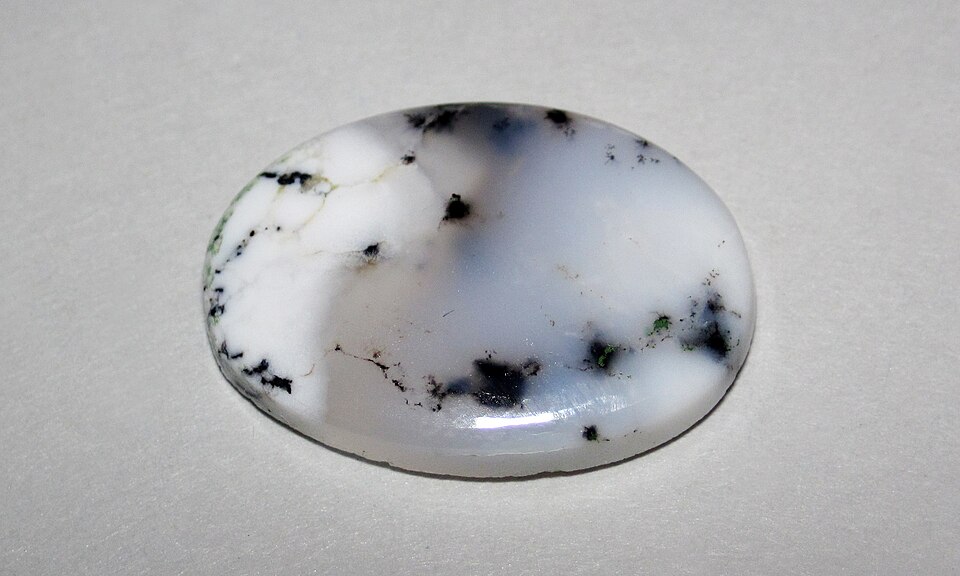
Dendritic Agate is a chalcedony variety with dark branching mineral inclusions that resemble trees, moss, or fern-like patterns.
Also known as: landscape agate, branching inclusions.
Dendritic Agate properties at a glance
| Type | Quartz Family |
|---|---|
| Chemical formula | SiO2 |
| Mohs hardness | 7 |
| Crystal system | hexagonal |
| Luster | waxy |
| Streak | White |
| Cleavage | None |
| Fracture | Conchoidal |
| Specific gravity | 2.6 |
| Transparency | translucent |
| Common colors | White, Gray, Black, Brown, Translucent |
| Rarity | common |
Geology & background
Forms when manganese or iron oxide minerals crystallize in branching patterns inside fine chalcedony or agate.
Dendritic Agate has long been cut for cabochons and ornamental stones because of its landscape-like patterns.
How to identify Dendritic Agate
- Look for the distinctive color, pattern, and translucency associated with Dendritic Agate.
- Photograph a fresh or polished surface in natural light and avoid glare.
- Use hardness, luster, fracture, and locality together; many chalcedony trade varieties overlap visually.
Full Dendritic Agate identification guide: checklist, home tests and look-alikes →
Dendritic Agate vs similar stones
Not sure it isn't something else? Side-by-side comparisons with the stones most often confused with Dendritic Agate.
Where Dendritic Agate is found
Dendritic Agate is a trade or collector label that may vary by locality; verify provenance when a source locality is important.
How much is Dendritic Agate worth?
| Entry-level specimen | $5 |
|---|---|
| Typical collector specimen | $30 |
| Premium specimen | $200+ |
Value depends on size, condition, color, pattern, locality, preparation, and provenance. Treat this as educational guidance, not an appraisal.
Common uses
- Cabochons
- Jewelry
- Tumbled stones
- Display specimens
Interesting facts
- The tree-like dendrites are inclusions, not fossil plants.
- Some specimens are sold as landscape agate.
- Strong contrast between pale chalcedony and dark dendrites improves visual appeal.
Care & safety
Treat Dendritic Agate as a collector specimen unless hardness, cleavage, and fracture are confirmed.
Avoid inhaling dust. Do not cut, grind, or polish unknown specimens without eye protection and a properly rated respirator.
Dendritic Agate FAQ
What is Dendritic Agate?
Dendritic Agate is a chalcedony variety with dark branching mineral inclusions that resemble trees, moss, or fern-like patterns.
How much is Dendritic Agate worth?
Entry-level Dendritic Agate specimens sell for around $5, a typical collector specimen for about $30, and premium pieces for $200 or more. Value depends on size, condition, color, pattern, locality, preparation, and provenance. Treat this as educational guidance, not an appraisal.
How hard is Dendritic Agate?
Dendritic Agate has a Mohs hardness of 7. It scratches glass and a steel knife and cannot be scratched by a steel file.
Where is Dendritic Agate found?
Notable sources of Dendritic Agate include Brazil, India, Madagascar, USA, and Australia. Forms when manganese or iron oxide minerals crystallize in branching patterns inside fine chalcedony or agate..
What is Dendritic Agate used for?
Dendritic Agate is used for cabochons, jewelry, tumbled stones, and display specimens.