Igneous Rocks · common
Diorite
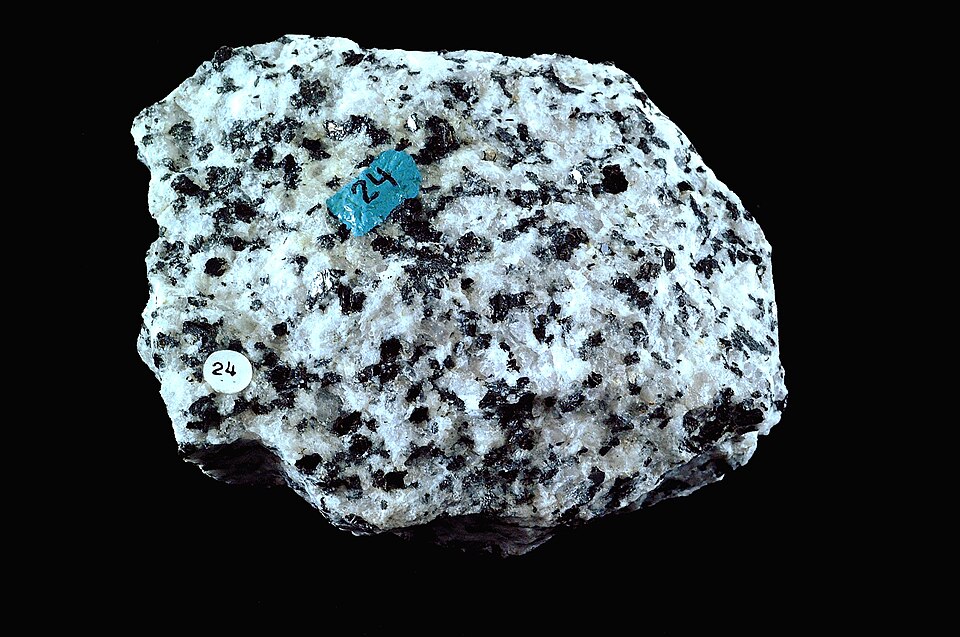
Diorite is a coarse-grained, intrusive igneous rock of intermediate composition, made mostly of plagioclase feldspar and dark hornblende or biotite, with little to no quartz. Its classic 'salt and pepper' look comes from the contrast between light gray-white feldspar and black amphibole crystals visible to the naked eye. It crystallizes slowly underground, giving it a fully crystalline, phaneritic texture.
Diorite properties at a glance
| Type | Igneous Rocks |
|---|---|
| Mohs hardness | 6–7 |
| Luster | Vitreous to dull (granular) |
| Fracture | Uneven, granular |
| Specific gravity | 2.8–3.0 |
| Transparency | Opaque |
| Common colors | Salt-and-pepper gray, Dark gray, Black and white speckled |
| Rarity | common |
Geology & background
Diorite forms deep within the crust from intermediate magma, generated above subduction zones through mixing and fractional crystallization of mantle-derived basaltic magma with melted crustal rock, and it cools slowly enough for large crystals to grow. It occurs in batholiths and smaller intrusions associated with continental volcanic arcs, often grading into granodiorite or gabbro depending on the exact proportions of feldspar, quartz, and dark minerals present. Notable exposures include parts of the Sierra Nevada batholith and ancient diorite quarried in Egypt for statuary. Rockhounds recognize diorite mainly by its speckled texture rather than any single mineral, since the mix of light plagioclase and dark hornblende or biotite gives it an easily spotted, mottled appearance. Its durability and attractive contrast have made it popular historically for monuments, tools, and, more recently, polished building facades and countertops.
How to identify Diorite
Diorite shows a coarse, fully crystalline, speckled texture, dominated by white to gray plagioclase feldspar and black hornblende or biotite in roughly balanced amounts. Overall hardness is around 6, reflecting its feldspar content, and there is no rock-scale cleavage, only mineral-scale cleavage in its component crystals. It is distinguished from granite by its scarcity of quartz and pink potassium feldspar, and from gabbro by its lighter overall color and more sodium-rich plagioclase.
- Compare the specimen's color, luster, crystal habit, grain size, streak, and locality before confirming.
- Use multiple photos when possible, including a fresh surface and a close view of texture.
Full Diorite identification guide: checklist, home tests and look-alikes →
Diorite vs similar stones
Not sure it isn't something else? Side-by-side comparisons with the stones most often confused with Diorite.
Where Diorite is found
Reported from multiple localities worldwide; verify locality against specimen provenance when available.
How much is Diorite worth?
| Entry-level specimen | $1 |
|---|---|
| Typical collector specimen | $10 |
| Premium specimen | $75+ |
Value depends on size, crystal quality, color, locality, rarity, damage, and provenance.
Common uses
- Field identification
- Construction or aggregate when suitable
- Landscape interpretation
- Education
Interesting facts
- Diorite's speckled 'salt and pepper' look comes from roughly equal amounts of light plagioclase and dark hornblende or biotite.
- Ancient Egyptian sculptors prized diorite for its hardness and durability, carving statues from it that have survived for thousands of years.
- Diorite forms a compositional bridge between dark gabbro and light granite, sitting squarely in the middle of the igneous rock spectrum.
Care & safety
Handle as a collector specimen until hardness, cleavage, and fracture are verified.
Avoid inhaling dust. Do not cut, grind, or polish unknown specimens without eye protection and a proper respirator.
Diorite FAQ
What is Diorite?
Diorite is a coarse-grained, intrusive igneous rock of intermediate composition, made mostly of plagioclase feldspar and dark hornblende or biotite, with little to no quartz. Its classic 'salt and pepper' look comes from the contrast between light gray-white feldspar and black amphibole crystals visible to the naked eye. It crystallizes slowly underground, giving it a fully crystalline, phaneritic texture.
How much is Diorite worth?
Entry-level Diorite specimens sell for around $1, a typical collector specimen for about $10, and premium pieces for $75 or more. Value depends on size, crystal quality, color, locality, rarity, damage, and provenance.
How hard is Diorite?
Diorite has a Mohs hardness of 6–7. It scratches glass and a steel knife and cannot be scratched by a steel file.
What is Diorite used for?
Diorite is used for field identification, construction or aggregate when suitable, landscape interpretation, and education.