Minerals · common
Dumortierite
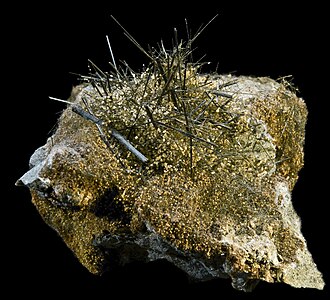
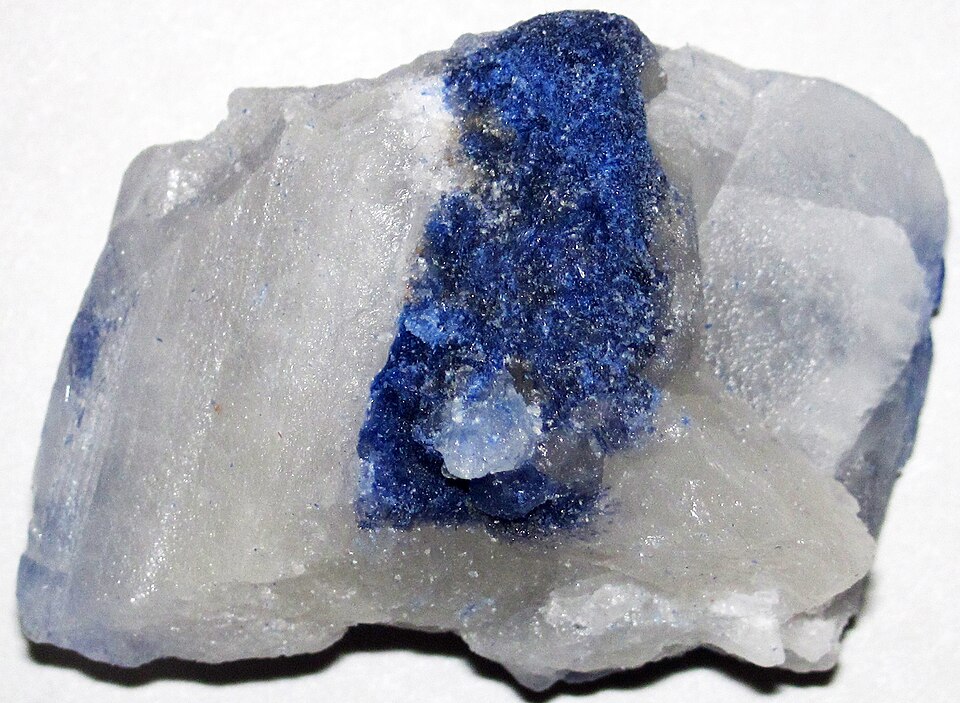
Dumortierite is an aluminum borosilicate mineral crystallizing in the orthorhombic system, best known for its intense blue to violet-blue color caused by trace iron and titanium substitutions. It typically forms fibrous, needle-like crystal aggregates within metamorphic rocks rich in aluminum, such as schists and gneisses subjected to high temperature and pressure. Its deep, saturated blue color has made it a popular but often misidentified substitute for lapis lazuli and sodalite in ornamental carvings.
Dumortierite properties at a glance
| Type | Minerals |
|---|---|
| Chemical formula | Al7BO3(SiO4)3O3 |
| Mohs hardness | 7–8.5 |
| Crystal system | Orthorhombic |
| Luster | Vitreous, silky when fibrous |
| Streak | White |
| Cleavage | Distinct on {100} |
| Fracture | Uneven, splintery |
| Specific gravity | 3.3–3.4 |
| Transparency | Translucent to opaque |
| Common colors | Blue, Violet-blue, Brownish, Pink (rare) |
| Rarity | common |
Geology & background
Dumortierite develops during regional or contact metamorphism of aluminum-rich sedimentary rocks, where boron-bearing fluids react with clay minerals under elevated temperature and pressure to grow dense mats of fibrous crystals. Notable deposits occur in Nevada's Clip mining district, Brazil's Bahia state, the Lyon area of France where the mineral was first described in 1881, and Namibia's western deserts. Because it typically forms in fibrous, felted masses rather than large individual crystals, well-formed single dumortierite crystals are considerably rarer than the common massive material used in jewelry and carving.
Massive blue dumortierite quartz, a mixture of fine dumortierite fibers embedded in quartz, is popular for beads, cabochons, and carvings because it takes a good polish and holds up well to everyday wear. Collectors distinguish true dumortierite from sodalite and lazulite by testing hardness and looking for the fibrous, sometimes silky sheen visible under magnification. Because color intensity varies significantly with fiber density, the deepest blue material commands noticeably higher prices among lapidary collectors than paler, more diluted specimens.
How to identify Dumortierite
Dumortierite ranges from violet-blue to deep blue, occasionally brown or pink, typically occurring as dense fibrous masses rather than large distinct crystals, with a vitreous to silky luster depending on fiber orientation. Its streak is white to pale blue, hardness runs about 7 to 8.5, notably harder than most blue minerals it resembles, and it shows no obvious cleavage, breaking instead with a splintery fracture. It is frequently confused with sodalite and lazulite, but dumortierite's higher hardness and fibrous internal structure distinguish it under a hand lens.
- Compare the specimen's color, luster, crystal habit, grain size, streak, and locality before confirming.
- Use multiple photos when possible, including a fresh surface and a close view of texture.
Full Dumortierite identification guide: checklist, home tests and look-alikes →
Dumortierite vs similar stones
Not sure it isn't something else? Side-by-side comparisons with the stones most often confused with Dumortierite.
Where Dumortierite is found
Reported from multiple localities worldwide; verify locality against specimen provenance when available.
How much is Dumortierite worth?
| Entry-level specimen | $2 |
|---|---|
| Typical collector specimen | $20 |
| Premium specimen | $150+ |
Value depends on size, crystal quality, color, locality, rarity, damage, and provenance.
Common uses
- Collector specimens
- Education
- Field identification
- Industrial or lapidary use when suitable
Interesting facts
- Dumortierite was named in 1881 after French paleontologist Eugene Dumortier, even though the mineral itself has nothing to do with fossils.
- Massive blue dumortierite quartz is sometimes sold under trade names that wrongly suggest it is lapis lazuli or sodalite.
- Because dumortierite forms as microscopic fibers rather than large crystals, individual specimens large enough to facet are exceptionally rare.
Care & safety
Handle as a collector specimen until hardness, cleavage, and fracture are verified.
Avoid inhaling dust. Do not cut, grind, or polish unknown specimens without eye protection and a proper respirator.
Dumortierite FAQ
What is Dumortierite?
Dumortierite is an aluminum borosilicate mineral crystallizing in the orthorhombic system, best known for its intense blue to violet-blue color caused by trace iron and titanium substitutions. It typically forms fibrous, needle-like crystal aggregates within metamorphic rocks rich in aluminum, such as schists and gneisses subjected to high temperature and pressure. Its deep, saturated blue color has made it a popular but often misidentified substitute for lapis lazuli and sodalite in ornamental carvings.
How much is Dumortierite worth?
Entry-level Dumortierite specimens sell for around $2, a typical collector specimen for about $20, and premium pieces for $150 or more. Value depends on size, crystal quality, color, locality, rarity, damage, and provenance.
How hard is Dumortierite?
Dumortierite has a Mohs hardness of 7–8.5. It scratches glass, steel and even quartz; only harder gems will mark it.
What is Dumortierite used for?
Dumortierite is used for collector specimens, education, field identification, and industrial or lapidary use when suitable.