Minerals · common
Goethite
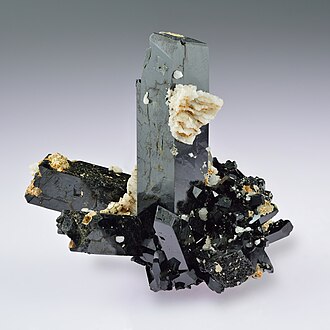
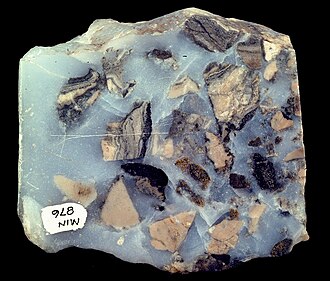
Goethite is an iron oxide-hydroxide, FeO(OH), and one of the most common iron-bearing minerals, formed by the weathering of other iron minerals such as pyrite, magnetite, and siderite. It crystallizes in the orthorhombic system but rarely shows well-formed crystals, instead forming botryoidal, stalactitic, or earthy masses. Named for the German writer and naturalist Johann Wolfgang von Goethe, it is a major constituent of the mineral mixture commonly called limonite.
Goethite properties at a glance
| Type | Minerals |
|---|---|
| Chemical formula | FeO(OH) |
| Mohs hardness | 5–5.5 |
| Crystal system | Orthorhombic |
| Luster | Adamantine to dull/earthy, silky |
| Streak | Yellowish brown |
| Cleavage | Perfect, one direction |
| Fracture | Uneven to splintery |
| Specific gravity | 3.3–4.3 |
| Transparency | Opaque, translucent in thin splinters |
| Common colors | Brown, Yellowish brown, Reddish brown, Black |
| Rarity | common |
Geology & background
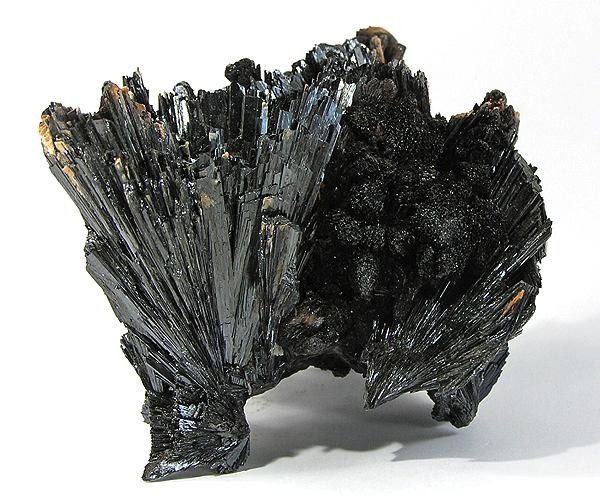
Goethite forms wherever iron-bearing minerals are exposed to oxygen and water, making it one of the most widespread products of chemical weathering in soils, gossans, and bogs worldwide. It frequently develops as a pseudomorph, replacing pyrite crystals while preserving their cubic outline, and it also precipitates directly from iron-rich groundwater as botryoidal crusts and stalactitic masses in caves and mine workings. Significant deposits occur in Germany's Siegerland district, Michigan's iron ranges, and numerous banded iron formations worldwide, where it forms a key ore of iron. Collectors often encounter goethite as smooth, rounded, botryoidal masses with a silky to submetallic sheen, or as pseudomorphs that retain the sharp cubic form of the pyrite they replaced. Its yellow-brown streak, one of the most diagnostic and easy field tests among common minerals, quickly separates it from hematite, which streaks red.
How to identify Goethite
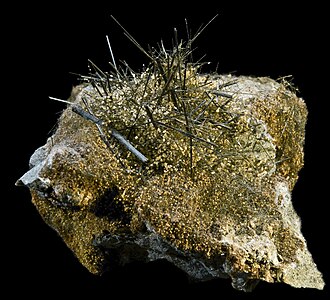
Goethite ranges from yellowish brown to dark brown or black, with a silky, dull, or submetallic luster depending on how it formed, and it commonly appears in botryoidal, stalactitic, or radiating fibrous masses rather than sharp crystals. Its streak is a distinctive yellowish brown, unlike hematite's red streak, and hardness runs about 5 to 5.5. It shows no cleavage in massive form. Goethite is frequently confused with hematite and limonite, with streak color remaining the fastest way to tell them apart.
- Compare the specimen's color, luster, crystal habit, grain size, streak, and locality before confirming.
- Use multiple photos when possible, including a fresh surface and a close view of texture.
Full Goethite identification guide: checklist, home tests and look-alikes →
Goethite vs similar stones
Not sure it isn't something else? Side-by-side comparisons with the stones most often confused with Goethite.
Where Goethite is found
Reported from multiple localities worldwide; verify locality against specimen provenance when available.
How much is Goethite worth?
| Entry-level specimen | $2 |
|---|---|
| Typical collector specimen | $20 |
| Premium specimen | $150+ |
Value depends on size, crystal quality, color, locality, rarity, damage, and provenance.
Common uses
- Collector specimens
- Education
- Field identification
- Industrial or lapidary use when suitable
Interesting facts
- Goethite's yellow-brown streak is one of the most reliable simple field tests in mineralogy, instantly separating it from red-streaking hematite.
- It is named after the German poet and naturalist Johann Wolfgang von Goethe, who was also an avid mineral collector.
- Goethite often forms as a pseudomorph after pyrite, faithfully preserving the original cubic crystal shape while replacing the chemistry entirely.
Care & safety
Handle as a collector specimen until hardness, cleavage, and fracture are verified.
Avoid inhaling dust. Do not cut, grind, or polish unknown specimens without eye protection and a proper respirator.
Goethite FAQ
What is Goethite?
Goethite is an iron oxide-hydroxide, FeO(OH), and one of the most common iron-bearing minerals, formed by the weathering of other iron minerals such as pyrite, magnetite, and siderite. It crystallizes in the orthorhombic system but rarely shows well-formed crystals, instead forming botryoidal, stalactitic, or earthy masses. Named for the German writer and naturalist Johann Wolfgang von Goethe, it is a major constituent of the mineral mixture commonly called limonite.
How much is Goethite worth?
Entry-level Goethite specimens sell for around $2, a typical collector specimen for about $20, and premium pieces for $150 or more. Value depends on size, crystal quality, color, locality, rarity, damage, and provenance.
How hard is Goethite?
Goethite has a Mohs hardness of 5–5.5. A steel knife blade (Mohs 5.5) scratches it; a copper coin does not.
What is Goethite used for?
Goethite is used for collector specimens, education, field identification, and industrial or lapidary use when suitable.