Minerals · common
Graphite
Graphite is native carbon, chemically identical to diamond but crystallizing in a completely different structure of stacked hexagonal sheets that slide easily past one another. This layered atomic arrangement gives graphite its softness, greasy feel, and ability to conduct electricity, all properties diamond lacks despite sharing the same element. It forms through the metamorphism of carbon-rich sedimentary rocks or through the crystallization of carbon in igneous and hydrothermal settings.
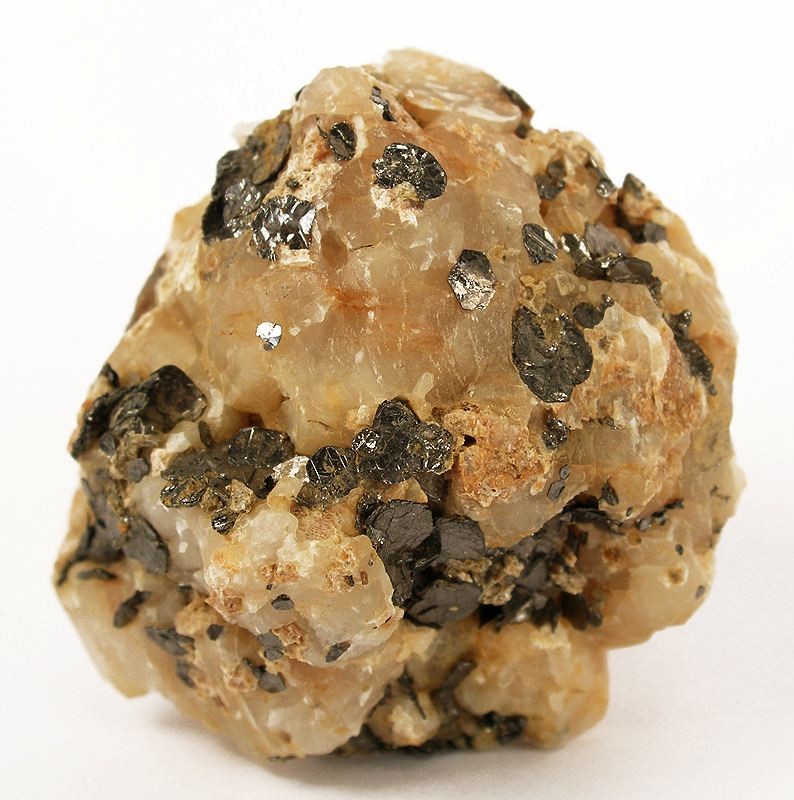
Graphite properties at a glance
| Type | Minerals |
|---|---|
| Chemical formula | C |
| Mohs hardness | 1–2 |
| Crystal system | Hexagonal |
| Luster | Metallic to dull/earthy |
| Streak | Black, shiny gray-black |
| Cleavage | Perfect basal {0001} |
| Fracture | Uneven (rare; mostly cleaves), flexible flakes |
| Specific gravity | 2.09–2.23 |
| Transparency | Opaque |
| Common colors | Black, Steel-gray |
| Rarity | common |
Geology & background
Graphite typically forms through regional or contact metamorphism of organic-rich sedimentary rocks such as coal or carbonaceous shale, where heat and pressure drive off volatile elements and leave crystallized carbon behind, though it can also grow directly from carbon-bearing fluids in igneous and pegmatitic settings or through the reduction of carbon dioxide during metamorphism of limestone. Major graphite deposits occur in Sri Lanka, source of some of the purest vein graphite known, along with Madagascar, China, and the Adirondack region of New York. The extremely high-grade Sri Lankan vein deposits are unusual for forming from fluids rather than metamorphosed organic matter.
Collectors typically encounter graphite as soft, black, flaky masses in schist or marble rather than as attractive crystal specimens, since well-formed hexagonal graphite crystals are uncommon. Its low hardness and greasy texture make it easy to identify but also easy to damage, so specimens deserve careful handling to avoid smearing or crumbling. Beyond mineral collecting, graphite's industrial importance in batteries, lubricants, and pencil lead makes it one of the more economically significant of the softer minerals.
How to identify Graphite
Graphite is black to dark gray with a distinctive metallic to dull luster and a black to gray streak that readily marks paper, a simple and reliable field test. It is extremely soft, around 1 to 2 on the Mohs scale, greasy to the touch, and has one perfect cleavage direction that produces thin, flexible flakes. It typically occurs as foliated, scaly, or earthy masses. Graphite is most often confused with molybdenite, though molybdenite carries a slightly bluish-gray streak and is denser.
- Compare the specimen's color, luster, crystal habit, grain size, streak, and locality before confirming.
- Use multiple photos when possible, including a fresh surface and a close view of texture.
Full Graphite identification guide: checklist, home tests and look-alikes →
Graphite vs similar stones
Not sure it isn't something else? Side-by-side comparisons with the stones most often confused with Graphite.
Where Graphite is found
Reported from multiple localities worldwide; verify locality against specimen provenance when available.
How much is Graphite worth?
| Entry-level specimen | $2 |
|---|---|
| Typical collector specimen | $20 |
| Premium specimen | $150+ |
Value depends on size, crystal quality, color, locality, rarity, damage, and provenance.
Common uses
- Collector specimens
- Education
- Field identification
- Industrial or lapidary use when suitable
Interesting facts
- Graphite and diamond are both pure carbon, yet one ranks among the softest minerals known and the other the hardest, purely because of how their atoms are arranged.
- So-called pencil lead contains no lead at all; it is a mixture of graphite and clay, a naming holdover from centuries ago.
- Sri Lanka has produced some of the purest natural graphite in the world, forming in veins rather than from metamorphosed plant material.
Care & safety
Handle as a collector specimen until hardness, cleavage, and fracture are verified.
Avoid inhaling dust. Do not cut, grind, or polish unknown specimens without eye protection and a proper respirator.
Graphite FAQ
What is Graphite?
Graphite is native carbon, chemically identical to diamond but crystallizing in a completely different structure of stacked hexagonal sheets that slide easily past one another. This layered atomic arrangement gives graphite its softness, greasy feel, and ability to conduct electricity, all properties diamond lacks despite sharing the same element. It forms through the metamorphism of carbon-rich sedimentary rocks or through the crystallization of carbon in igneous and hydrothermal settings.
How much is Graphite worth?
Entry-level Graphite specimens sell for around $2, a typical collector specimen for about $20, and premium pieces for $150 or more. Value depends on size, crystal quality, color, locality, rarity, damage, and provenance.
How hard is Graphite?
Graphite has a Mohs hardness of 1–2. A fingernail (Mohs 2.5) scratches it easily.
What is Graphite used for?
Graphite is used for collector specimens, education, field identification, and industrial or lapidary use when suitable.