Silicate Minerals · uncommon
Leucite
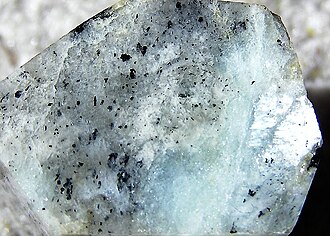
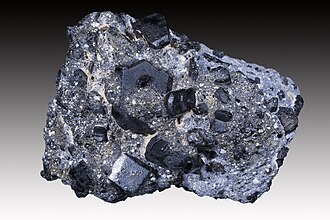
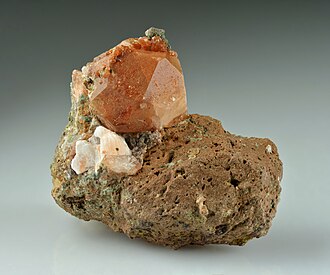
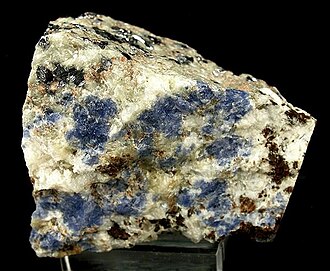
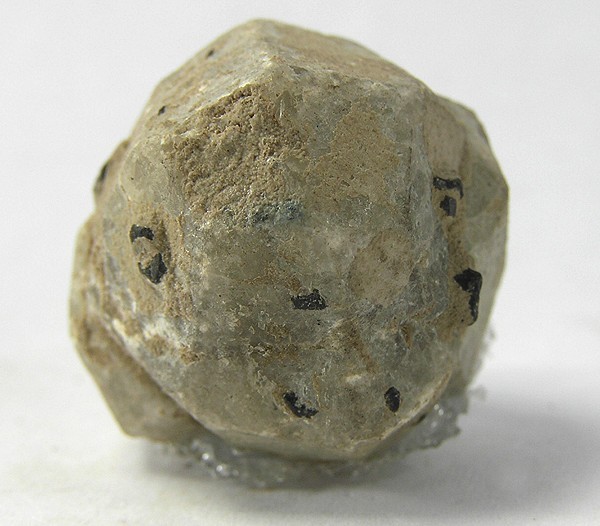
Leucite is a potassium aluminum silicate feldspathoid that typically forms distinctive rounded, near-spherical trapezohedral crystals. It is white to gray and occurs as phenocrysts in potassium-rich volcanic rocks.
Also known as: White garnet.
Leucite properties at a glance
| Type | Silicate Minerals |
|---|---|
| Chemical formula | KAlSi2O6 |
| Mohs hardness | 5.75 |
| Crystal system | tetragonal |
| Luster | vitreous |
| Streak | White |
| Cleavage | Very poor |
| Fracture | Conchoidal |
| Specific gravity | 2.5 |
| Transparency | translucent |
| Common colors | White, Gray, Colorless, Pale yellow |
| Rarity | uncommon |
Geology & background
Leucite crystallizes from potassium-rich, silica-poor magmas and occurs as phenocrysts in young volcanic rocks such as leucitite and potassic lavas.
Leucite has long interested petrologists as an indicator of silica-poor potassic magmas, and it has been studied as a potential source of potassium and aluminum.
How to identify Leucite
- Look for rounded, near-spherical pale crystals with a trapezohedral form set in dark volcanic rock.
- Leucite is moderately hard, has very poor cleavage, and a conchoidal fracture.
- Distinguish it from garnet by its lower hardness and volcanic host, and from analcime by its crystal habit and association.
Full Leucite identification guide: checklist, home tests and look-alikes →
Leucite vs similar stones
Not sure it isn't something else? Side-by-side comparisons with the stones most often confused with Leucite.
Where Leucite is found
Leucite occurs as phenocrysts in potassium-rich volcanic rocks, with notable localities in Italy, Germany, the United States, Uganda, and Australia.
How much is Leucite worth?
| Entry-level specimen | $5 |
|---|---|
| Typical collector specimen | $35 |
| Premium specimen | $180+ |
Value depends on crystal form, size, locality, aesthetics, damage, and provenance.
Common uses
- Petrological indicator
- Mineralogical study
- Experimental potassium source
- Collector specimens
Interesting facts
- The name leucite comes from a Greek word for white, reflecting its usual pale color.
- Leucite almost always forms equant trapezohedral crystals, a habit unusual among common minerals.
- It crystallizes in the cubic system at high temperature but inverts to tetragonal symmetry on cooling.
- Leucite is well known from the young volcanic rocks around Vesuvius and the Alban Hills in Italy.
Care & safety
Leucite is moderately hard but brittle, and crystals can chip or fracture if struck.
Avoid inhaling dust. Do not cut, grind, or polish unknown specimens without eye protection and a proper respirator.
Leucite FAQ
What is Leucite?
Leucite is a potassium aluminum silicate feldspathoid that typically forms distinctive rounded, near-spherical trapezohedral crystals. It is white to gray and occurs as phenocrysts in potassium-rich volcanic rocks.
How much is Leucite worth?
Entry-level Leucite specimens sell for around $5, a typical collector specimen for about $35, and premium pieces for $180 or more. Value depends on crystal form, size, locality, aesthetics, damage, and provenance.
How hard is Leucite?
Leucite has a Mohs hardness of 5.75. It is about as hard as window glass: a knife barely marks it, while a steel file (Mohs 6.5) will.
Where is Leucite found?
Notable sources of Leucite include Italy, Germany, United States, Uganda, and Australia. Leucite crystallizes from potassium-rich, silica-poor magmas and occurs as phenocrysts in young volcanic rocks such as leucitite and potassic lavas..
What is Leucite used for?
Leucite is used for petrological indicator, mineralogical study, experimental potassium source, and collector specimens.