Silicate Minerals · uncommon
Nepheline
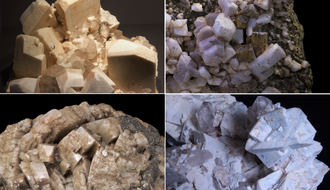
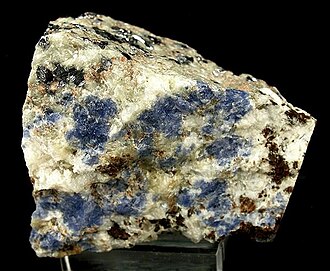
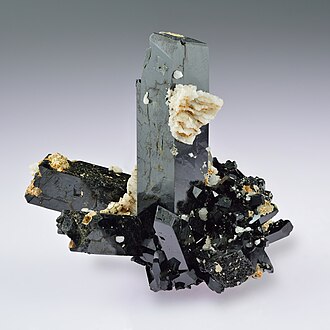
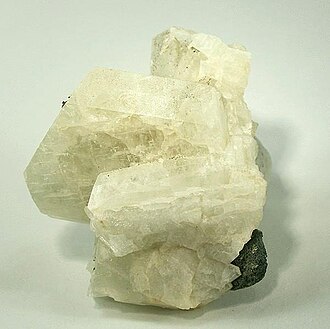
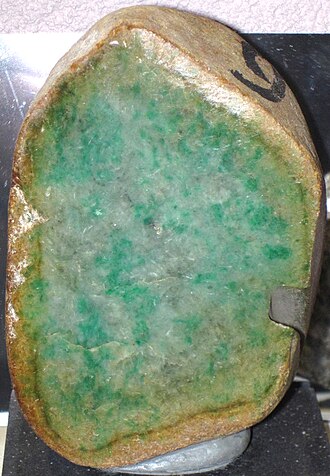
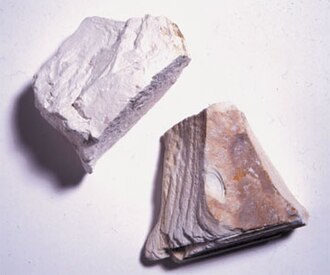
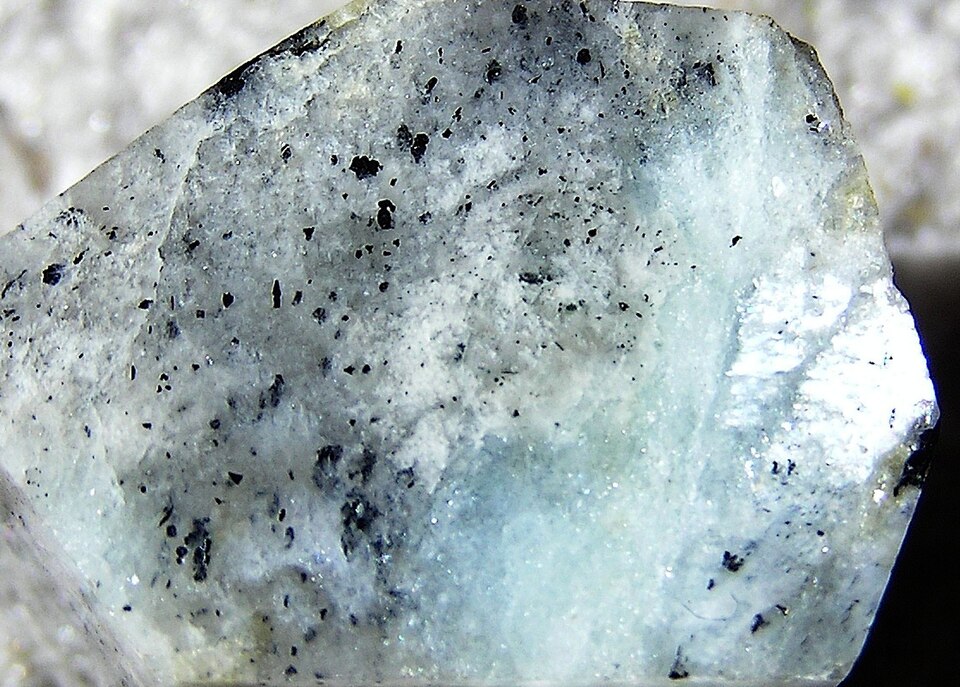
Nepheline is a sodium and potassium aluminosilicate of the feldspathoid group, found in silica-poor igneous rocks. It usually appears as gray, greasy-looking masses and grains rather than well-formed crystals.
Also known as: Nephelite, Eleolite.
Nepheline properties at a glance
| Type | Silicate Minerals |
|---|---|
| Chemical formula | (Na,K)AlSiO4 |
| Mohs hardness | 6 |
| Crystal system | hexagonal |
| Luster | vitreous |
| Streak | White |
| Cleavage | Poor on {1010} |
| Fracture | Subconchoidal |
| Specific gravity | 2.6 |
| Transparency | translucent |
| Common colors | Colorless, White, Gray, Yellowish, Greenish, Reddish |
| Rarity | uncommon |
Geology & background
Nepheline is a feldspathoid that crystallizes from silica-poor, alkali-rich magmas, forming in nepheline syenites, phonolites, and related igneous rocks where quartz cannot develop.
Nepheline has been important to petrologists for defining silica-undersaturated rocks, and nepheline syenite became a valued industrial raw material for glass and ceramic manufacturing.
How to identify Nepheline
- Look for gray to colorless masses with a greasy luster in silica-poor igneous rocks rather than sharp crystals.
- Nepheline is about 6 in hardness with poor cleavage and a subconchoidal fracture.
- It becomes cloudy and gelatinizes when treated with acid, helping separate it from quartz and feldspar.
Full Nepheline identification guide: checklist, home tests and look-alikes →
Nepheline vs similar stones
Not sure it isn't something else? Side-by-side comparisons with the stones most often confused with Nepheline.
Where Nepheline is found
Nepheline occurs in silica-poor igneous rocks worldwide, with notable specimen localities in Canada, Russia, Norway, Germany, the United States, and Italy.
How much is Nepheline worth?
| Entry-level specimen | $5 |
|---|---|
| Typical collector specimen | $30 |
| Premium specimen | $150+ |
Value depends on crystal development, color, locality, associated minerals, and overall specimen quality.
Common uses
- Glass manufacturing
- Ceramics and porcelain
- Filler and extender
- Source of alumina
- Collector specimens
Interesting facts
- Nepheline forms only in silica-poor magmas and never coexists in equilibrium with quartz.
- Its name comes from a Greek word for cloud because it turns cloudy when placed in acid.
- Nepheline is used as a raw material in glass and ceramics as an alternative to feldspar.
- The rock nepheline syenite is quarried in large quantities for industrial use.
Care & safety
Nepheline is moderately hard but brittle and can chip on edges with rough handling.
Avoid inhaling dust. Do not cut, grind, or polish unknown specimens without eye protection and a proper respirator.
Nepheline FAQ
What is Nepheline?
Nepheline is a sodium and potassium aluminosilicate of the feldspathoid group, found in silica-poor igneous rocks. It usually appears as gray, greasy-looking masses and grains rather than well-formed crystals.
How much is Nepheline worth?
Entry-level Nepheline specimens sell for around $5, a typical collector specimen for about $30, and premium pieces for $150 or more. Value depends on crystal development, color, locality, associated minerals, and overall specimen quality.
How hard is Nepheline?
Nepheline has a Mohs hardness of 6. It is about as hard as window glass: a knife barely marks it, while a steel file (Mohs 6.5) will.
Where is Nepheline found?
Notable sources of Nepheline include Canada, Russia, Norway, Germany, United States, and Italy. Nepheline is a feldspathoid that crystallizes from silica-poor, alkali-rich magmas, forming in nepheline syenites, phonolites, and related igneous rocks where quartz cannot develop..
What is Nepheline used for?
Nepheline is used for glass manufacturing, ceramics and porcelain, filler and extender, source of alumina, and collector specimens.