Hydroxide Minerals · common
Limonite
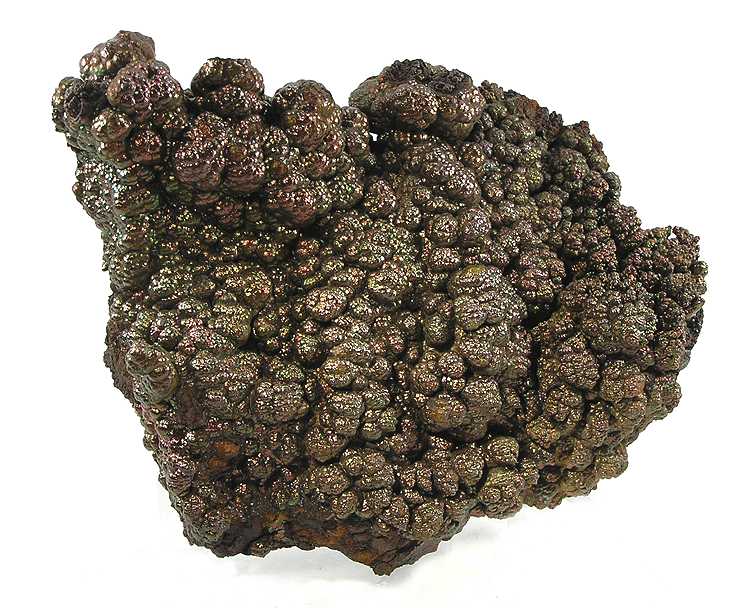
Limonite is a field name for poorly crystalline, hydrated iron oxide-hydroxide material, mostly fine-grained goethite. It forms brown earthy masses, botryoidal crusts, and pseudomorphs and has long served as an iron ore and pigment.
Also known as: Bog iron, Brown iron ore.
Limonite properties at a glance
| Type | Hydroxide Minerals |
|---|---|
| Chemical formula | FeO(OH)·nH2O |
| Mohs hardness | 4.5 |
| Crystal system | amorphous |
| Luster | earthy |
| Streak | Yellowish brown |
| Cleavage | None |
| Fracture | Earthy to conchoidal |
| Specific gravity | 3.6 |
| Transparency | opaque |
| Common colors | Yellowish brown, Brown, Dark brown, Ochre yellow |
| Rarity | common |
Geology & background
Limonite forms by the weathering and oxidation of iron-bearing minerals, accumulating as gossans, bog iron, and earthy crusts in soils and near-surface deposits.
Limonite and bog iron were among the earliest iron ores worked by ancient and medieval peoples, and limonite earth pigments have been used in art since prehistoric times.
How to identify Limonite
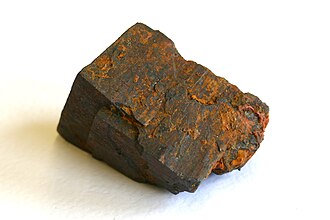
- Look for brown to yellowish-brown earthy or botryoidal masses that lack crystal faces of their own.
- Limonite always leaves a distinctive yellowish-brown streak, a key identifying feature.
- Distinguish it from hematite by its yellow-brown rather than red streak, and recognize cube-shaped pseudomorphs after pyrite.
Full Limonite identification guide: checklist, home tests and look-alikes →
Limonite photos
Limonite vs similar stones
Not sure it isn't something else? Side-by-side comparisons with the stones most often confused with Limonite.
Where Limonite is found
Limonite forms in weathered iron-bearing deposits and bogs worldwide, with notable occurrences in the United States, Germany, France, the United Kingdom, and Sweden.
How much is Limonite worth?
| Entry-level specimen | $3 |
|---|---|
| Typical collector specimen | $20 |
| Premium specimen | $120+ |
Value depends on form, color, size, locality, aesthetics, condition, and provenance.
Common uses
- Iron ore
- Yellow ochre pigment
- Historic bog iron source
- Decorative specimens
- Collector specimens
Interesting facts
- Limonite is not a single mineral species but a mixture, mostly of goethite with adsorbed water.
- Its name comes from a Greek word for meadow, reflecting its occurrence as bog iron.
- Limonite is the source of the yellow-brown earth pigment known as yellow ochre.
- It often forms pseudomorphs, replacing pyrite crystals while keeping their original cubic shape.
Care & safety
Limonite is variable in hardness and often earthy and friable, so masses can crumble or stain.
Avoid inhaling dust. Do not cut, grind, or polish unknown specimens without eye protection and a proper respirator.
Limonite FAQ
What is Limonite?
Limonite is a field name for poorly crystalline, hydrated iron oxide-hydroxide material, mostly fine-grained goethite. It forms brown earthy masses, botryoidal crusts, and pseudomorphs and has long served as an iron ore and pigment.
How much is Limonite worth?
Entry-level Limonite specimens sell for around $3, a typical collector specimen for about $20, and premium pieces for $120 or more. Value depends on form, color, size, locality, aesthetics, condition, and provenance.
How hard is Limonite?
Limonite has a Mohs hardness of 4.5. A steel knife blade (Mohs 5.5) scratches it; a copper coin does not.
Where is Limonite found?
Notable sources of Limonite include United States, Germany, France, United Kingdom, and Sweden. Limonite forms by the weathering and oxidation of iron-bearing minerals, accumulating as gossans, bog iron, and earthy crusts in soils and near-surface deposits..
What is Limonite used for?
Limonite is used for iron ore, yellow ochre pigment, historic bog iron source, decorative specimens, and collector specimens.