Carbonates · common
Magnesite
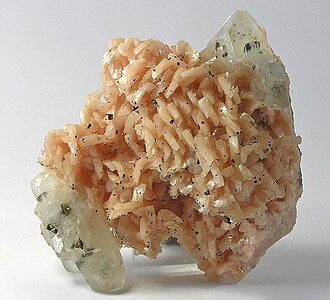
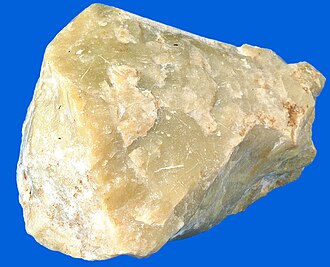
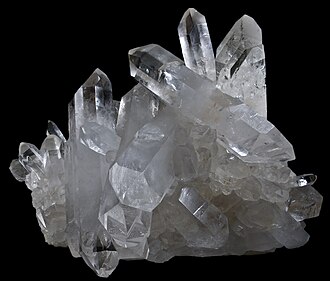
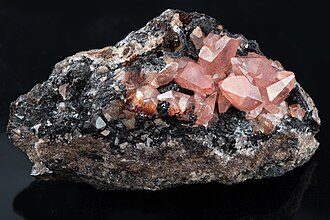
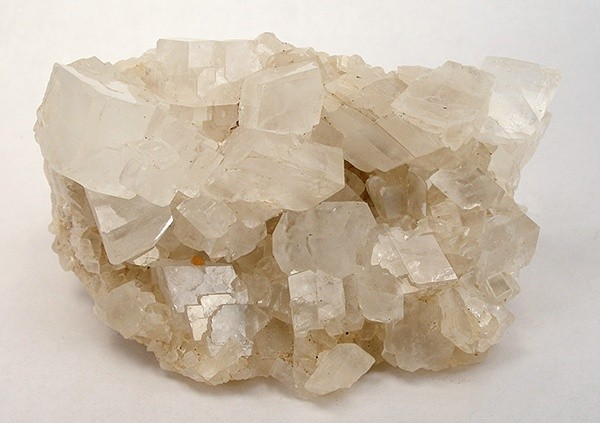
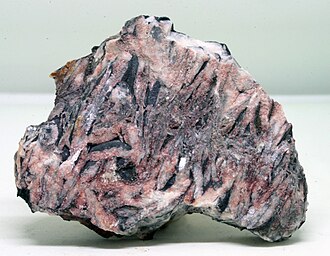
Magnesite is a magnesium carbonate mineral that forms white to gray crystalline masses and, less commonly, rhombohedral crystals. It is an important source of magnesium and refractory magnesia.
Also known as: Magnesium carbonate.
Magnesite properties at a glance
| Type | Carbonates |
|---|---|
| Chemical formula | MgCO3 |
| Mohs hardness | 4 |
| Crystal system | trigonal |
| Luster | vitreous |
| Streak | White |
| Cleavage | Perfect rhombohedral |
| Fracture | Conchoidal to uneven |
| Specific gravity | 3 |
| Transparency | translucent |
| Common colors | White, Gray, Yellowish, Brown, Colorless |
| Rarity | common |
Geology & background
Magnesite forms by alteration of magnesium-rich rocks such as serpentinite, by metasomatism of carbonate rocks, and as a sedimentary precipitate in some lake and weathering settings.
Magnesite has been mined as the principal raw material for refractory bricks that line high-temperature furnaces, and it remains an industrial source of magnesium compounds.
How to identify Magnesite
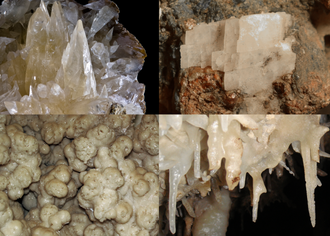
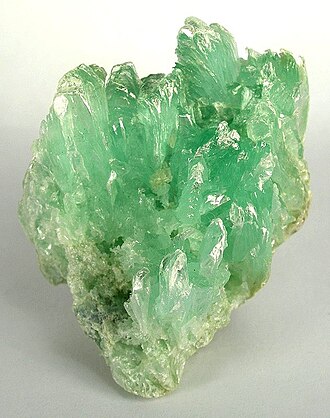
- Look for white to gray crystalline or porcelain-like masses with perfect rhombohedral cleavage in crystalline material.
- Magnesite effervesces only in warm acid, which separates it from readily fizzing calcite.
- Distinguish it from dolomite by chemical testing and from calcite by its higher hardness and weaker acid reaction.
Full Magnesite identification guide: checklist, home tests and look-alikes →
Magnesite photos
Magnesite vs similar stones
Not sure it isn't something else? Side-by-side comparisons with the stones most often confused with Magnesite.
Where Magnesite is found
Magnesite occurs in altered magnesium-rich rocks and metasomatized carbonates worldwide, with notable sources in Austria, Brazil, China, Spain, and Australia.
How much is Magnesite worth?
| Entry-level specimen | $3 |
|---|---|
| Typical collector specimen | $25 |
| Premium specimen | $150+ |
Value depends on crystal form, color, size, locality, aesthetics, damage, and provenance.
Common uses
- Refractory magnesia
- Magnesium chemicals
- Dyed imitation gem material
- Industrial filler
- Collector specimens
Interesting facts
- Massive porcelain-like magnesite is often dyed to imitate turquoise in inexpensive jewelry.
- Magnesite reacts only with warm acid, unlike calcite, which fizzes readily in cold acid.
- Heating magnesite drives off carbon dioxide to produce magnesia, a key refractory material.
- Magnesite forms a partial chemical series with iron-bearing siderite.
Care & safety
Magnesite is moderately soft and can scratch or chip, and crystalline material cleaves easily.
Avoid inhaling dust. Do not cut, grind, or polish unknown specimens without eye protection and a proper respirator.
Magnesite FAQ
What is Magnesite?
Magnesite is a magnesium carbonate mineral that forms white to gray crystalline masses and, less commonly, rhombohedral crystals. It is an important source of magnesium and refractory magnesia.
How much is Magnesite worth?
Entry-level Magnesite specimens sell for around $3, a typical collector specimen for about $25, and premium pieces for $150 or more. Value depends on crystal form, color, size, locality, aesthetics, damage, and provenance.
How hard is Magnesite?
Magnesite has a Mohs hardness of 4. A steel knife blade (Mohs 5.5) scratches it; a copper coin does not.
Where is Magnesite found?
Notable sources of Magnesite include Austria, Brazil, China, Spain, and Australia. Magnesite forms by alteration of magnesium-rich rocks such as serpentinite, by metasomatism of carbonate rocks, and as a sedimentary precipitate in some lake and weathering settings..
What is Magnesite used for?
Magnesite is used for refractory magnesia, magnesium chemicals, dyed imitation gem material, industrial filler, and collector specimens.