Minerals · common
Magnetite
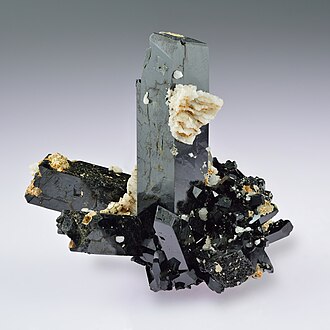
Magnetite is an iron oxide mineral, Fe3O4, crystallizing in the cubic system and the most strongly magnetic naturally occurring mineral on Earth, capable of attracting steel objects and even acting as a natural compass in its lodestone form. It forms in a remarkably wide range of igneous, metamorphic, and sedimentary environments, making it one of the most common accessory minerals in rock-forming systems worldwide. Ancient sailors and travelers used naturally magnetized lodestone, a variety of magnetite, as the earliest known compasses.
Magnetite properties at a glance
| Type | Minerals |
|---|---|
| Chemical formula | Fe3O4 |
| Mohs hardness | 5.5–6.5 |
| Crystal system | Cubic |
| Luster | Metallic to submetallic/dull |
| Streak | Black |
| Cleavage | None; octahedral parting common |
| Fracture | Subconchoidal to uneven, brittle |
| Specific gravity | 5.17–5.2 |
| Transparency | Opaque |
| Common colors | Black, Iron-black, Gray-black |
| Rarity | common |
Geology & background
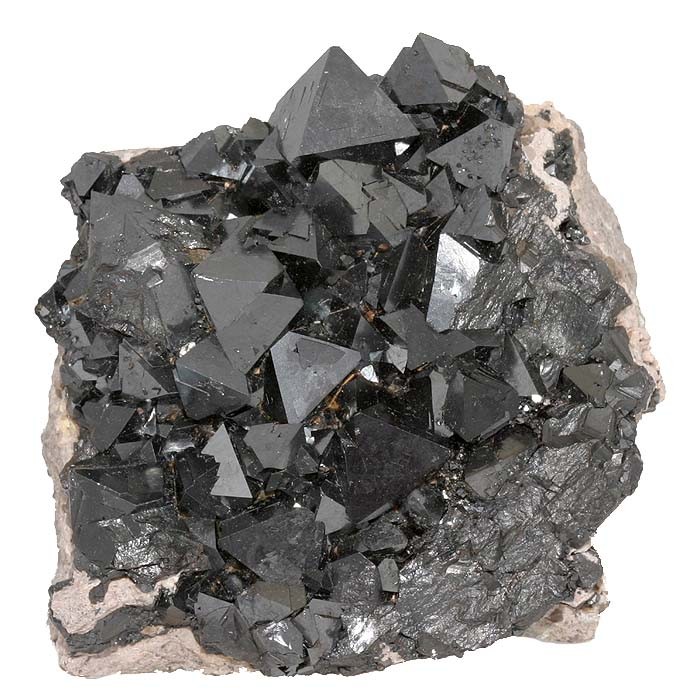
Magnetite crystallizes directly from cooling magma as an accessory mineral in igneous rocks, forms through metamorphic recrystallization of iron-rich sediments, and precipitates in banded iron formations deposited in ancient oceans lacking free oxygen. Massive, high-grade magnetite ore bodies occur in Sweden's Kiruna district, Russia's Kursk Magnetic Anomaly, and the Lake Superior iron ranges of Minnesota and Michigan, all of which have supplied iron ore to industry for well over a century. Small, well-formed octahedral crystals suitable for mineral collections come from localities in New York, New Jersey, and various skarn deposits worldwide.
Rockhounds can identify magnetite instantly with a simple magnet test, since even small grains will visibly attract to a handheld magnet, a property shared by very few other common minerals. Naturally magnetized magnetite, called lodestone, can itself attract iron filings and small steel objects, a genuinely rare natural phenomenon that fascinated ancient civilizations long before the physics of magnetism was understood. Because magnetite is so widespread and abundant, individual specimens have modest monetary value, though well-formed octahedral crystals and lodestone pieces remain popular teaching specimens.
How to identify Magnetite
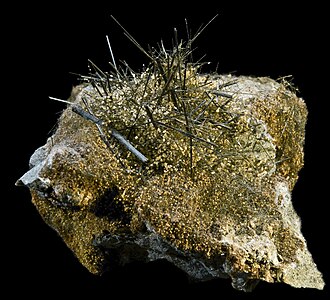
Magnetite is black to brownish-black, with a metallic to dull, sometimes submetallic luster, and a black streak that stays consistent even on tarnished specimens. Its hardness is about 5.5 to 6.5, it lacks distinct cleavage, breaking instead with a conchoidal to uneven fracture, and it commonly forms octahedral crystals or granular masses. The defining field test is magnetism: a small magnet or compass needle will visibly react to even modest-sized fragments. It is most often confused with black hematite varieties, which lack magnetism and instead give a reddish-brown streak.
- Compare the specimen's color, luster, crystal habit, grain size, streak, and locality before confirming.
- Use multiple photos when possible, including a fresh surface and a close view of texture.
Full Magnetite identification guide: checklist, home tests and look-alikes →
Magnetite vs similar stones
Not sure it isn't something else? Side-by-side comparisons with the stones most often confused with Magnetite.
Where Magnetite is found
Reported from multiple localities worldwide; verify locality against specimen provenance when available.
How much is Magnetite worth?
| Entry-level specimen | $2 |
|---|---|
| Typical collector specimen | $20 |
| Premium specimen | $150+ |
Value depends on size, crystal quality, color, locality, rarity, damage, and provenance.
Common uses
- Collector specimens
- Education
- Field identification
- Industrial or lapidary use when suitable
Interesting facts
- Naturally magnetized magnetite, known as lodestone, served as the world's first magnetic compass long before humans understood why it worked.
- Certain bacteria and even homing pigeons contain microscopic magnetite crystals believed to help them sense Earth's magnetic field for navigation.
- Banded iron formations built largely from magnetite recorded the moment ancient oceans first became oxygenated more than two billion years ago.
Care & safety
Handle as a collector specimen until hardness, cleavage, and fracture are verified.
Avoid inhaling dust. Do not cut, grind, or polish unknown specimens without eye protection and a proper respirator.
Magnetite FAQ
What is Magnetite?
Magnetite is an iron oxide mineral, Fe3O4, crystallizing in the cubic system and the most strongly magnetic naturally occurring mineral on Earth, capable of attracting steel objects and even acting as a natural compass in its lodestone form. It forms in a remarkably wide range of igneous, metamorphic, and sedimentary environments, making it one of the most common accessory minerals in rock-forming systems worldwide. Ancient sailors and travelers used naturally magnetized lodestone, a variety of magnetite, as the earliest known compasses.
How much is Magnetite worth?
Entry-level Magnetite specimens sell for around $2, a typical collector specimen for about $20, and premium pieces for $150 or more. Value depends on size, crystal quality, color, locality, rarity, damage, and provenance.
How hard is Magnetite?
Magnetite has a Mohs hardness of 5.5–6.5. It is about as hard as window glass: a knife barely marks it, while a steel file (Mohs 6.5) will.
What is Magnetite used for?
Magnetite is used for collector specimens, education, field identification, and industrial or lapidary use when suitable.