Sulfide Minerals · uncommon
Molybdenite
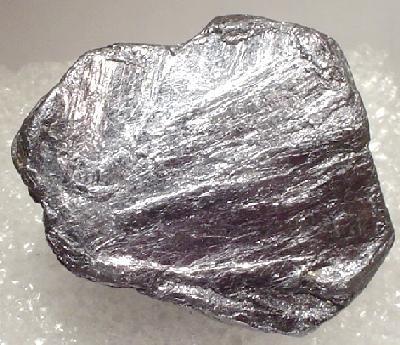
Molybdenite is a soft, metallic molybdenum sulfide and the most important ore of molybdenum. It appears as bluish lead-gray flakes, plates, and foliated masses that feel greasy and leave a mark like graphite.
Also known as: Molybdenum sulfide, Molybdenum glance.
Molybdenite properties at a glance
| Type | Sulfide Minerals |
|---|---|
| Chemical formula | MoS2 |
| Mohs hardness | 1.25 |
| Crystal system | hexagonal |
| Luster | metallic |
| Streak | Bluish gray |
| Cleavage | Perfect on {0001} |
| Fracture | Uneven |
| Specific gravity | 4.7 |
| Transparency | opaque |
| Common colors | Lead gray, Bluish gray |
| Rarity | uncommon |
Geology & background
Molybdenite forms in high-temperature hydrothermal environments, especially in porphyry deposits, quartz veins, pegmatites, and contact metamorphic zones around intrusive rocks.
Molybdenite was long confused with graphite and galena until eighteenth-century chemists identified the new element molybdenum within it, opening the way for modern molybdenum metallurgy.
How to identify Molybdenite
- Look for a soft, bluish lead-gray metallic mineral that feels greasy and forms flexible flakes.
- It is extremely soft, marking paper and bending into thin nonelastic plates along its perfect cleavage.
- Distinguish it from graphite by its bluish-gray streak on glazed porcelain and higher density.
Full Molybdenite identification guide: checklist, home tests and look-alikes →
Molybdenite vs similar stones
Not sure it isn't something else? Side-by-side comparisons with the stones most often confused with Molybdenite.
Where Molybdenite is found
Molybdenite occurs in porphyry deposits, veins, and pegmatites worldwide, with notable specimen localities in the United States, Canada, China, Chile, Australia, and Norway.
How much is Molybdenite worth?
| Entry-level specimen | $8 |
|---|---|
| Typical collector specimen | $45 |
| Premium specimen | $250+ |
Value depends on crystal size, well-formed plates, matrix, locality, and aesthetic quality of the specimen.
Common uses
- Ore of molybdenum
- Solid lubricant
- Steel alloying additive
- Source of rhenium
- Collector specimens
Interesting facts
- Molybdenite is so soft it can be marked with a fingernail and feels greasy to the touch.
- It closely resembles graphite, but molybdenite leaves a bluish streak while graphite leaves a black one.
- It is the primary ore of molybdenum, a metal used to strengthen and harden steel.
- Molybdenite is sometimes a minor source of the rare element rhenium.
Care & safety
Molybdenite is very soft and easily smeared, scratched, or deformed by ordinary handling.
Avoid inhaling dust. Do not cut, grind, or polish unknown specimens without eye protection and a proper respirator.
Molybdenite FAQ
What is Molybdenite?
Molybdenite is a soft, metallic molybdenum sulfide and the most important ore of molybdenum. It appears as bluish lead-gray flakes, plates, and foliated masses that feel greasy and leave a mark like graphite.
How much is Molybdenite worth?
Entry-level Molybdenite specimens sell for around $8, a typical collector specimen for about $45, and premium pieces for $250 or more. Value depends on crystal size, well-formed plates, matrix, locality, and aesthetic quality of the specimen.
How hard is Molybdenite?
Molybdenite has a Mohs hardness of 1.25. A fingernail (Mohs 2.5) scratches it easily.
Where is Molybdenite found?
Notable sources of Molybdenite include United States, Canada, China, Chile, Australia, and Norway. Molybdenite forms in high-temperature hydrothermal environments, especially in porphyry deposits, quartz veins, pegmatites, and contact metamorphic zones around intrusive rocks..
What is Molybdenite used for?
Molybdenite is used for ore of molybdenum, solid lubricant, steel alloying additive, source of rhenium, and collector specimens.