Silicate Minerals · rare
Morganite
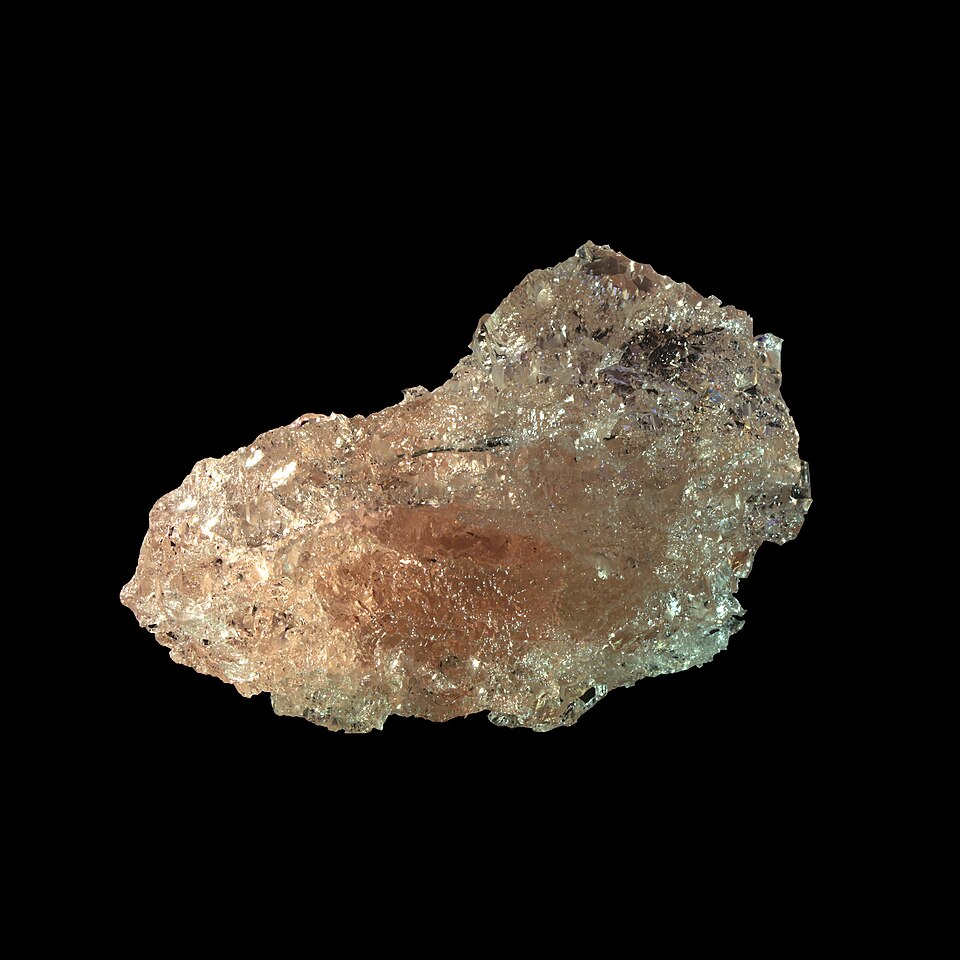
Morganite is the pink to peach variety of beryl, colored by traces of manganese. A durable and softly toned gemstone, it forms in pegmatites as transparent tabular crystals and is cut into faceted gems.
Also known as: Pink beryl, Rose beryl, Pink emerald.
Morganite properties at a glance
| Type | Silicate Minerals |
|---|---|
| Chemical formula | Be3Al2Si6O18 |
| Mohs hardness | 7.75 |
| Crystal system | hexagonal |
| Luster | vitreous |
| Streak | White |
| Cleavage | Imperfect on {0001} |
| Fracture | Conchoidal to uneven |
| Specific gravity | 2.8 |
| Transparency | transparent |
| Common colors | Pink, Peach, Salmon, Pale violet |
| Rarity | rare |
Geology & background
Morganite is the pink to peach gem variety of beryl, crystallizing in granitic pegmatites where beryllium-rich fluids form well-developed crystals, with manganese providing its color.
Recognized as a distinct beryl variety in the early twentieth century, morganite gained a strong following in modern jewelry, especially as a softer-toned alternative to pink sapphire and diamond.
How to identify Morganite
- Look for a soft pink to peach transparent crystal with a hexagonal habit and vitreous luster.
- Morganite is hard at about 7.5 to 8 and shows weak basal cleavage and conchoidal fracture.
- Color and crystal form distinguish it from pink topaz, kunzite, and pink tourmaline.
Full Morganite identification guide: checklist, home tests and look-alikes →
Morganite vs similar stones
Not sure it isn't something else? Side-by-side comparisons with the stones most often confused with Morganite.
Where Morganite is found
Morganite occurs in granitic pegmatites worldwide, with notable gem localities in Brazil, the United States, Madagascar, Afghanistan, Mozambique, and Namibia.
How much is Morganite worth?
| Entry-level specimen | $30 |
|---|---|
| Typical collector specimen | $250 |
| Premium specimen | $2000+ |
Value depends on color saturation, clarity, cut, size, and whether the stone is a gem or crystal specimen.
Common uses
- Faceted gemstones
- Fine jewelry
- Collector crystals
- Beryllium-bearing mineral specimens
Interesting facts
- Morganite was named in 1911 in honor of the financier and gem collector J. P. Morgan.
- Its color comes from small amounts of manganese substituting into the beryl structure.
- Some morganite is gently heat treated to reduce orange tones and emphasize a cleaner pink.
- It belongs to the beryl family alongside emerald, aquamarine, and golden heliodor.
Care & safety
Morganite is hard and durable but can chip on edges or fracture if struck sharply.
Avoid inhaling dust. Do not cut, grind, or polish unknown specimens without eye protection and a proper respirator.
Morganite FAQ
What is Morganite?
Morganite is the pink to peach variety of beryl, colored by traces of manganese. A durable and softly toned gemstone, it forms in pegmatites as transparent tabular crystals and is cut into faceted gems.
How much is Morganite worth?
Entry-level Morganite specimens sell for around $30, a typical collector specimen for about $250, and premium pieces for $2000 or more. Value depends on color saturation, clarity, cut, size, and whether the stone is a gem or crystal specimen.
How hard is Morganite?
Morganite has a Mohs hardness of 7.75. It scratches glass, steel and even quartz; only harder gems will mark it.
Where is Morganite found?
Notable sources of Morganite include Brazil, United States, Madagascar, Afghanistan, Mozambique, and Namibia. Morganite is the pink to peach gem variety of beryl, crystallizing in granitic pegmatites where beryllium-rich fluids form well-developed crystals, with manganese providing its color..
What is Morganite used for?
Morganite is used for faceted gemstones, fine jewelry, collector crystals, and beryllium-bearing mineral specimens.