Materials · common
Opalite
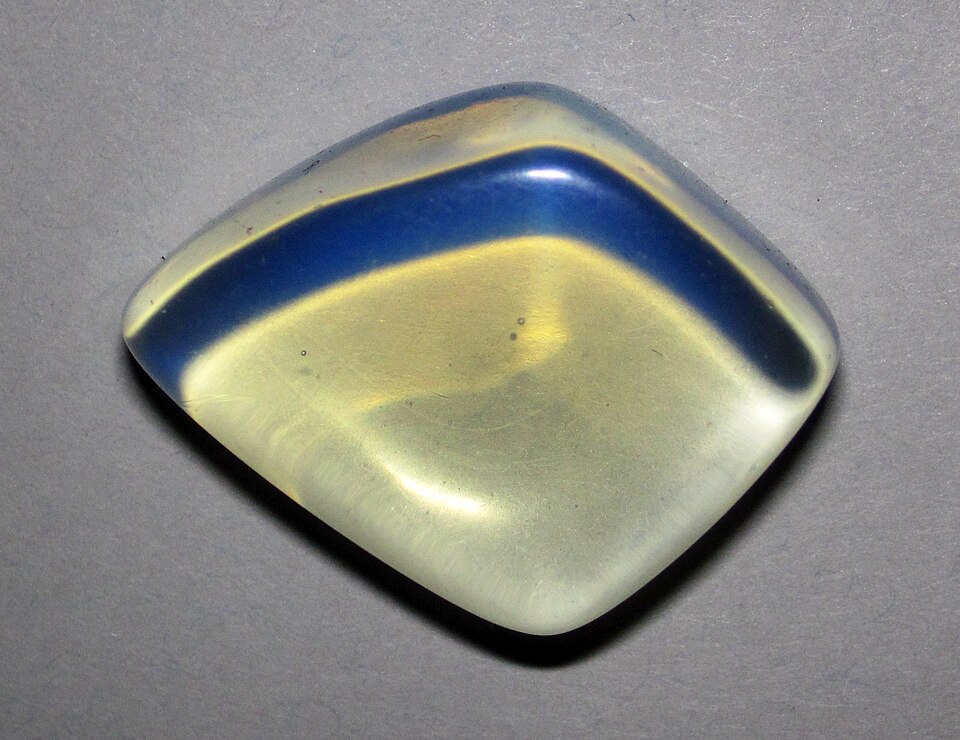
Opalite is a retail trade name for manmade opalescent glass and related opal simulants, commonly sold as tumbled stones or jewelry.
Also known as: Manmade Opalite, Opalescent Glass, Synthetic Opal Glass, Opal Glass, opal simulant.
Opalite properties at a glance
| Type | Materials |
|---|---|
| Chemical formula | Opalescent silica glass |
| Mohs hardness | 5.5 |
| Crystal system | amorphous |
| Luster | vitreous |
| Streak | White to colorless |
| Cleavage | None |
| Fracture | Conchoidal |
| Specific gravity | 2.4 |
| Transparency | translucent |
| Common colors | Milky White, Blue, Yellow, Opalescent |
| Rarity | common |
Geology & background
Made as opalescent glass or another opal simulant that scatters light to produce blue and yellow glow.
Opalite is a modern crystal-retail and jewelry trade label for opal-like glass and simulants.
How to identify Opalite
- Look for milky translucent glass with blue-yellow glow and smooth manufactured polish.
- Check for bubbles or molded shapes that support a glass identification.
- Do not identify retail opalite as natural Opal unless play-of-color and provenance support it.
Full Opalite identification guide: checklist, home tests and look-alikes →
Opalite vs similar stones
Not sure it isn't something else? Side-by-side comparisons with the stones most often confused with Opalite.
Where Opalite is found
Opalite is a retail or manufactured material label; record seller disclosure and provenance when known.
How much is Opalite worth?
| Entry-level specimen | $3 |
|---|---|
| Typical collector specimen | $15 |
| Premium specimen | $70+ |
Value is usually decorative or lapidary-market value, not natural rarity. Price depends on size, polish, color effect, condition, seller disclosure, and craftsmanship.
Common uses
- Tumbled stones
- Jewelry
- Decorative objects
- Crystal retail
Interesting facts
- Most retail opalite is manmade glass, not natural opal.
- It often appears milky blue against dark backgrounds and warmer yellow against light.
- Natural geology also uses opalite differently, so seller context matters.
Care & safety
Opalite may be glass, coated, dyed, or otherwise manufactured; handle it as a decorative material unless verified otherwise.
Avoid inhaling dust. Do not cut, grind, or polish unknown specimens without eye protection and a properly rated respirator.
Opalite FAQ
What is Opalite?
Opalite is a retail trade name for manmade opalescent glass and related opal simulants, commonly sold as tumbled stones or jewelry.
How much is Opalite worth?
Entry-level Opalite specimens sell for around $3, a typical collector specimen for about $15, and premium pieces for $70 or more. Value is usually decorative or lapidary-market value, not natural rarity. Price depends on size, polish, color effect, condition, seller disclosure, and craftsmanship.
How hard is Opalite?
Opalite has a Mohs hardness of 5.5. It is about as hard as window glass: a knife barely marks it, while a steel file (Mohs 6.5) will.
What is Opalite used for?
Opalite is used for tumbled stones, jewelry, decorative objects, and crystal retail.