Silicate Minerals · uncommon
Scapolite
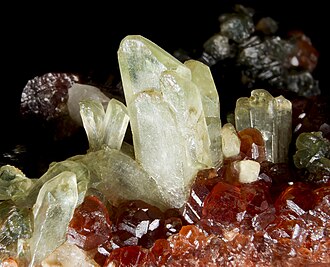
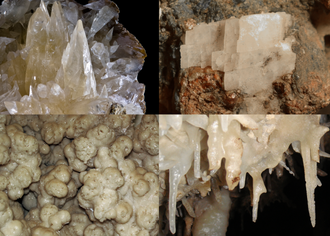
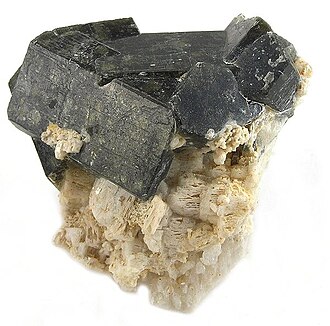
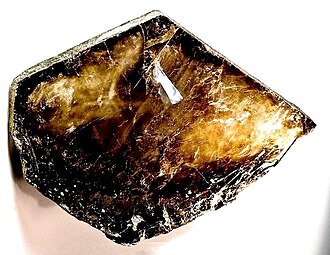
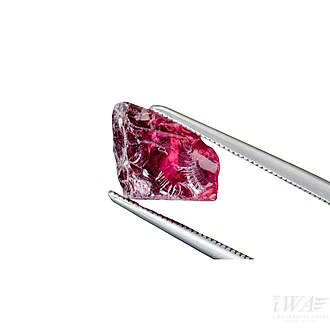
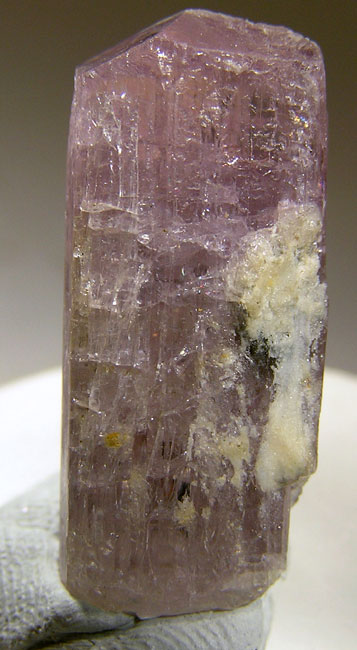
Scapolite is a group of tectosilicate minerals forming a solid solution between sodium-rich marialite and calcium-rich meionite. It occurs as prismatic crystals or massive material in white, pink, violet, and yellow tones, sometimes showing a cat's-eye effect when cut.
Also known as: Wernerite, Marialite, Meionite.
Scapolite properties at a glance
| Type | Silicate Minerals |
|---|---|
| Chemical formula | (Na,Ca)4[Al(Al,Si)Si2O8]3(Cl,CO3,SO4) |
| Mohs hardness | 6 |
| Crystal system | tetragonal |
| Luster | vitreous |
| Streak | White |
| Cleavage | Distinct on {100} and {110} |
| Fracture | Conchoidal to uneven |
| Specific gravity | 2.65 |
| Transparency | transparent |
| Common colors | White, Pink, Violet, Yellow, Gray |
| Rarity | uncommon |
Geology & background
Scapolite forms mainly in regionally metamorphosed and contact-metamorphosed rocks, and it can also crystallize in marbles, skarns, and some pegmatites.
Scapolite was recognized as a distinct mineral in the early nineteenth century. It later gained interest as a gemstone, especially fine violet and yellow stones from Africa and Asia.
How to identify Scapolite
- Look for prismatic tetragonal crystals with distinct cleavage and a vitreous luster.
- Fluorescence in yellow, orange, or pink under ultraviolet light can help confirm scapolite.
- Scapolite can resemble feldspar; check crystal form, density, and locality context.
Full Scapolite identification guide: checklist, home tests and look-alikes →
Scapolite vs similar stones
Not sure it isn't something else? Side-by-side comparisons with the stones most often confused with Scapolite.
Where Scapolite is found
Scapolite occurs in metamorphic rocks, marbles, and skarns worldwide, with notable specimen and gem localities in Afghanistan, Myanmar, Tanzania, Canada, Brazil, and Madagascar.
How much is Scapolite worth?
| Entry-level specimen | $10 |
|---|---|
| Typical collector specimen | $70 |
| Premium specimen | $500+ |
Value depends on color, clarity, crystal quality, size, locality, and any chatoyant cat's-eye effect.
Common uses
- Faceted and cabochon gemstones
- Collector specimens
- Mineralogical study of metamorphism
- Educational reference material
Interesting facts
- The name scapolite comes from a Greek word for rod, describing its prismatic crystal shape.
- Some scapolite shows a strong cat's-eye effect, or chatoyancy, when polished as a cabochon.
- Scapolite is actually a mineral series, ranging between the end members marialite and meionite.
- Certain scapolites fluoresce yellow, orange, or pink under ultraviolet light.
Care & safety
Scapolite is moderately hard but brittle, with distinct cleavage that makes it prone to chipping.
Avoid inhaling dust. Do not cut, grind, or polish unknown specimens without eye protection and a proper respirator.
Scapolite FAQ
What is Scapolite?
Scapolite is a group of tectosilicate minerals forming a solid solution between sodium-rich marialite and calcium-rich meionite. It occurs as prismatic crystals or massive material in white, pink, violet, and yellow tones, sometimes showing a cat's-eye effect when cut.
How much is Scapolite worth?
Entry-level Scapolite specimens sell for around $10, a typical collector specimen for about $70, and premium pieces for $500 or more. Value depends on color, clarity, crystal quality, size, locality, and any chatoyant cat's-eye effect.
How hard is Scapolite?
Scapolite has a Mohs hardness of 6. It is about as hard as window glass: a knife barely marks it, while a steel file (Mohs 6.5) will.
Where is Scapolite found?
Notable sources of Scapolite include Afghanistan, Myanmar, Tanzania, Canada, Brazil, and Madagascar. Scapolite forms mainly in regionally metamorphosed and contact-metamorphosed rocks, and it can also crystallize in marbles, skarns, and some pegmatites..
What is Scapolite used for?
Scapolite is used for faceted and cabochon gemstones, collector specimens, mineralogical study of metamorphism, and educational reference material.