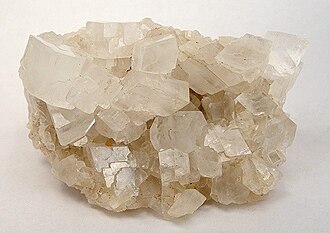
Carbonates · common
Siderite
Siderite is an iron carbonate mineral that occurs as honey-brown to tan rhombohedral crystals, often with curved or saddle-shaped faces. It also forms massive and concretionary masses and is a recognized iron ore.
Also known as: Chalybite, Iron carbonate.
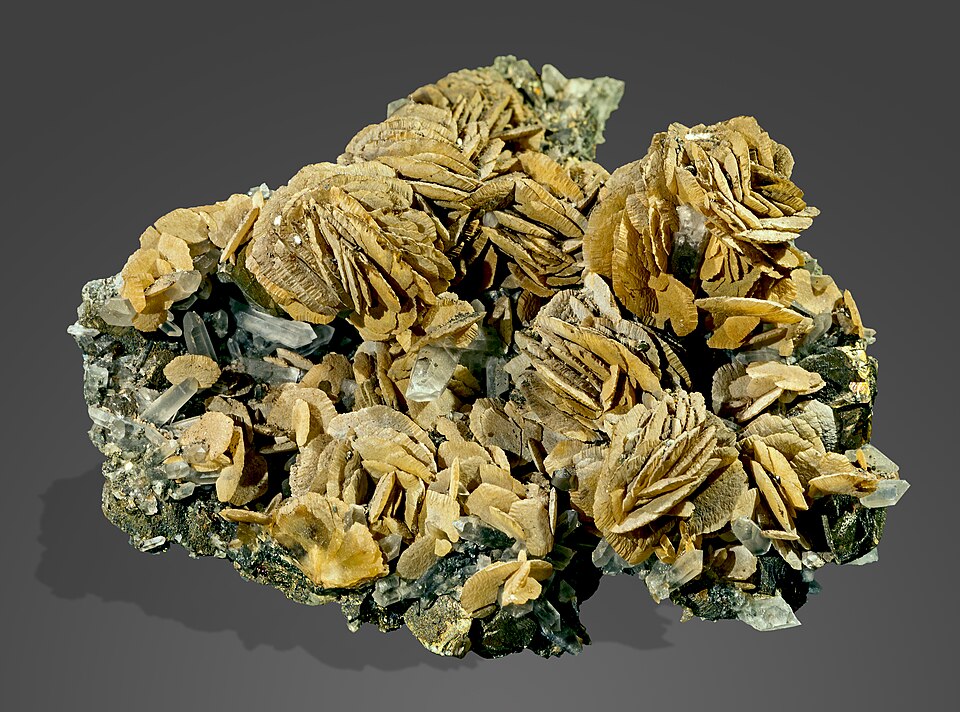
Siderite properties at a glance
| Type | Carbonates |
|---|---|
| Chemical formula | FeCO3 |
| Mohs hardness | 4 |
| Crystal system | trigonal |
| Luster | vitreous |
| Streak | White |
| Cleavage | Perfect rhombohedral |
| Fracture | Uneven to conchoidal |
| Specific gravity | 3.96 |
| Transparency | translucent |
| Common colors | Yellowish brown, Brown, Tan, Gray |
| Rarity | common |
Geology & background
Siderite forms in hydrothermal veins, in sedimentary iron-rich beds, and as a concretionary mineral in shales and bog environments where iron and carbonate are available.
Siderite has been mined as an iron ore since antiquity, and certain districts built local ironworking industries around sedimentary siderite beds and ironstone concretions.
How to identify Siderite
- Look for honey-brown to tan rhombohedral crystals, often with curved saddle-shaped faces.
- Siderite has perfect rhombohedral cleavage and is notably heavy for a carbonate.
- Unlike calcite, siderite reacts only weakly with cold dilute acid and may need warm acid to fizz.
Full Siderite identification guide: checklist, home tests and look-alikes →
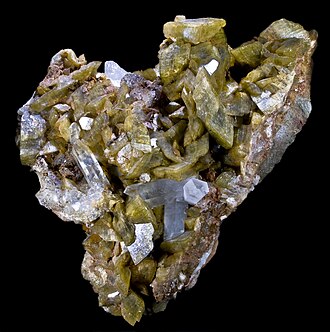
Siderite photos
Siderite vs similar stones
Not sure it isn't something else? Side-by-side comparisons with the stones most often confused with Siderite.
Where Siderite is found
Siderite occurs in hydrothermal veins and sedimentary iron beds worldwide, with notable specimen localities in the United Kingdom, Germany, Brazil, Portugal, the United States, and Bolivia.
How much is Siderite worth?
| Entry-level specimen | $5 |
|---|---|
| Typical collector specimen | $45 |
| Premium specimen | $350+ |
Value depends on crystal quality, color, luster, size, locality, and aesthetic association with other minerals.
Common uses
- Iron ore
- Collector specimens
- Educational mineralogy
- Reference material for carbonate study
Interesting facts
- The name siderite comes from the Greek word for iron, reflecting its iron content.
- Siderite crystals frequently show curved, saddle-shaped faces similar to those of dolomite.
- It is a significant iron ore in some regions, particularly where it occurs in thick sedimentary beds.
- Siderite slowly weathers to iron oxides, often gaining a brown to rusty surface coating.
Care & safety
Siderite is moderately soft and brittle, with perfect cleavage that makes it prone to chipping.
Avoid inhaling dust. Do not cut, grind, or polish unknown specimens without eye protection and a proper respirator.
Siderite FAQ
What is Siderite?
Siderite is an iron carbonate mineral that occurs as honey-brown to tan rhombohedral crystals, often with curved or saddle-shaped faces. It also forms massive and concretionary masses and is a recognized iron ore.
How much is Siderite worth?
Entry-level Siderite specimens sell for around $5, a typical collector specimen for about $45, and premium pieces for $350 or more. Value depends on crystal quality, color, luster, size, locality, and aesthetic association with other minerals.
How hard is Siderite?
Siderite has a Mohs hardness of 4. A steel knife blade (Mohs 5.5) scratches it; a copper coin does not.
Where is Siderite found?
Notable sources of Siderite include United Kingdom, Germany, Brazil, Portugal, United States, and Bolivia. Siderite forms in hydrothermal veins, in sedimentary iron-rich beds, and as a concretionary mineral in shales and bog environments where iron and carbonate are available..
What is Siderite used for?
Siderite is used for iron ore, collector specimens, educational mineralogy, and reference material for carbonate study.