Metals & Alloys · common
Stainless Steel
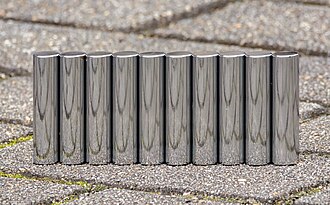
Stainless steel is a silvery iron-based alloy commonly used in watch bands, rings, tools, cookware, and hardware. It is not a natural mineral specimen, but it is an in-scope visible material for StoneSnap when a scan clearly shows a metallic manufactured object.
Also known as: Steel, Inox, Stainless, Brushed stainless steel, Stainless steel watch band, Stainless steel bracelet.

Stainless Steel properties at a glance
| Type | Metals & Alloys |
|---|---|
| Chemical formula | Iron alloy with chromium; composition varies by grade |
| Mohs hardness | 5.5 |
| Luster | metallic |
| Streak | Gray to silver-gray |
| Cleavage | None |
| Fracture | Ductile to uneven |
| Specific gravity | 7.9 |
| Transparency | opaque |
| Common colors | Silver, Gray, Steel gray |
| Rarity | common |
Geology & background
Stainless steel is a manufactured iron-based alloy. Chromium forms a thin passive oxide layer that helps the surface resist rust and tarnish.
Modern stainless steels were developed in the early twentieth century and became important for cutlery, medical tools, architecture, watches, jewelry, and corrosion-resistant industrial equipment.
How to identify Stainless Steel
- Look for a silvery metallic color with brushed, satin, or polished surfaces.
- Watch bracelets often show repeated machined links, clasp parts, or mesh construction rather than natural crystal habit.
- Stainless steel usually resists dark tarnish better than silver and is common in watches, rings, tools, and hardware.
- A magnet may attract some stainless steels but not all grades, so magnetism alone is not definitive.
Full Stainless Steel identification guide: checklist, home tests and look-alikes →
Stainless Steel vs similar stones
Not sure it isn't something else? Side-by-side comparisons with the stones most often confused with Stainless Steel.
Where Stainless Steel is found
Manufactured worldwide; verify grade and origin from markings, documentation, or product provenance when available.
How much is Stainless Steel worth?
| Entry-level specimen | $1 |
|---|---|
| Typical collector specimen | $20 |
| Premium specimen | $200+ |
Value depends mostly on the object, brand, grade, condition, weight, and whether it is part of jewelry, a watch, a tool, or hardware.
Common uses
- Watch bands
- Rings and jewelry
- Tools and hardware
- Cookware
- Medical instruments
- Industrial equipment
Interesting facts
- Stainless steel resists corrosion because chromium in the alloy forms a protective surface oxide.
- Many watch bracelets use stainless steel because it is durable, polishable, and relatively corrosion resistant.
- Different grades can contain nickel, molybdenum, manganese, or other alloying elements.
- A brushed finish often appears matte or satin compared with mirror-polished silver or chrome plating.
Care & safety
Stainless steel is tough and corrosion resistant, though polished or brushed surfaces can scratch.
Check sharp edges. Manufactured metal objects can have sharp edges, burrs, or broken clasp parts; handle damaged pieces carefully.
Stainless Steel FAQ
What is Stainless Steel?
Stainless steel is a silvery iron-based alloy commonly used in watch bands, rings, tools, cookware, and hardware. It is not a natural mineral specimen, but it is an in-scope visible material for StoneSnap when a scan clearly shows a metallic manufactured object.
How much is Stainless Steel worth?
Entry-level Stainless Steel specimens sell for around $1, a typical collector specimen for about $20, and premium pieces for $200 or more. Value depends mostly on the object, brand, grade, condition, weight, and whether it is part of jewelry, a watch, a tool, or hardware.
How hard is Stainless Steel?
Stainless Steel has a Mohs hardness of 5.5. It is about as hard as window glass: a knife barely marks it, while a steel file (Mohs 6.5) will.
What is Stainless Steel used for?
Stainless Steel is used for watch bands, rings and jewelry, tools and hardware, cookware, and medical instruments.