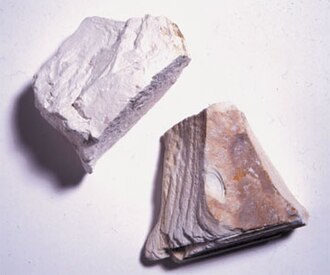
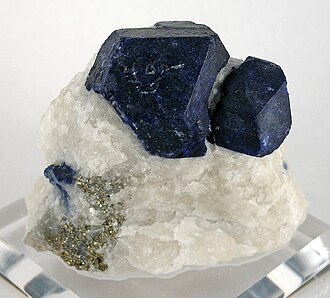
Silicate Minerals · uncommon
Sunstone
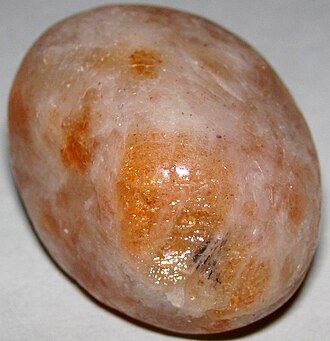
Sunstone is a gem feldspar known for aventurescence, a glittering metallic shimmer caused by tiny reflective platelets of copper, hematite, or goethite. It ranges from golden to orange and red and is cut as a gemstone.
Also known as: Aventurine feldspar, Heliolite, Oregon sunstone.
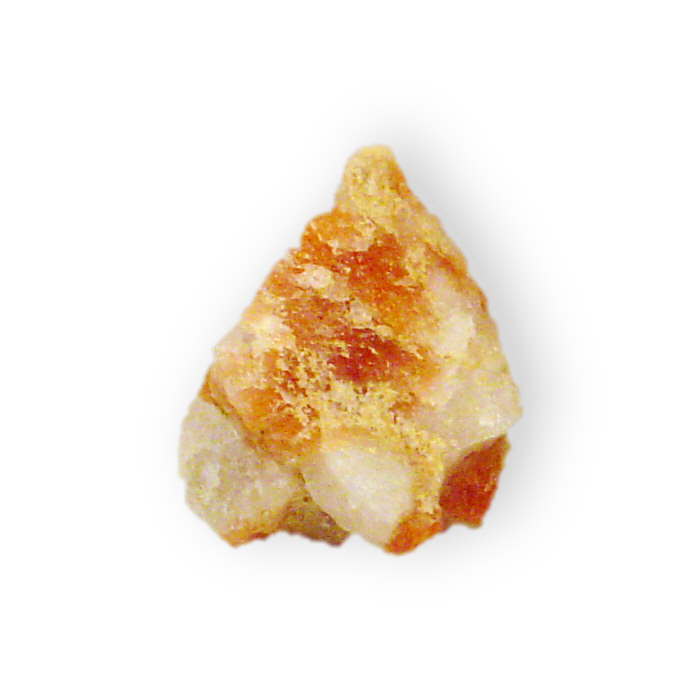
Sunstone properties at a glance
| Type | Silicate Minerals |
|---|---|
| Chemical formula | (Na,Ca)(Si,Al)4O8 |
| Mohs hardness | 6.5 |
| Crystal system | triclinic |
| Luster | vitreous |
| Streak | White |
| Cleavage | Perfect in two directions |
| Fracture | Uneven to conchoidal |
| Specific gravity | 2.65 |
| Transparency | transparent |
| Common colors | Orange, Red, Golden, Pink, Colorless |
| Rarity | uncommon |
Geology & background
Sunstone is a feldspar variety, usually oligoclase or labradorite, that forms in igneous rocks and shows a glittering optical effect from tiny mineral platelets within the crystal.
Sunstone has been used as an ornamental gem for centuries, valued in Scandinavia and elsewhere, and copper-bearing Oregon sunstone brought renewed attention to the gem in modern times.
How to identify Sunstone
- Look for a glittering metallic shimmer, called aventurescence, that flashes as the stone is tilted.
- Feldspar cleavage in two directions and hardness near 6 to 6.5 help confirm the identification.
- Tiny copper or hematite platelets create the sparkle, so distinguish it from simple orange feldspar.
Full Sunstone identification guide: checklist, home tests and look-alikes →
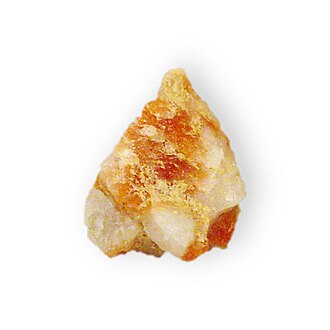
Sunstone photos
Sunstone vs similar stones
Not sure it isn't something else? Side-by-side comparisons with the stones most often confused with Sunstone.
Where Sunstone is found
Sunstone occurs as a gem feldspar in igneous rocks, with notable localities in the United States, India, Norway, Russia, Tanzania, and Canada.
How much is Sunstone worth?
| Entry-level specimen | $10 |
|---|---|
| Typical collector specimen | $90 |
| Premium specimen | $700+ |
Value depends on strength of aventurescence, body color, transparency, cut quality, and locality.
Common uses
- Faceted gemstones
- Cabochons and beads
- Jewelry
- Collector specimens
Interesting facts
- The sparkle of sunstone, called aventurescence or schiller, comes from light bouncing off countless tiny inclusions.
- Oregon sunstone is colored by copper and is the official state gemstone of Oregon.
- Sunstone can be either plagioclase or potassium feldspar depending on the deposit.
- Norway and Russia produced classic hematite-bearing sunstone long before the Oregon deposits became well known.
Care & safety
Sunstone is moderately hard but has feldspar cleavage, so it can chip or split on sharp impact.
Avoid inhaling dust. Do not cut, grind, or polish unknown specimens without eye protection and a proper respirator.
Sunstone FAQ
What is Sunstone?
Sunstone is a gem feldspar known for aventurescence, a glittering metallic shimmer caused by tiny reflective platelets of copper, hematite, or goethite. It ranges from golden to orange and red and is cut as a gemstone.
How much is Sunstone worth?
Entry-level Sunstone specimens sell for around $10, a typical collector specimen for about $90, and premium pieces for $700 or more. Value depends on strength of aventurescence, body color, transparency, cut quality, and locality.
How hard is Sunstone?
Sunstone has a Mohs hardness of 6.5. It scratches glass and a steel knife and cannot be scratched by a steel file.
Where is Sunstone found?
Notable sources of Sunstone include United States, India, Norway, Russia, Tanzania, and Canada. Sunstone is a feldspar variety, usually oligoclase or labradorite, that forms in igneous rocks and shows a glittering optical effect from tiny mineral platelets within the crystal..
What is Sunstone used for?
Sunstone is used for faceted gemstones, cabochons and beads, jewelry, and collector specimens.