Silicate Minerals · uncommon
Titanite
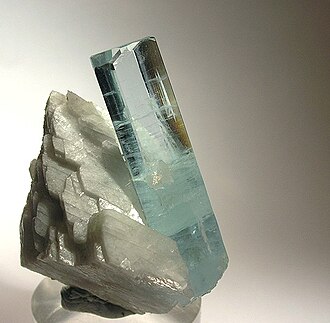
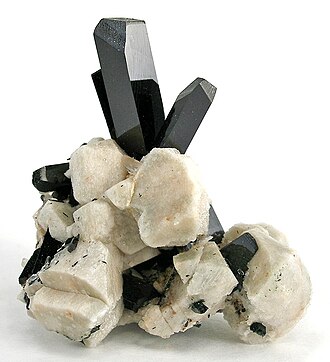
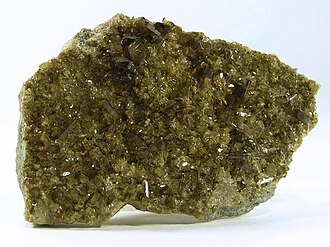
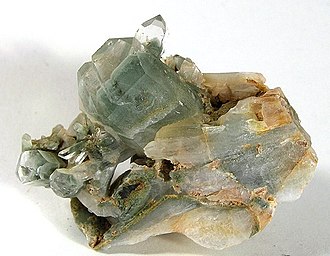
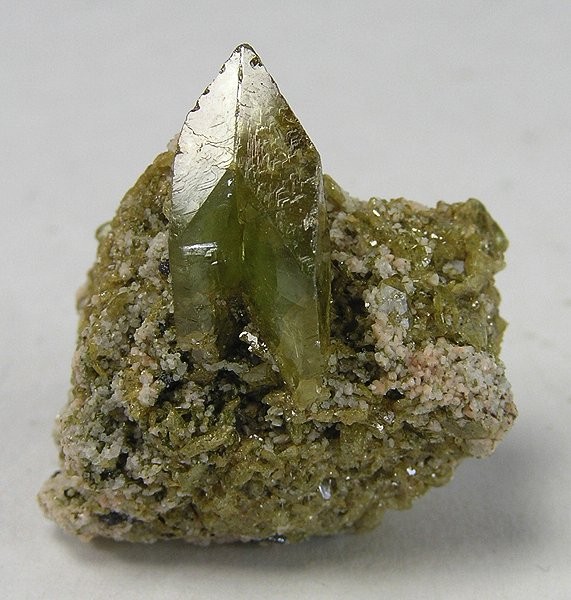
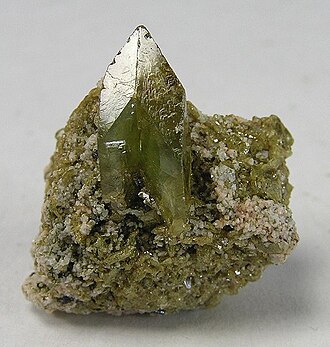
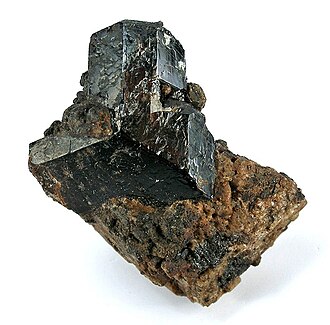
Titanite, also called sphene, is a calcium titanium silicate known for its high luster, strong dispersion, and characteristic wedge-shaped crystals. Specimens are often green, yellow, or brown and may be transparent enough to facet, prized by collectors for their fire.
Also known as: Sphene, Calcium titanium silicate.
Titanite properties at a glance
| Type | Silicate Minerals |
|---|---|
| Chemical formula | CaTiSiO5 |
| Mohs hardness | 5.5 |
| Crystal system | monoclinic |
| Luster | adamantine |
| Streak | White |
| Cleavage | Distinct |
| Fracture | Conchoidal |
| Specific gravity | 3.5 |
| Transparency | transparent |
| Common colors | Green, Yellow, Brown, Black |
| Rarity | uncommon |
Geology & background
Titanite is a common accessory mineral that crystallizes in igneous rocks such as granite and in metamorphic rocks including schists and skarns, and it occurs in well-formed crystals in alpine fissure veins.
Titanite was described and named sphene in 1801, with the alternate name titanite reflecting its titanium content. It has long been valued by mineral collectors for its brilliance and by geologists as a dating mineral.
How to identify Titanite
- Look for wedge-shaped or flattened crystals with a bright adamantine to resinous luster.
- Strong dispersion and pleochroism in transparent material help distinguish titanite from similar minerals.
- Moderate hardness near 5.5 and a single distinct cleavage direction support identification.
Full Titanite identification guide: checklist, home tests and look-alikes →
Titanite photos
Titanite vs similar stones
Not sure it isn't something else? Side-by-side comparisons with the stones most often confused with Titanite.
Where Titanite is found
Titanite occurs as an accessory mineral worldwide, with notable crystal localities in the alpine fissures of Austria, Switzerland, and Italy, and additional fine specimens from Pakistan, Brazil, and Canada.
How much is Titanite worth?
| Entry-level specimen | $15 |
|---|---|
| Typical collector specimen | $90 |
| Premium specimen | $600+ |
Value depends on crystal size, color, transparency, luster, locality, damage, and overall aesthetics.
Common uses
- Collector specimens
- Faceted gemstones
- Minor titanium ore
- Radiometric dating
- Educational mineralogy
Interesting facts
- The name sphene comes from the Greek word for wedge, referring to the mineral's distinctive wedge-shaped crystals.
- Titanite has dispersion higher than diamond, giving faceted stones intense rainbow fire.
- It is an important ore mineral of titanium and a useful mineral for radiometric dating.
- Titanite is strongly pleochroic, showing different colors when viewed from different directions.
Care & safety
Titanite is moderately hard but brittle with distinct cleavage, so crystals can chip if knocked.
Avoid inhaling dust. Do not cut, grind, or polish unknown specimens without eye protection and a proper respirator.
Titanite FAQ
What is Titanite?
Titanite, also called sphene, is a calcium titanium silicate known for its high luster, strong dispersion, and characteristic wedge-shaped crystals. Specimens are often green, yellow, or brown and may be transparent enough to facet, prized by collectors for their fire.
How much is Titanite worth?
Entry-level Titanite specimens sell for around $15, a typical collector specimen for about $90, and premium pieces for $600 or more. Value depends on crystal size, color, transparency, luster, locality, damage, and overall aesthetics.
How hard is Titanite?
Titanite has a Mohs hardness of 5.5. It is about as hard as window glass: a knife barely marks it, while a steel file (Mohs 6.5) will.
Where is Titanite found?
Notable sources of Titanite include Austria, Switzerland, Italy, Pakistan, Brazil, and Canada. Titanite is a common accessory mineral that crystallizes in igneous rocks such as granite and in metamorphic rocks including schists and skarns, and it occurs in well-formed crystals in alpine fissure veins..
What is Titanite used for?
Titanite is used for collector specimens, faceted gemstones, minor titanium ore, radiometric dating, and educational mineralogy.