Metamorphic Rocks · uncommon
Blueschist
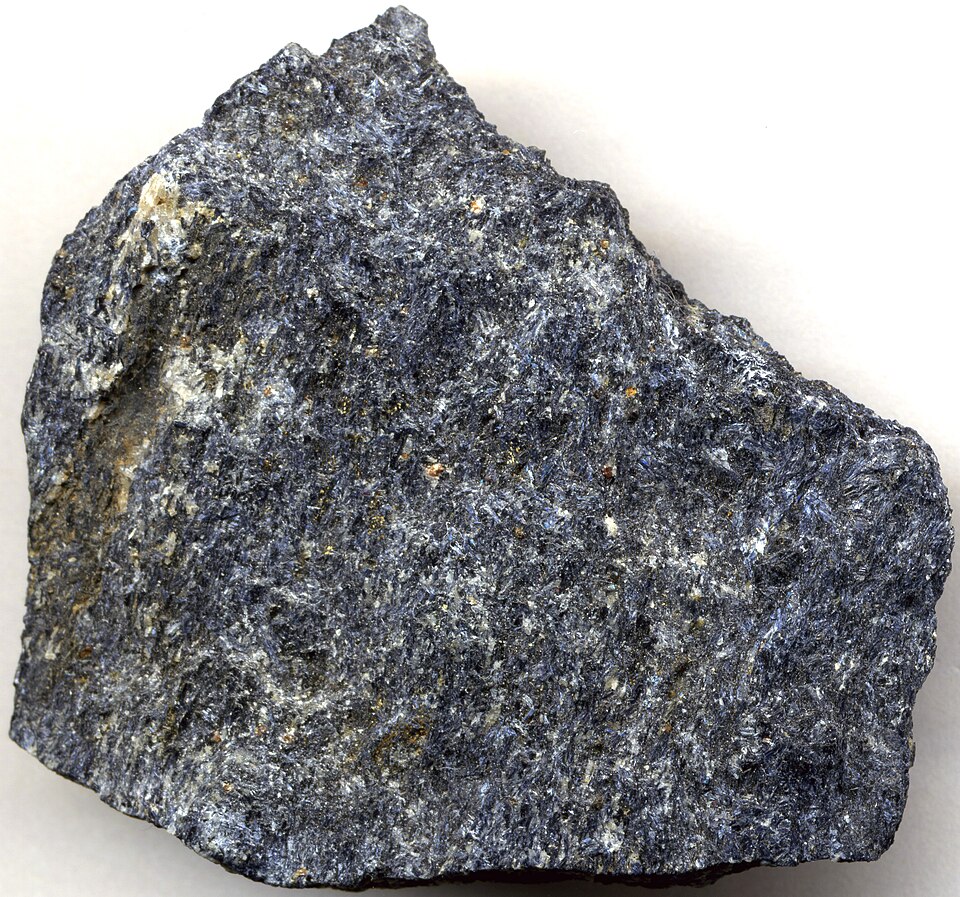
Blueschist is a blue to blue-gray metamorphic rock linked to subduction zones. Its color often comes from blue amphibole minerals such as glaucophane.
Also known as: Glaucophane schist, Blue schist.
Blueschist properties at a glance
| Type | Metamorphic Rocks |
|---|---|
| Chemical formula | Glaucophane-bearing metamorphic rock |
| Mohs hardness | 5.5 |
| Luster | silky |
| Streak | Variable; usually pale gray |
| Cleavage | Variable by mineral grains |
| Fracture | Uneven to splintery |
| Specific gravity | 3.1 |
| Transparency | opaque |
| Common colors | Blue, Blue gray, Gray, Green, Black |
| Rarity | uncommon |
Geology & background
Forms in high-pressure, low-temperature subduction-zone metamorphism, commonly with blue amphibole minerals such as glaucophane.
Blueschist is important evidence for plate tectonics because it forms in subduction-related metamorphic settings.
How to identify Blueschist
- Look for blue to blue-gray mineral grains or a blue cast in the rock.
- Blueschist is usually less glassy than blue slag and less transparent than gem minerals.
- A schistose or foliated fabric can support the identification.
- Locality helps because blueschist is tied to subduction-related metamorphic belts.
Full Blueschist identification guide: checklist, home tests and look-alikes →
Blueschist vs similar stones
Not sure it isn't something else? Side-by-side comparisons with the stones most often confused with Blueschist.
Where Blueschist is found
Reported from multiple metamorphic terrains worldwide; verify locality against specimen provenance when available.
How much is Blueschist worth?
| Entry-level specimen | $5 |
|---|---|
| Typical collector specimen | $30 |
| Premium specimen | $150+ |
Blueschist is usually valued for teaching, field context, locality, texture, mineral content, or unusually attractive specimens rather than high gem value.
Common uses
- Field identification
- Subduction-zone study
- Education
- Collector specimens
Interesting facts
- Blueschist records high pressure but relatively low temperature conditions.
- It is strongly associated with ancient subduction zones.
- The blue color is a key clue but can be muted by weathering or mixed minerals.
Care & safety
Blueschist can vary in toughness, cleavage, and weathering depending on mineral mix and fabric.
Avoid inhaling dust. Do not cut, grind, or polish unknown metamorphic rocks without eye protection and a properly rated respirator.
Blueschist FAQ
What is Blueschist?
Blueschist is a blue to blue-gray metamorphic rock linked to subduction zones. Its color often comes from blue amphibole minerals such as glaucophane.
How much is Blueschist worth?
Entry-level Blueschist specimens sell for around $5, a typical collector specimen for about $30, and premium pieces for $150 or more. Blueschist is usually valued for teaching, field context, locality, texture, mineral content, or unusually attractive specimens rather than high gem value.
How hard is Blueschist?
Blueschist has a Mohs hardness of 5.5. It is about as hard as window glass: a knife barely marks it, while a steel file (Mohs 6.5) will.
What is Blueschist used for?
Blueschist is used for field identification, subduction-zone study, education, and collector specimens.