Oxide Minerals · common
Ilmenite
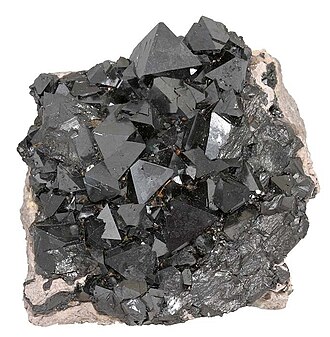
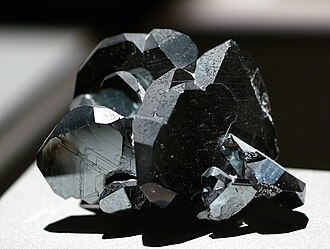
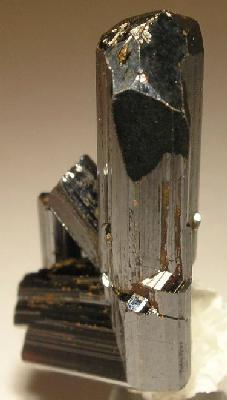
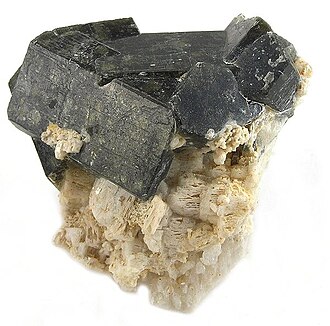
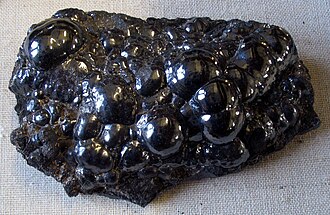
Ilmenite is an iron titanium oxide and the most important ore of titanium. It typically forms black, weakly magnetic, metallic to submetallic grains and tabular crystals in igneous rocks and heavy mineral sands.
Also known as: Titanic iron ore, Menaccanite.
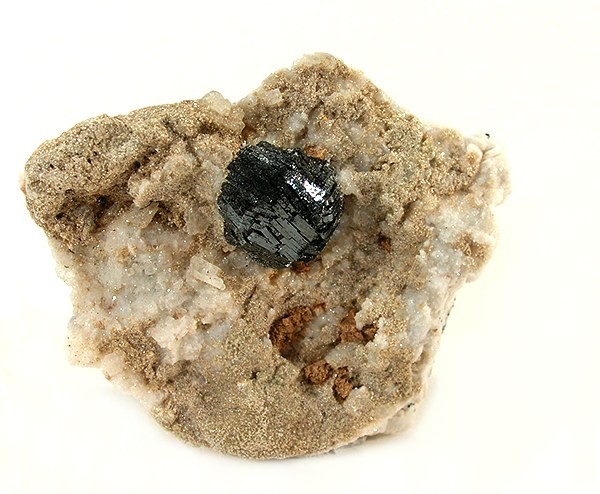
Ilmenite properties at a glance
| Type | Oxide Minerals |
|---|---|
| Chemical formula | FeTiO3 |
| Mohs hardness | 5.5 |
| Crystal system | trigonal |
| Luster | metallic |
| Streak | Black to brownish red |
| Cleavage | None |
| Fracture | Conchoidal to uneven |
| Specific gravity | 4.7 |
| Transparency | opaque |
| Common colors | Black, Iron-black, Brownish black |
| Rarity | common |
Geology & background
Ilmenite crystallizes from mafic igneous magmas and concentrates in layered intrusions, and it also accumulates in metamorphic rocks and heavy-mineral beach sands.
Ilmenite became economically important in the twentieth century as demand grew for titanium metal and bright white titanium dioxide pigment used in paints and coatings.
How to identify Ilmenite
- Look for a black, opaque, metallic to submetallic mineral that is dense and only weakly magnetic.
- Ilmenite leaves a black to brownish-red streak and lacks distinct cleavage.
- Distinguish it from magnetite by its much weaker magnetism and from hematite by its black rather than red streak.
Full Ilmenite identification guide: checklist, home tests and look-alikes →
Ilmenite vs similar stones
Not sure it isn't something else? Side-by-side comparisons with the stones most often confused with Ilmenite.
Where Ilmenite is found
Ilmenite occurs in mafic igneous rocks, layered intrusions, and heavy mineral sands worldwide, with notable sources in Norway, South Africa, Australia, Canada, India, and the United States.
How much is Ilmenite worth?
| Entry-level specimen | $5 |
|---|---|
| Typical collector specimen | $35 |
| Premium specimen | $200+ |
Value depends on crystal form, size, locality, aesthetics, damage, and provenance.
Common uses
- Titanium ore
- Titanium dioxide pigment
- Aerospace titanium metal
- Welding rod coatings
- Collector specimens
Interesting facts
- Ilmenite was first described in 1827 from the Ilmen Mountains of Russia, which gave the mineral its name.
- It is the world's leading ore of titanium and a primary feedstock for titanium dioxide pigment.
- Ilmenite is only weakly magnetic, which helps separate it from strongly magnetic magnetite.
- Lunar basalt samples returned by the Apollo missions contained abundant ilmenite.
Care & safety
Ilmenite is reasonably hard and durable but can chip along edges if dropped or struck.
Avoid inhaling dust. Do not cut, grind, or polish unknown specimens without eye protection and a proper respirator.
Ilmenite FAQ
What is Ilmenite?
Ilmenite is an iron titanium oxide and the most important ore of titanium. It typically forms black, weakly magnetic, metallic to submetallic grains and tabular crystals in igneous rocks and heavy mineral sands.
How much is Ilmenite worth?
Entry-level Ilmenite specimens sell for around $5, a typical collector specimen for about $35, and premium pieces for $200 or more. Value depends on crystal form, size, locality, aesthetics, damage, and provenance.
How hard is Ilmenite?
Ilmenite has a Mohs hardness of 5.5. It is about as hard as window glass: a knife barely marks it, while a steel file (Mohs 6.5) will.
Where is Ilmenite found?
Notable sources of Ilmenite include Norway, South Africa, Australia, Canada, India, and United States. Ilmenite crystallizes from mafic igneous magmas and concentrates in layered intrusions, and it also accumulates in metamorphic rocks and heavy-mineral beach sands..
What is Ilmenite used for?
Ilmenite is used for titanium ore, titanium dioxide pigment, aerospace titanium metal, welding rod coatings, and collector specimens.