Oxide Minerals · common
Pyrolusite
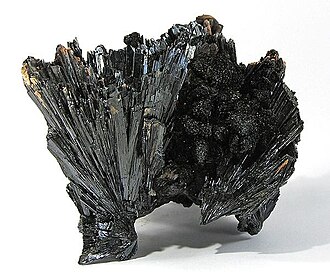
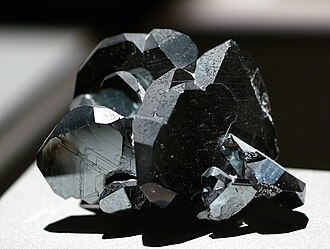
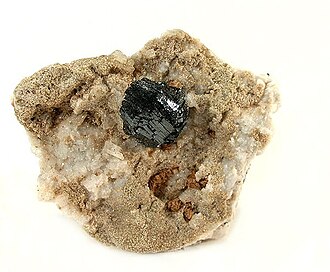
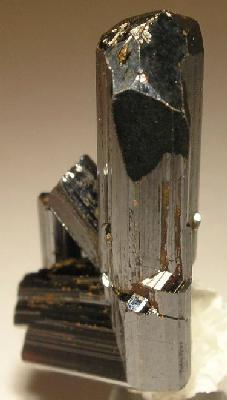
Pyrolusite is the most common manganese oxide ore mineral, with a steel-gray to black color and metallic to dull luster. It typically occurs as massive, fibrous, or radiating aggregates and often forms branching dendrites on rock surfaces.
Also known as: Manganese dioxide, Polianite.
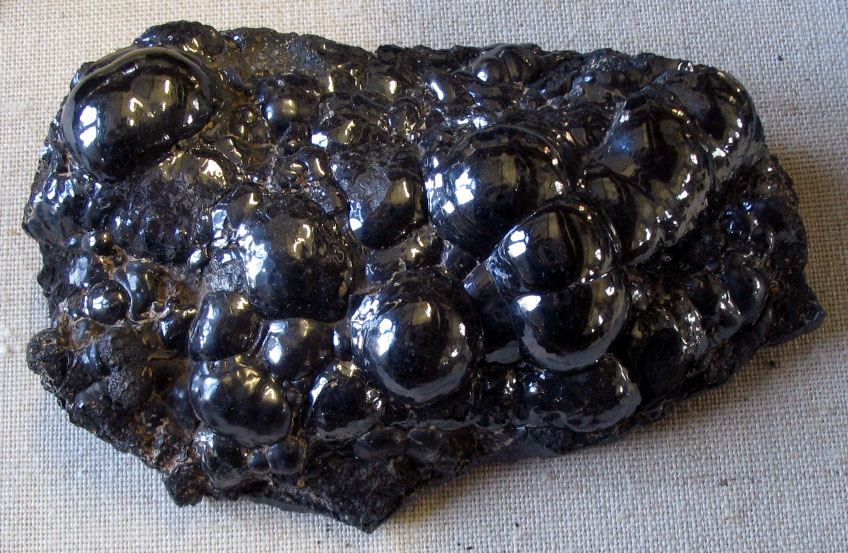
Pyrolusite properties at a glance
| Type | Oxide Minerals |
|---|---|
| Chemical formula | MnO2 |
| Mohs hardness | 6.25 |
| Crystal system | tetragonal |
| Luster | metallic |
| Streak | Black to bluish black |
| Cleavage | Perfect prismatic |
| Fracture | Uneven |
| Specific gravity | 5 |
| Transparency | opaque |
| Common colors | Black, Steel gray, Bluish gray |
| Rarity | common |
Geology & background
Pyrolusite forms when manganese is oxidized near the surface, precipitating from groundwater in bogs, lake beds, and weathered deposits, often as massive, fibrous, or dendritic growths.
Pyrolusite has long been used to decolorize glass and to make manganese compounds, and it became essential to modern industry as the principal ore for manganese in steel alloys.
How to identify Pyrolusite
- Look for a steel-gray to black metallic mineral that leaves a black streak and can soil the fingers.
- Massive and fibrous habits are typical, and branching black dendrites are a recognizable form.
- Soft, sooty manganese oxide coatings are commonly pyrolusite mixed with related manganese minerals.
Full Pyrolusite identification guide: checklist, home tests and look-alikes →
Pyrolusite vs similar stones
Not sure it isn't something else? Side-by-side comparisons with the stones most often confused with Pyrolusite.
Where Pyrolusite is found
Pyrolusite occurs in weathered and sedimentary manganese deposits worldwide, with notable specimen localities in Germany, India, Brazil, South Africa, the United States, and Ukraine.
How much is Pyrolusite worth?
| Entry-level specimen | $5 |
|---|---|
| Typical collector specimen | $35 |
| Premium specimen | $200+ |
Value depends on crystal development, habit, locality, associated minerals, and overall condition.
Common uses
- Manganese ore for steel
- Glassmaking and decolorizing
- Dry-cell batteries
- Pigments and chemicals
- Collector specimens
Interesting facts
- Pyrolusite is the most important ore of manganese, a key ingredient in steelmaking.
- Branching, fern-like pyrolusite dendrites on rock are often mistaken for fossil plants.
- Its name comes from Greek words for fire and to wash, since it was used to remove color from glass.
- Well-formed pyrolusite crystals are uncommon, so most specimens are massive or fibrous.
Care & safety
Pyrolusite ranges from hard crystals to soft, crumbly masses that can flake and stain on handling.
Avoid inhaling dust. Do not cut, grind, or polish unknown specimens without eye protection and a proper respirator.
Pyrolusite FAQ
What is Pyrolusite?
Pyrolusite is the most common manganese oxide ore mineral, with a steel-gray to black color and metallic to dull luster. It typically occurs as massive, fibrous, or radiating aggregates and often forms branching dendrites on rock surfaces.
How much is Pyrolusite worth?
Entry-level Pyrolusite specimens sell for around $5, a typical collector specimen for about $35, and premium pieces for $200 or more. Value depends on crystal development, habit, locality, associated minerals, and overall condition.
How hard is Pyrolusite?
Pyrolusite has a Mohs hardness of 6.25. It is about as hard as window glass: a knife barely marks it, while a steel file (Mohs 6.5) will.
Where is Pyrolusite found?
Notable sources of Pyrolusite include Germany, India, Brazil, South Africa, United States, and Ukraine. Pyrolusite forms when manganese is oxidized near the surface, precipitating from groundwater in bogs, lake beds, and weathered deposits, often as massive, fibrous, or dendritic growths..
What is Pyrolusite used for?
Pyrolusite is used for manganese ore for steel, glassmaking and decolorizing, dry-cell batteries, pigments and chemicals, and collector specimens.