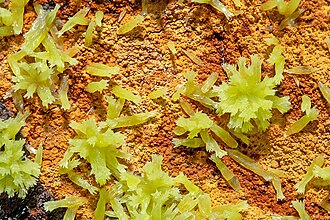
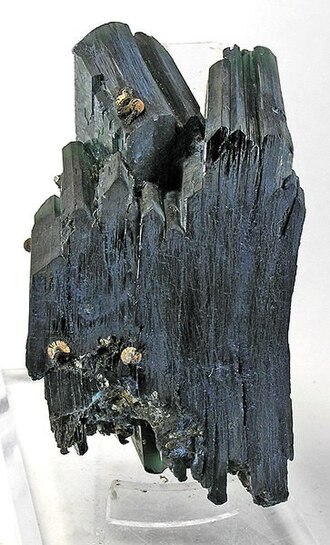
Phosphate Minerals · uncommon
Variscite
Variscite is a hydrated aluminum phosphate prized for its green to blue-green color. It typically occurs as massive nodules and veins with a waxy luster and is cut into cabochons and carvings as an attractive ornamental stone.
Also known as: Aluminum phosphate, Lucinite.
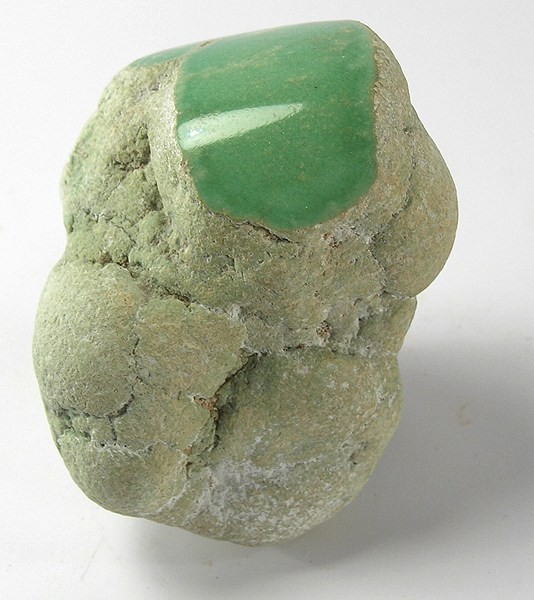
Variscite properties at a glance
| Type | Phosphate Minerals |
|---|---|
| Chemical formula | AlPO4·2H2O |
| Mohs hardness | 4 |
| Crystal system | orthorhombic |
| Luster | waxy |
| Streak | White |
| Cleavage | Good |
| Fracture | Conchoidal |
| Specific gravity | 2.6 |
| Transparency | translucent |
| Common colors | Green, Blue-green, Yellow-green |
| Rarity | uncommon |
Geology & background
Variscite forms as a secondary mineral when phosphate-rich waters react with aluminum-bearing rocks, depositing green nodules, crusts, and veins near the surface in fractures and cavities.
Variscite was named in 1837 and has been used as an ornamental and lapidary stone. In some regions ancient peoples worked variscite into beads and ornaments much as turquoise was used elsewhere.
How to identify Variscite
- Look for even green to blue-green massive material with a waxy to dull luster.
- Variscite is generally a purer green than turquoise and lacks turquoise's blue dominance.
- Moderate hardness near 4 and a nodular habit support identification.
Full Variscite identification guide: checklist, home tests and look-alikes →
Variscite vs similar stones
Not sure it isn't something else? Side-by-side comparisons with the stones most often confused with Variscite.
Where Variscite is found
Variscite occurs as a secondary phosphate mineral, with notable nodular deposits in the United States and additional localities in Australia, Spain, Germany, Brazil, and Bolivia.
How much is Variscite worth?
| Entry-level specimen | $10 |
|---|---|
| Typical collector specimen | $55 |
| Premium specimen | $350+ |
Value depends on color, pattern, polish quality, locality, damage, and overall aesthetics.
Common uses
- Cabochons and jewelry
- Carvings and ornamental stone
- Collector specimens
- Educational mineralogy
Interesting facts
- Variscite is sometimes confused with turquoise but is usually a purer, more even green.
- It is named after Variscia, the historical name for the Vogtland region of Germany.
- Variscite nodules can show attractive spiderweb patterns from veins of other minerals.
- Utah's Clay Canyon and Fairfield deposits are classic sources of fine variscite.
Care & safety
Variscite is relatively soft and can scratch, chip, or abrade with rough handling.
Avoid inhaling dust. Do not cut, grind, or polish unknown specimens without eye protection and a proper respirator.
Variscite FAQ
What is Variscite?
Variscite is a hydrated aluminum phosphate prized for its green to blue-green color. It typically occurs as massive nodules and veins with a waxy luster and is cut into cabochons and carvings as an attractive ornamental stone.
How much is Variscite worth?
Entry-level Variscite specimens sell for around $10, a typical collector specimen for about $55, and premium pieces for $350 or more. Value depends on color, pattern, polish quality, locality, damage, and overall aesthetics.
How hard is Variscite?
Variscite has a Mohs hardness of 4. A steel knife blade (Mohs 5.5) scratches it; a copper coin does not.
Where is Variscite found?
Notable sources of Variscite include United States, Australia, Spain, Germany, Brazil, and Bolivia. Variscite forms as a secondary mineral when phosphate-rich waters react with aluminum-bearing rocks, depositing green nodules, crusts, and veins near the surface in fractures and cavities..
What is Variscite used for?
Variscite is used for cabochons and jewelry, carvings and ornamental stone, collector specimens, and educational mineralogy.