Molybdate Minerals · uncommon
Wulfenite
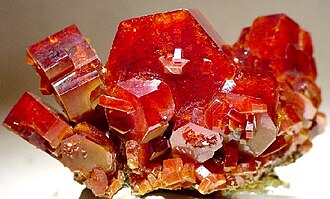
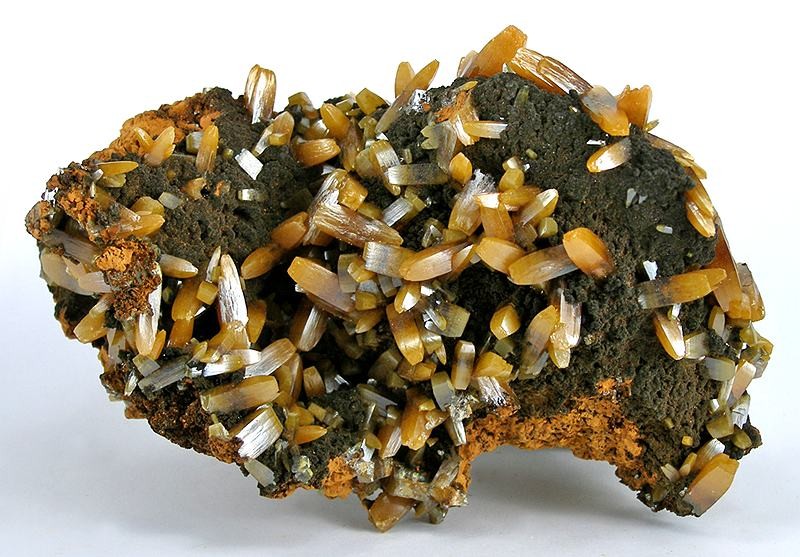
Wulfenite is a lead molybdate famous for its brilliant orange to yellow tabular crystals. A secondary mineral of oxidized lead deposits, it is a highly popular collector species and a minor ore of molybdenum.
Also known as: Lead molybdate.
Wulfenite properties at a glance
| Type | Molybdate Minerals |
|---|---|
| Chemical formula | PbMoO4 |
| Mohs hardness | 3 |
| Crystal system | tetragonal |
| Luster | adamantine |
| Streak | White |
| Cleavage | Distinct |
| Fracture | Uneven |
| Specific gravity | 6.8 |
| Transparency | transparent |
| Common colors | Orange, Yellow, Red, Brown |
| Rarity | uncommon |
Geology & background
Wulfenite forms as a secondary mineral in the oxidized zones of lead and molybdenum ore deposits, where it commonly crystallizes as thin tabular plates in arid weathered settings.
Wulfenite was named in 1845 after Franz Xavier von Wulfen, who studied lead minerals from Carinthia. It became one of the most prized collector minerals and a notable molybdenum ore.
How to identify Wulfenite
- Look for thin square tabular crystals with an adamantine luster in orange to yellow hues.
- Unusually high density from lead content helps distinguish wulfenite from similar minerals.
- Occurrence in oxidized lead deposits and low hardness near 3 support identification.
Full Wulfenite identification guide: checklist, home tests and look-alikes →
Wulfenite photos
Wulfenite vs similar stones
Not sure it isn't something else? Side-by-side comparisons with the stones most often confused with Wulfenite.
Where Wulfenite is found
Wulfenite occurs in oxidized lead deposits in arid regions, with famous specimen localities in the United States and Mexico and additional finds in Morocco, Austria, Australia, and Namibia.
How much is Wulfenite worth?
| Entry-level specimen | $12 |
|---|---|
| Typical collector specimen | $80 |
| Premium specimen | $700+ |
Value depends on crystal color, size, luster, locality, damage, and overall aesthetics.
Common uses
- Collector specimens
- Minor molybdenum ore
- Educational mineralogy
- Display pieces
Interesting facts
- Wulfenite often forms remarkably thin, square tabular crystals that look like flat plates.
- The Red Cloud Mine in Arizona is world famous for its intense orange-red wulfenite.
- It is a minor ore of the metal molybdenum.
- Wulfenite was named after the Austrian mineralogist Franz Xavier von Wulfen.
Care & safety
Wulfenite is soft and brittle, and its thin tabular crystals chip and break very easily.
Avoid inhaling dust. Do not cut, grind, or polish unknown specimens without eye protection and a proper respirator.
Contains lead. Wulfenite is a lead mineral; wash hands after handling and keep specimens away from food and children.
Wulfenite FAQ
What is Wulfenite?
Wulfenite is a lead molybdate famous for its brilliant orange to yellow tabular crystals. A secondary mineral of oxidized lead deposits, it is a highly popular collector species and a minor ore of molybdenum.
How much is Wulfenite worth?
Entry-level Wulfenite specimens sell for around $12, a typical collector specimen for about $80, and premium pieces for $700 or more. Value depends on crystal color, size, luster, locality, damage, and overall aesthetics.
How hard is Wulfenite?
Wulfenite has a Mohs hardness of 3. A copper coin (Mohs 3.5) scratches it, but a fingernail does not.
Where is Wulfenite found?
Notable sources of Wulfenite include United States, Mexico, Morocco, Austria, Australia, and Namibia. Wulfenite forms as a secondary mineral in the oxidized zones of lead and molybdenum ore deposits, where it commonly crystallizes as thin tabular plates in arid weathered settings..
What is Wulfenite used for?
Wulfenite is used for collector specimens, minor molybdenum ore, educational mineralogy, and display pieces.