Arsenate Minerals · uncommon
Mimetite
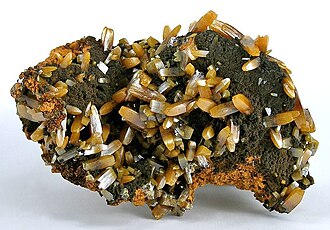
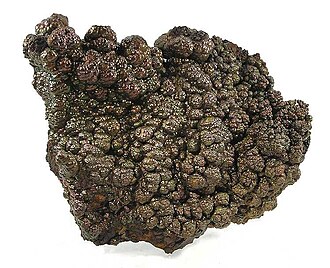
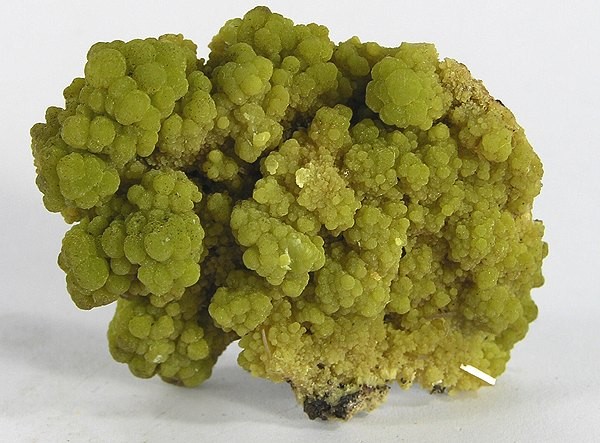
Mimetite is a lead arsenate mineral that forms in the weathered zones of lead ore deposits. It is admired for its rounded botryoidal crusts and barrel-shaped crystals in warm yellow, orange, and brown tones.
Also known as: Campylite, Lead arsenate.
Mimetite properties at a glance
| Type | Arsenate Minerals |
|---|---|
| Chemical formula | Pb5(AsO4)3Cl |
| Mohs hardness | 3.75 |
| Crystal system | hexagonal |
| Luster | resinous |
| Streak | White |
| Cleavage | None |
| Fracture | Subconchoidal to uneven |
| Specific gravity | 7.24 |
| Transparency | translucent |
| Common colors | Yellow, Orange, Yellow-brown, Pale green, White |
| Rarity | uncommon |
Geology & background
Mimetite is a secondary mineral that forms in the oxidized zones of lead and arsenic-bearing ore deposits, where weathering alters primary minerals such as galena and arsenopyrite.
Mimetite has been valued mainly as a collector mineral and as a mineralogical curiosity, and its study helped early scientists understand chemical substitution between arsenate and phosphate minerals.
How to identify Mimetite
- Look for warm yellow to orange botryoidal crusts or barrel-shaped hexagonal crystals with a resinous luster.
- Mimetite is heavy for its size due to lead and is fairly soft at about 3.5 to 4 in hardness.
- It is nearly impossible to distinguish from pyromorphite by eye; chemical testing confirms the arsenic content.
Full Mimetite identification guide: checklist, home tests and look-alikes →
Mimetite vs similar stones
Not sure it isn't something else? Side-by-side comparisons with the stones most often confused with Mimetite.
Where Mimetite is found
Mimetite occurs in the oxidized zones of lead deposits worldwide, with notable specimen localities in Mexico, Namibia, Germany, the United Kingdom, the United States, and France.
How much is Mimetite worth?
| Entry-level specimen | $15 |
|---|---|
| Typical collector specimen | $90 |
| Premium specimen | $600+ |
Value depends on color, crystal form, luster, locality, size, and freedom from chips or damage.
Common uses
- Collector specimens
- Minor ore of lead
- Mineralogical study
- Museum display
Interesting facts
- Its name comes from a Greek word for 'imitator' because it closely resembles the related mineral pyromorphite.
- Mimetite forms a chemical series with pyromorphite, with arsenic and phosphorus substituting for each other.
- The rounded botryoidal variety from Mexico is sometimes called 'campylite' when crystals are barrel-shaped.
- Its high lead content gives even small specimens a noticeably heavy feel.
Care & safety
Mimetite is soft and brittle, and crystals chip or abrade easily if handled roughly.
Contains lead and arsenic. Mimetite contains lead and arsenic; wash hands after handling and never ingest dust or place near food.
Avoid inhaling dust. Do not cut, grind, or polish unknown specimens without eye protection and a proper respirator.
Mimetite FAQ
What is Mimetite?
Mimetite is a lead arsenate mineral that forms in the weathered zones of lead ore deposits. It is admired for its rounded botryoidal crusts and barrel-shaped crystals in warm yellow, orange, and brown tones.
How much is Mimetite worth?
Entry-level Mimetite specimens sell for around $15, a typical collector specimen for about $90, and premium pieces for $600 or more. Value depends on color, crystal form, luster, locality, size, and freedom from chips or damage.
How hard is Mimetite?
Mimetite has a Mohs hardness of 3.75. A steel knife blade (Mohs 5.5) scratches it; a copper coin does not.
Where is Mimetite found?
Notable sources of Mimetite include Mexico, Namibia, Germany, United Kingdom, United States, and France. Mimetite is a secondary mineral that forms in the oxidized zones of lead and arsenic-bearing ore deposits, where weathering alters primary minerals such as galena and arsenopyrite..
What is Mimetite used for?
Mimetite is used for collector specimens, minor ore of lead, mineralogical study, and museum display.