Carbonates · uncommon
Smithsonite
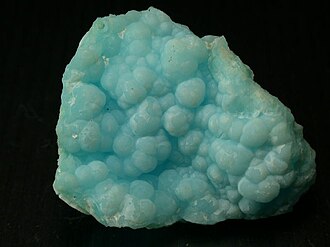
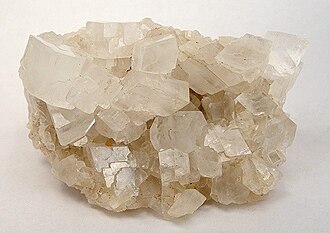
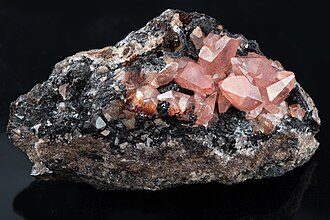
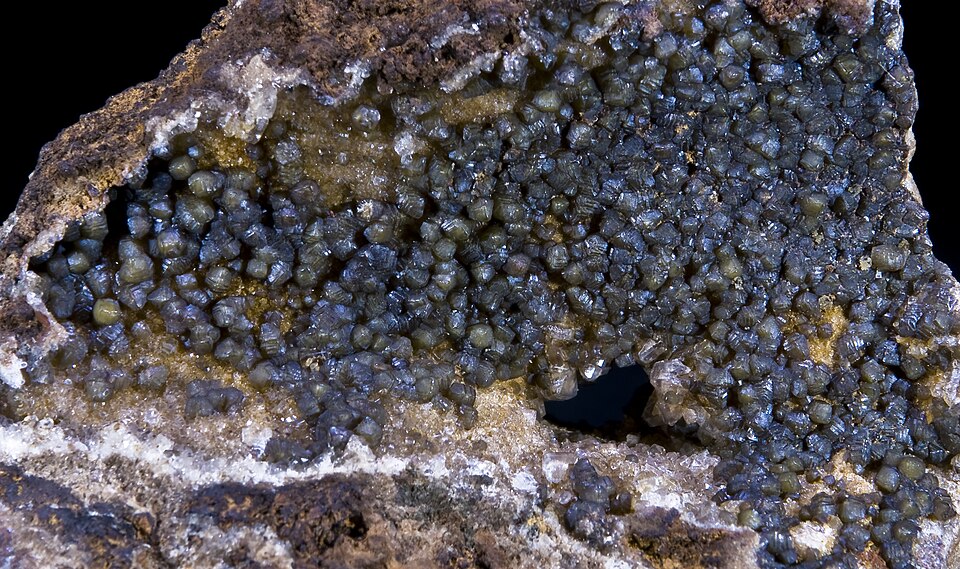
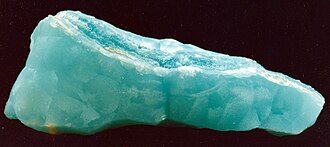
Smithsonite is a zinc carbonate mineral most admired for its smooth botryoidal crusts and soft pastel colors, especially blue-green. It also occurs as massive material and rare rhombohedral crystals and is a recognized zinc ore.
Also known as: Zinc carbonate, Zinc spar.
Smithsonite properties at a glance
| Type | Carbonates |
|---|---|
| Chemical formula | ZnCO3 |
| Mohs hardness | 4.5 |
| Crystal system | trigonal |
| Luster | vitreous |
| Streak | White |
| Cleavage | Perfect rhombohedral |
| Fracture | Uneven to conchoidal |
| Specific gravity | 4.4 |
| Transparency | translucent |
| Common colors | Blue green, Green, Blue, Yellow, Pink, White |
| Rarity | uncommon |
Geology & background
Smithsonite forms in the oxidized zone of zinc ore deposits, where weathering of primary zinc minerals such as sphalerite produces zinc carbonate.
Smithsonite was distinguished as a separate mineral in the early nineteenth century and named for James Smithson. It has long been mined as a zinc ore and prized by collectors for its pastel botryoidal specimens.
How to identify Smithsonite
- Look for smooth botryoidal crusts, soft pastel colors, and a notable heft for a carbonate.
- Smithsonite has perfect rhombohedral cleavage and a hardness near four and a half.
- It can resemble hemimorphite; smithsonite is the carbonate and reacts with warm dilute acid.
Full Smithsonite identification guide: checklist, home tests and look-alikes →
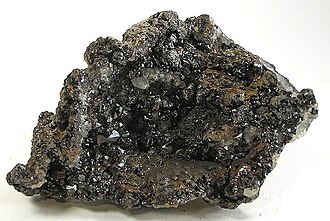
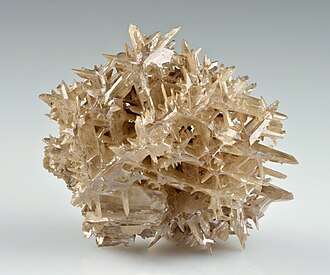
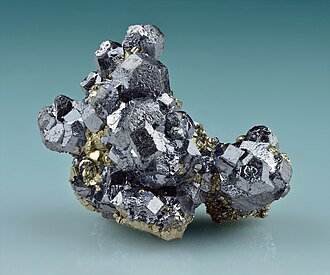
Smithsonite photos
Smithsonite vs similar stones
Not sure it isn't something else? Side-by-side comparisons with the stones most often confused with Smithsonite.
Where Smithsonite is found
Smithsonite occurs in the oxidized zones of zinc deposits worldwide, with notable specimen localities in Greece, Mexico, the United States, Namibia, Italy, and Australia.
How much is Smithsonite worth?
| Entry-level specimen | $15 |
|---|---|
| Typical collector specimen | $120 |
| Premium specimen | $900+ |
Value depends on color, botryoidal quality, size, locality, surface sheen, and condition.
Common uses
- Zinc ore
- Collector specimens
- Occasional cabochon gemstones
- Educational mineralogy
Interesting facts
- Smithsonite is named after James Smithson, the scientist whose bequest founded the Smithsonian Institution.
- Its most prized form is a smooth, grape-like botryoidal crust with a soft pearly sheen.
- Trace elements give smithsonite a wide color range, including blue-green, yellow, pink, and lavender.
- Smithsonite was historically confused with hemimorphite, and both were once grouped as calamine.
Care & safety
Smithsonite is moderately soft and brittle, with perfect cleavage that makes it prone to chipping.
Avoid inhaling dust. Do not cut, grind, or polish unknown specimens without eye protection and a proper respirator.
Smithsonite FAQ
What is Smithsonite?
Smithsonite is a zinc carbonate mineral most admired for its smooth botryoidal crusts and soft pastel colors, especially blue-green. It also occurs as massive material and rare rhombohedral crystals and is a recognized zinc ore.
How much is Smithsonite worth?
Entry-level Smithsonite specimens sell for around $15, a typical collector specimen for about $120, and premium pieces for $900 or more. Value depends on color, botryoidal quality, size, locality, surface sheen, and condition.
How hard is Smithsonite?
Smithsonite has a Mohs hardness of 4.5. A steel knife blade (Mohs 5.5) scratches it; a copper coin does not.
Where is Smithsonite found?
Notable sources of Smithsonite include Greece, Mexico, United States, Namibia, Italy, and Australia. Smithsonite forms in the oxidized zone of zinc ore deposits, where weathering of primary zinc minerals such as sphalerite produces zinc carbonate..
What is Smithsonite used for?
Smithsonite is used for zinc ore, collector specimens, occasional cabochon gemstones, and educational mineralogy.