Silicate Minerals · rare
Sugilite
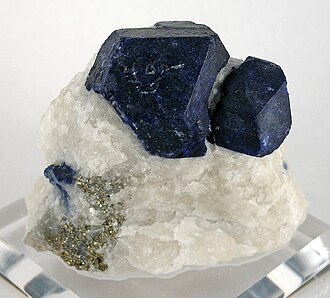
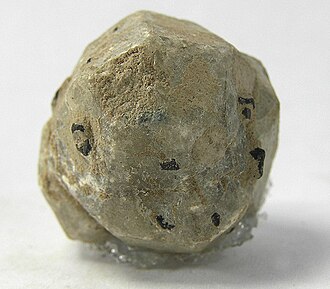
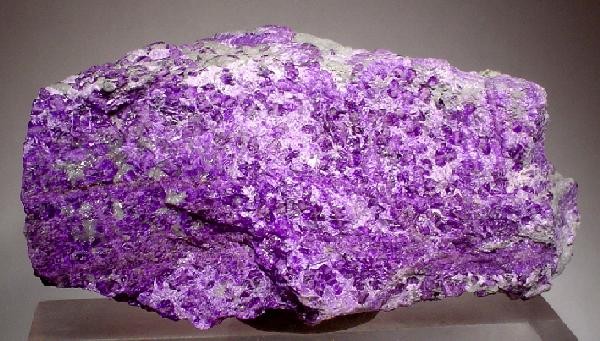
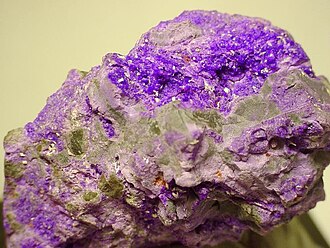
Sugilite is a rare lithium-bearing cyclosilicate best known for its vivid purple to magenta gem material. It usually occurs as massive aggregates rather than crystals and is used as an ornamental and lapidary stone.
Also known as: Luvulite, Lavulite, Royal lavulite.
Sugilite properties at a glance
| Type | Silicate Minerals |
|---|---|
| Chemical formula | KNa2(Fe,Mn,Al)2Li3Si12O30 |
| Mohs hardness | 6 |
| Crystal system | hexagonal |
| Luster | vitreous |
| Streak | White |
| Cleavage | None |
| Fracture | Conchoidal to uneven |
| Specific gravity | 2.74 |
| Transparency | translucent |
| Common colors | Purple, Violet, Magenta, Pink, Brownish yellow |
| Rarity | rare |
Geology & background
Sugilite is a rare cyclosilicate that forms in manganese-rich metamorphic rocks and alkaline igneous rocks, with gem-grade purple material occurring in manganese ore bodies.
Described in 1944 from Japan, sugilite remained obscure until the discovery of rich purple material in South Africa in the 1970s and 1980s made it a popular lapidary and ornamental stone.
How to identify Sugilite
- Look for solid, massive purple to magenta material rather than distinct crystals.
- Moderate hardness near 6, lack of cleavage, and association with manganese minerals are strong clues.
- Color can range from pale lilac to deep royal purple, so confirm rare or costly stones with proper testing.
Full Sugilite identification guide: checklist, home tests and look-alikes →
Sugilite photos
Sugilite vs similar stones
Not sure it isn't something else? Side-by-side comparisons with the stones most often confused with Sugilite.
Where Sugilite is found
Sugilite occurs in manganese-rich and alkaline metamorphic rocks, with the main gem source in South Africa and other occurrences in Japan, Italy, Canada, India, and Australia.
How much is Sugilite worth?
| Entry-level specimen | $15 |
|---|---|
| Typical collector specimen | $150 |
| Premium specimen | $1200+ |
Value depends on color intensity, evenness, translucency, freedom from matrix, and material quality.
Common uses
- Cabochons and ornamental stone
- Beads and carvings
- Collector specimens
- Jewelry
Interesting facts
- Sugilite was named for the Japanese petrologist Ken-ichi Sugi, who first found it.
- Gem-quality purple sugilite comes almost entirely from manganese mines in South Africa.
- It is sometimes called the purple turquoise because of its use as an opaque ornamental stone.
- Most sugilite is massive, so well-formed crystals are extremely rare and prized.
Care & safety
Sugilite is fairly hard and tough with no cleavage, making it reasonably durable for jewelry.
Avoid inhaling dust. Do not cut, grind, or polish unknown specimens without eye protection and a proper respirator.
Sugilite FAQ
What is Sugilite?
Sugilite is a rare lithium-bearing cyclosilicate best known for its vivid purple to magenta gem material. It usually occurs as massive aggregates rather than crystals and is used as an ornamental and lapidary stone.
How much is Sugilite worth?
Entry-level Sugilite specimens sell for around $15, a typical collector specimen for about $150, and premium pieces for $1200 or more. Value depends on color intensity, evenness, translucency, freedom from matrix, and material quality.
How hard is Sugilite?
Sugilite has a Mohs hardness of 6. It is about as hard as window glass: a knife barely marks it, while a steel file (Mohs 6.5) will.
Where is Sugilite found?
Notable sources of Sugilite include South Africa, Japan, Italy, Canada, India, and Australia. Sugilite is a rare cyclosilicate that forms in manganese-rich metamorphic rocks and alkaline igneous rocks, with gem-grade purple material occurring in manganese ore bodies..
What is Sugilite used for?
Sugilite is used for cabochons and ornamental stone, beads and carvings, collector specimens, and jewelry.